Table of Contents
Have you ever made homemade blueberry jam? I absolutely love it.
Every year I look forward to making blueberry jam again. I love the smell of the fruit being peeled, then washed and rolled under water in your hand to make it nice and clean, and then it cooks. The sound of it bubbling nicely in the pot and making the whole house smell good.
Cooking jam reminds me so much of my grandmother and the memories of her baking buns on Sundays or making fruit dumplings.
They are those hidden memories you bring out every now and then and relive with joy in the presence of others, which makes them a little brighter.
In addition, making jam at home also has a positive effect on our minds.
Have you ever thought that when you actually cook, you have to fully devote yourself to cooking, and your brain is actively resting from work? Well, that's just a pleasant side effect. ☺️ But it's also good to mention it. Because some of us sometimes have a bit of a problem, freeing our minds from work and letting a little daylight into our heads.
We eat jam very often at home. You could say that we eat 40 jars a year for nothing. And why not, when they are 75% fruit thanks to home preparation, right? Plus, when Christmas comes around, I use about 6 of them. And I also use jams as gifts and small gifts for friends, who sometimes give me pickled mushrooms, dried mushrooms, or other goodies in return, which we exchange.
How do I know which fruit is best for jam?
I choose carefully. It's definitely not like I take the first one that falls into my hand. Fruit for jam has to be ripe just right, according to the type. But what exactly does that mean? It must not be unripe, i.e., green, yellow... in short, when I choose fruit for jam, I choose the moment when the fruit is exactly at the "eatable" moment. Fruit for jam must be at exactly this moment so that it is processed well and its taste stands out beautifully. If, on the other hand, I took overripe fruit with the idea that it would still "pass", then it would not be there for marmalade. The marmalade could remain liquid.
Let me explain it more precisely:
Choosing "ripe" fruit is key for you. It directly affects the result of your marmalade. The point is that chemical processes occur during the creation of marmalade. Every fruit has pectin. This causes thickening. If the fruit is unripe, it gels more easily. If, on the other hand, it is overripe, the pectin in it has already broken down, and your jam will remain liquid. It's very similar in taste. With "just" ripe fruit, you have the right ratio of sugars and acidity. If you use unripe fruit for marmalade, the marmalade may taste sour or slightly bitter. With overripe fruit, on the contrary, you will have a boring, oversweet taste like sugar cubes. Gelling agents
There are a huge number of them on the market. I try to use those where I already have a pre-prepared mixture. I don't have to mix sugar with gelling powder on the side, but I already have prepared gelling sugar, which works. I don't like it when the jam is too stiff, which can happen if your hand slips somewhere while mixing the gelling powder with sugar.
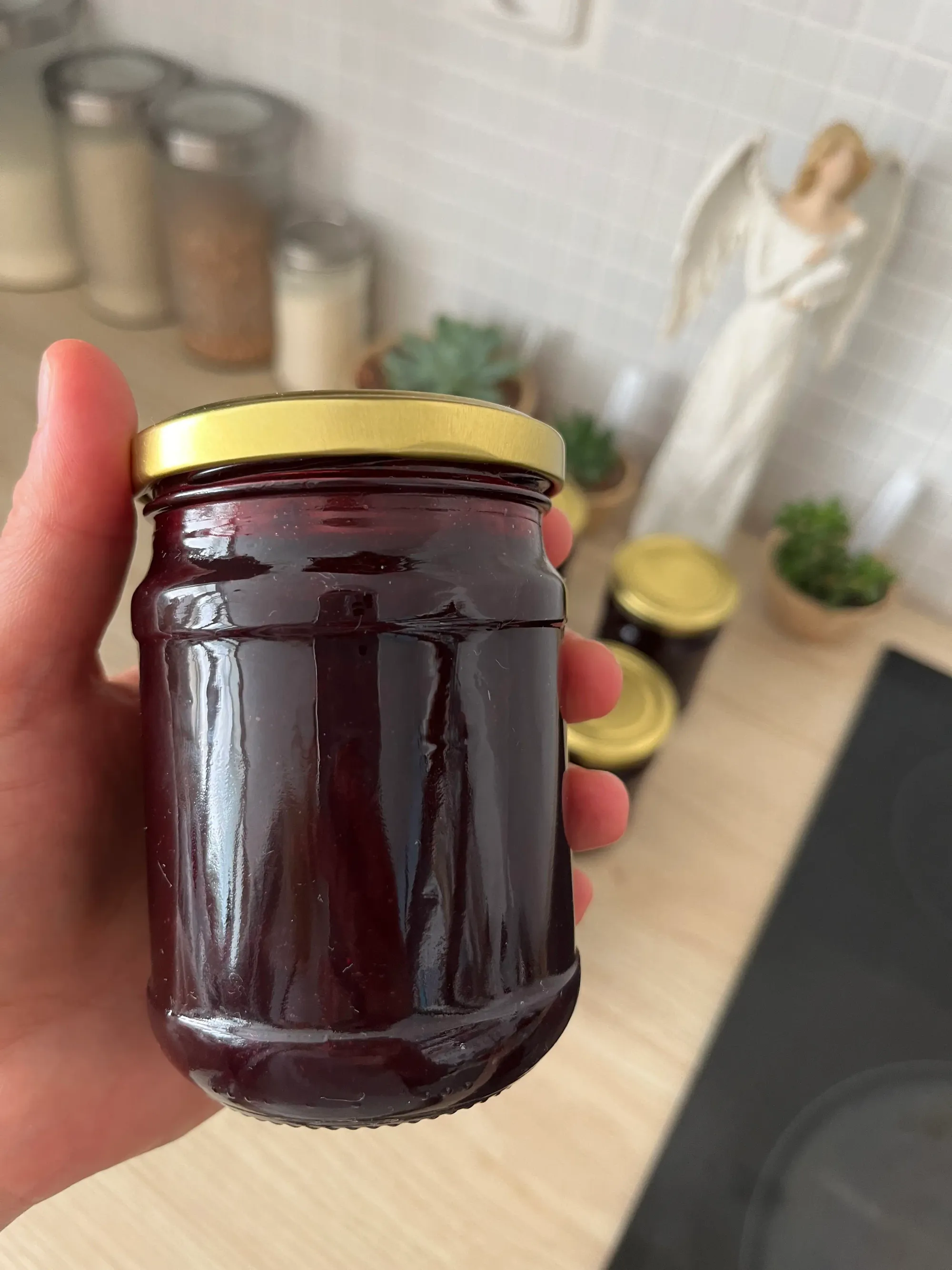
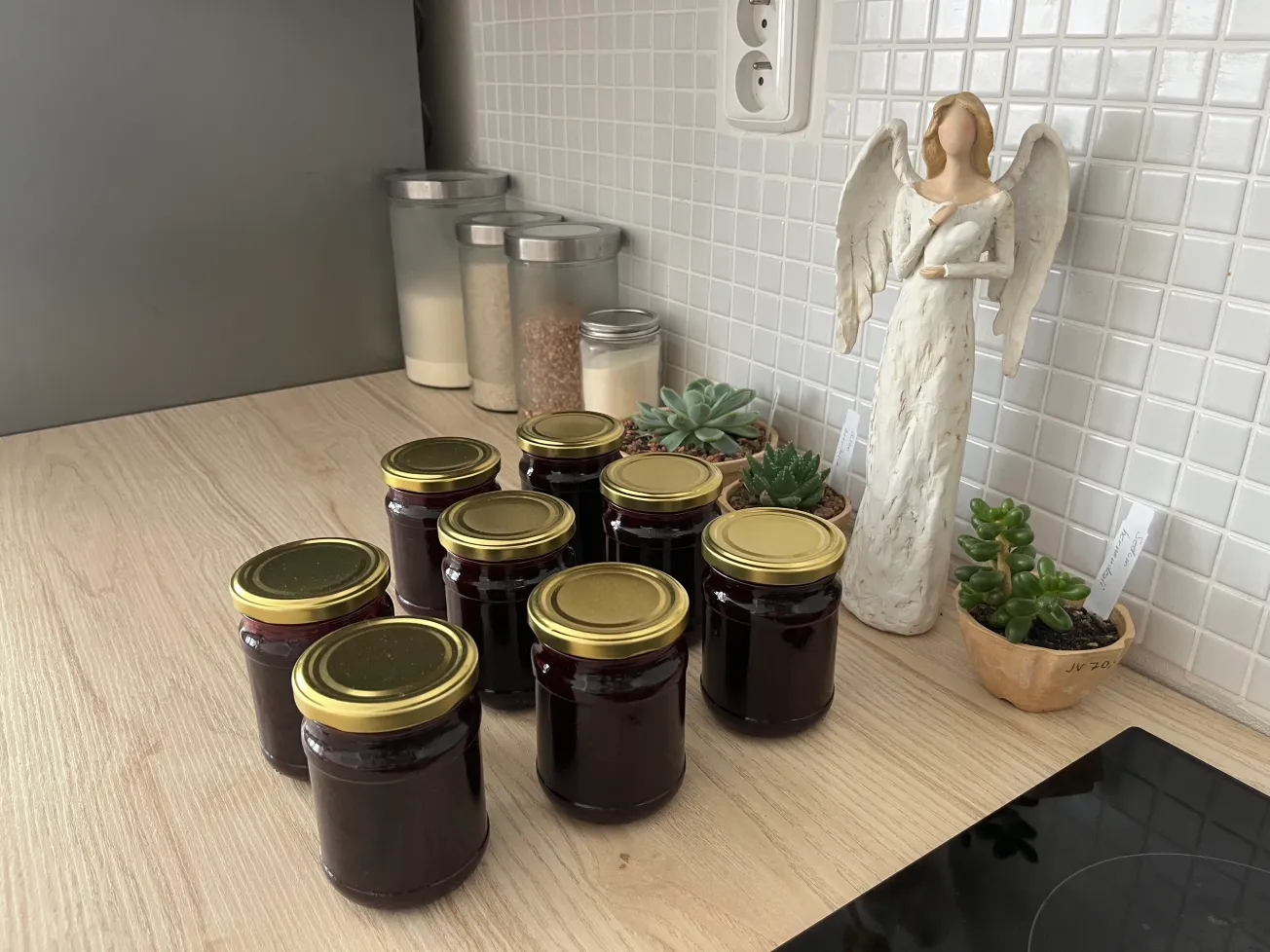
I also chose gelatin sugar for my blueberry jam, which has the highest fruit content in the resulting marmalade. The ratio of fruit to sugar is 75% fruit and 25% sugar, which is absolutely amazing. If you look at the ratio of fruit in jam in the store, you will usually find 15%-max 20% and a bunch of flavorings. Another advantage of using ready-made gelling sugars is that you only need 1.5 kg of fruit to make 500 grams, which is about 8 pieces of 250 ml jars. You don't have to cook large batches. Just 1.5 kg of fruit and you have a little home-made joy.
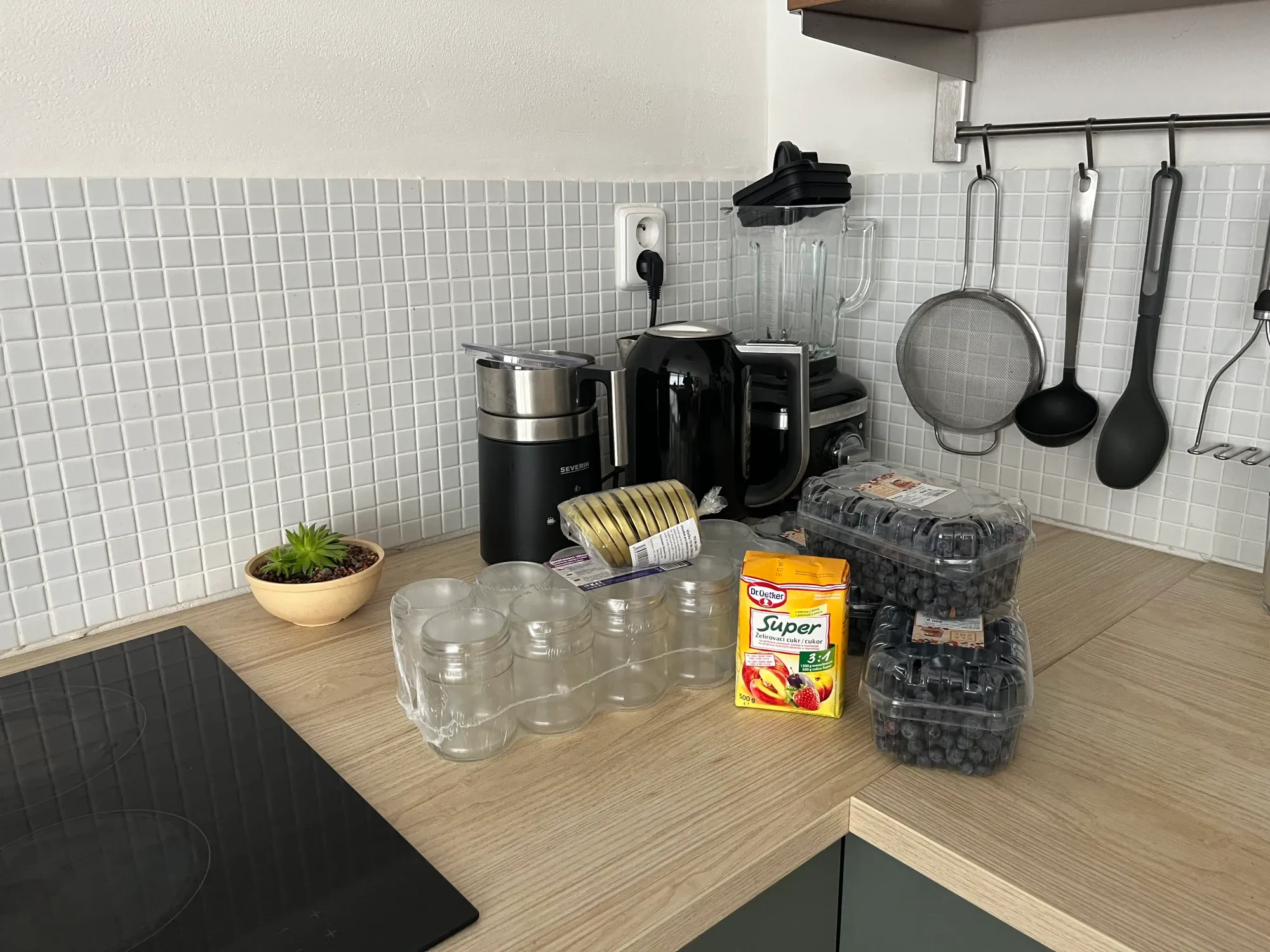
How to make homemade blueberry jam:
This is my absolute favorite! The process is incredibly simple, and if you follow step by step, you can't go wrong, so anyone can make homemade jam. Even a complete beginner.What you need
Jellying agent - I recommend using ready-made, mixed sugar, so you can enjoy making jam without worrying about the exact ratio of sugar and gelling agent. On the back of the gelling agent, you can always find how much fruit it will be enough for. In my case, the ratio is 500 g of gelling sugar to 1.5 kg of cleaned fruit.
What do you need for homemade blueberry jam:
500 g of gelling agent
1.5 kg of fruit
Jam glass jars (if you use smaller ones, keep about 8-10 jars on hand. You don't have to buy new ones. I recycle jars. For example, after baby food or yogurt in a jar, I just wash the jar and leave it for use when jam season comes. They are made right when there is fruit. Then you can just happily enjoy it with your family. (Or even by yourself.)
A deeper cooking pot. Get a really big one so that 1.5 kg of fruit can actually fit in it.
A blender or something for chopping fruit into puree. It's up to you whether you use an immersion blender or chop the fruit in a blender. It doesn't matter. The important thing is that you make a puree from the fruit, from which you will cook jam.
How to make homemade blueberry jam:
Wash the jars and lids you want to use for jam.
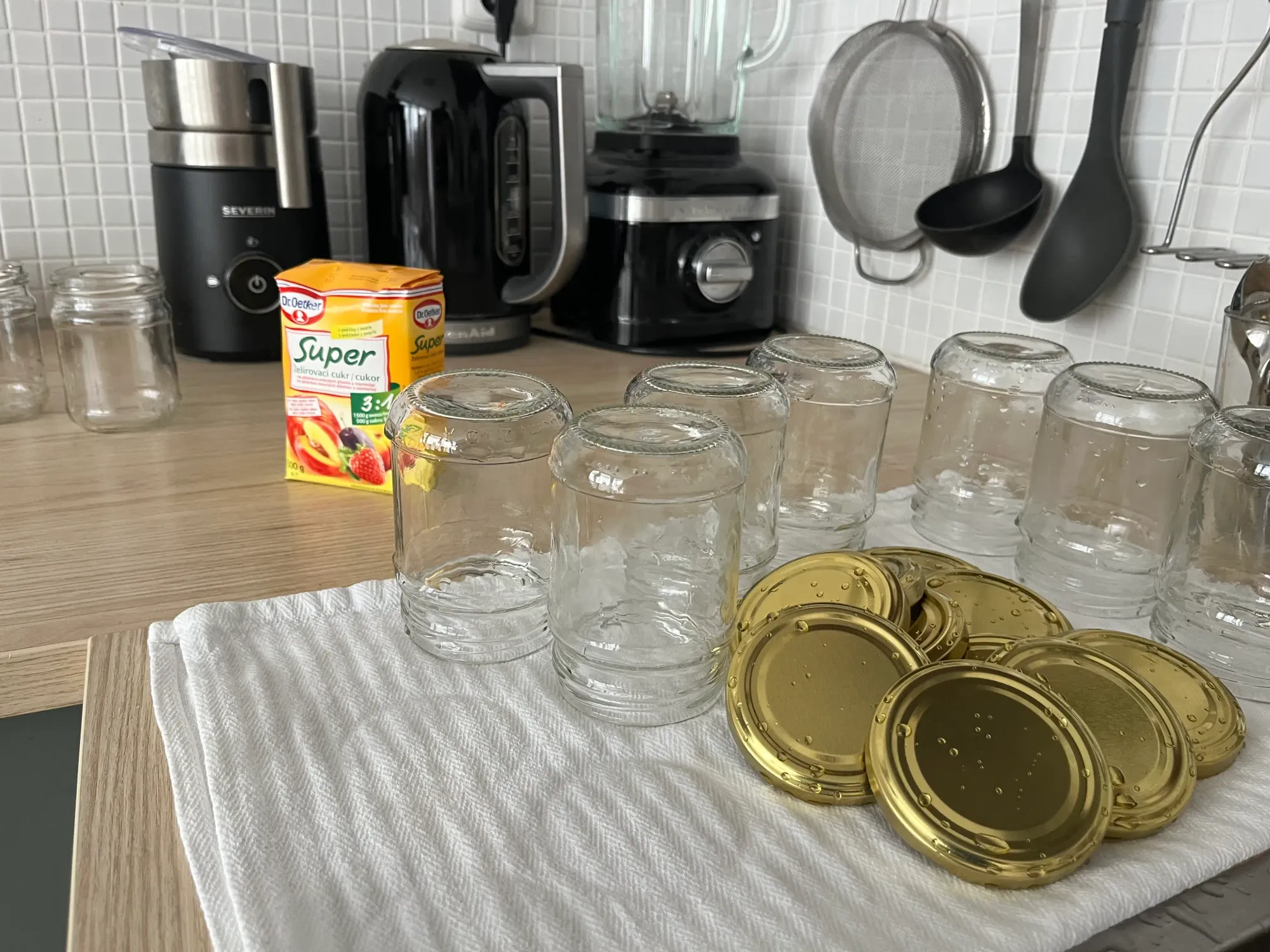
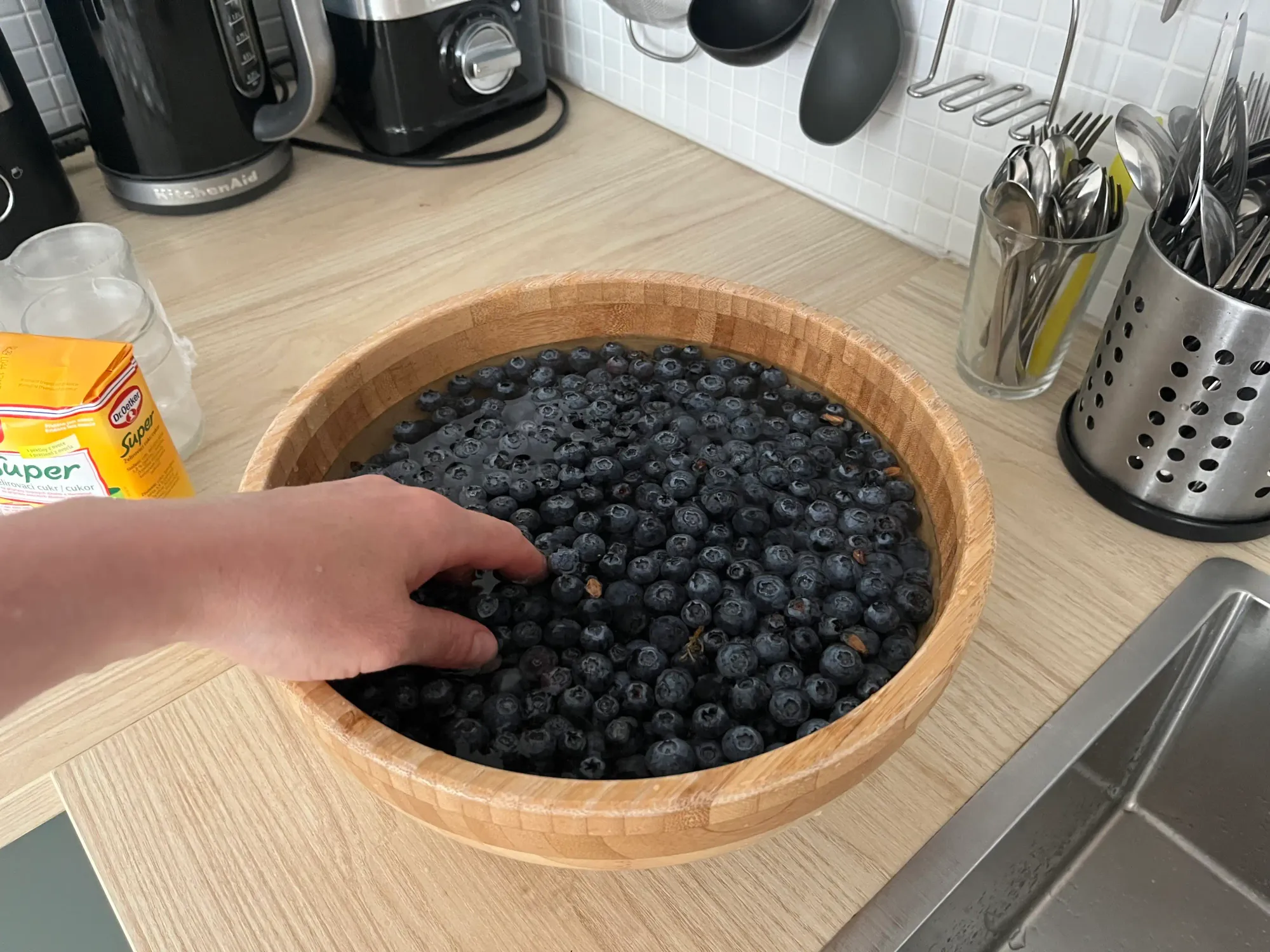
Homemade Blueberry Jam clean jars and fruits
Wash the fruit in water and remove any leaves and twigs.
Weigh as much fruit as you need for your jam on a scale. In my case, 1.5 kg.
Grind the fruit. I personally use an immersion blender, and I always grind the fruit right in a pot, into which I immediately put it after cleaning and weighing the right amount.
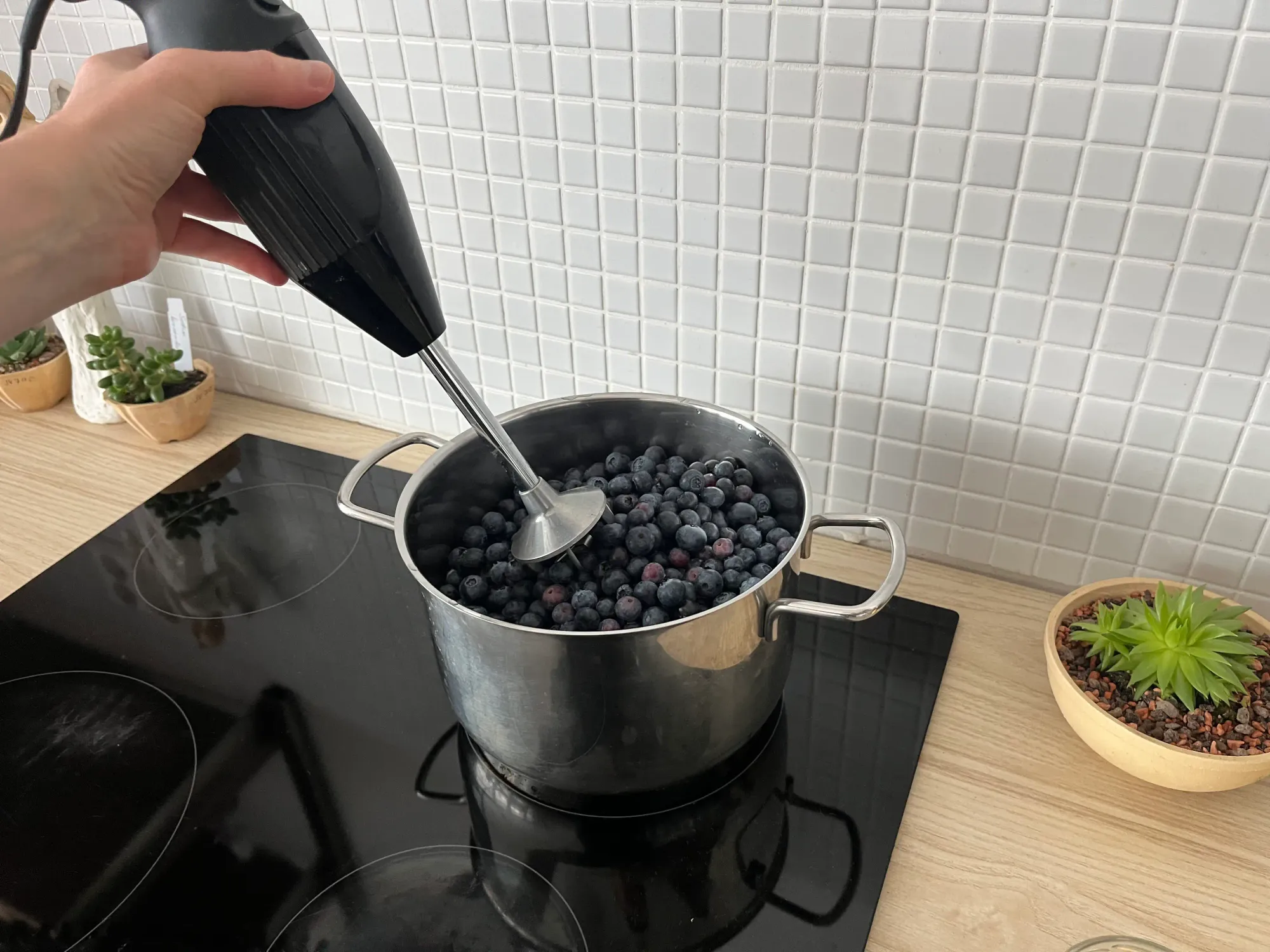
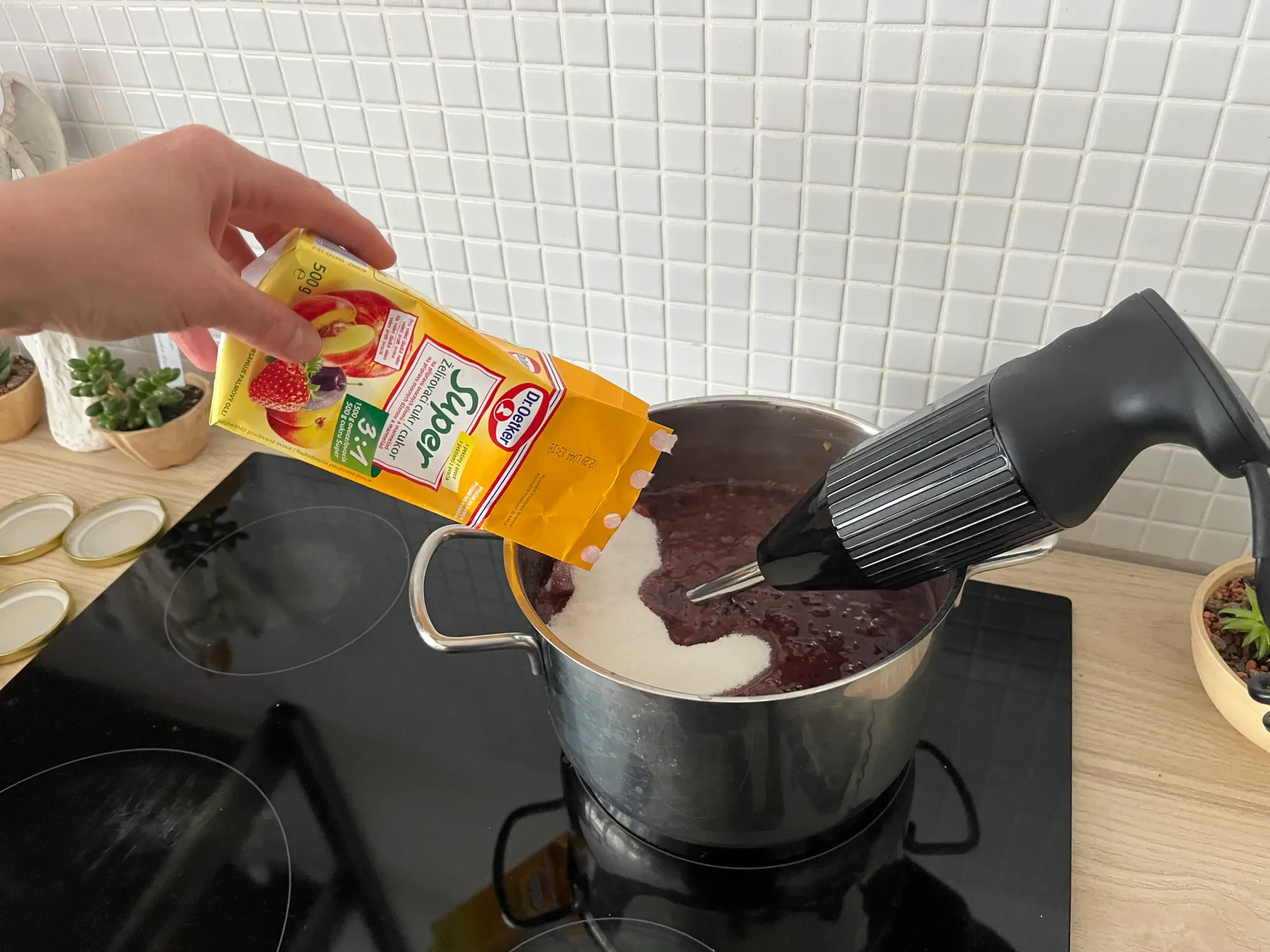
Homemade Blueberry Jam grind fruits and mix it with gelling agent
Mix the ground pulp with the gelling sugar. Mix everything cold and really thoroughly. The gelling agent is added to the cold fruit so that it mixes well. If you add it to hot fruit, it will immediately start to solidify, leaving you no time to mix it well and creating hideous lumps of jelly in your jam.
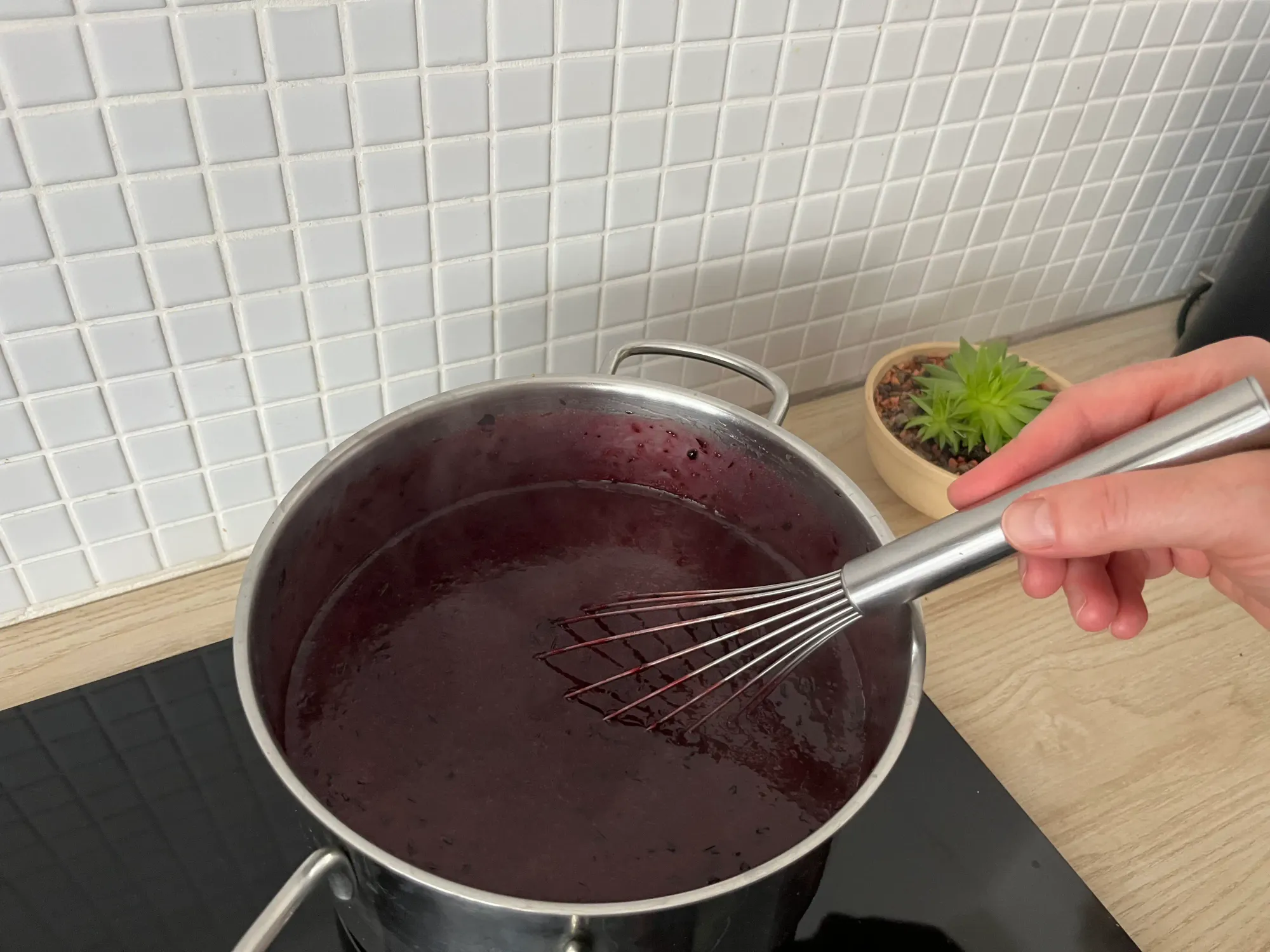
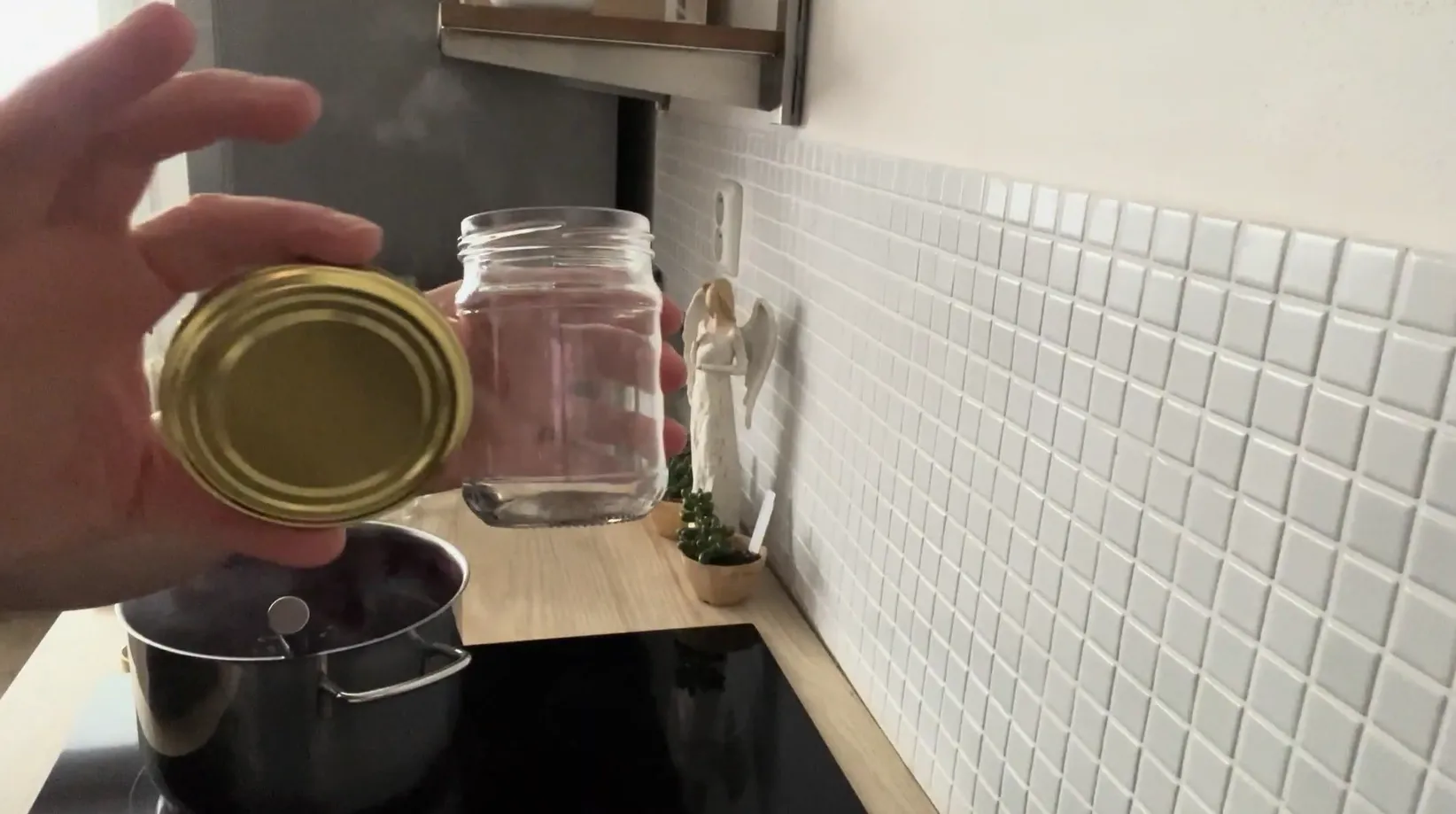
Homemade Blueberry Jam cook for 5 min when starts to buble, after 5 min. fill the prepared jars.
Bring the thoroughly mixed liquid fruit mass to a boil, stirring constantly. Please be very careful here. As soon as the mass gets hotter, it will start to thicken. As soon as the mass starts to bubble, start the 5-minute countdown.
Stir the mass with a whisk for the full 5 minutes while it is bubbling under your hands. The mass tends to stick to the bottom of the pot if you stop stirring for a while. You can lower the cooking temperature slightly; the mass will still maintain a high temperature. Just stir slowly and constantly.
After 5 minutes of cooking, remove from the stove or gas.
Do a little test. Drop a small drop on a saucer. If it thickens within a moment, you've won. If not, you can add a pinch of citric acid. Usually, however, this is not necessary.
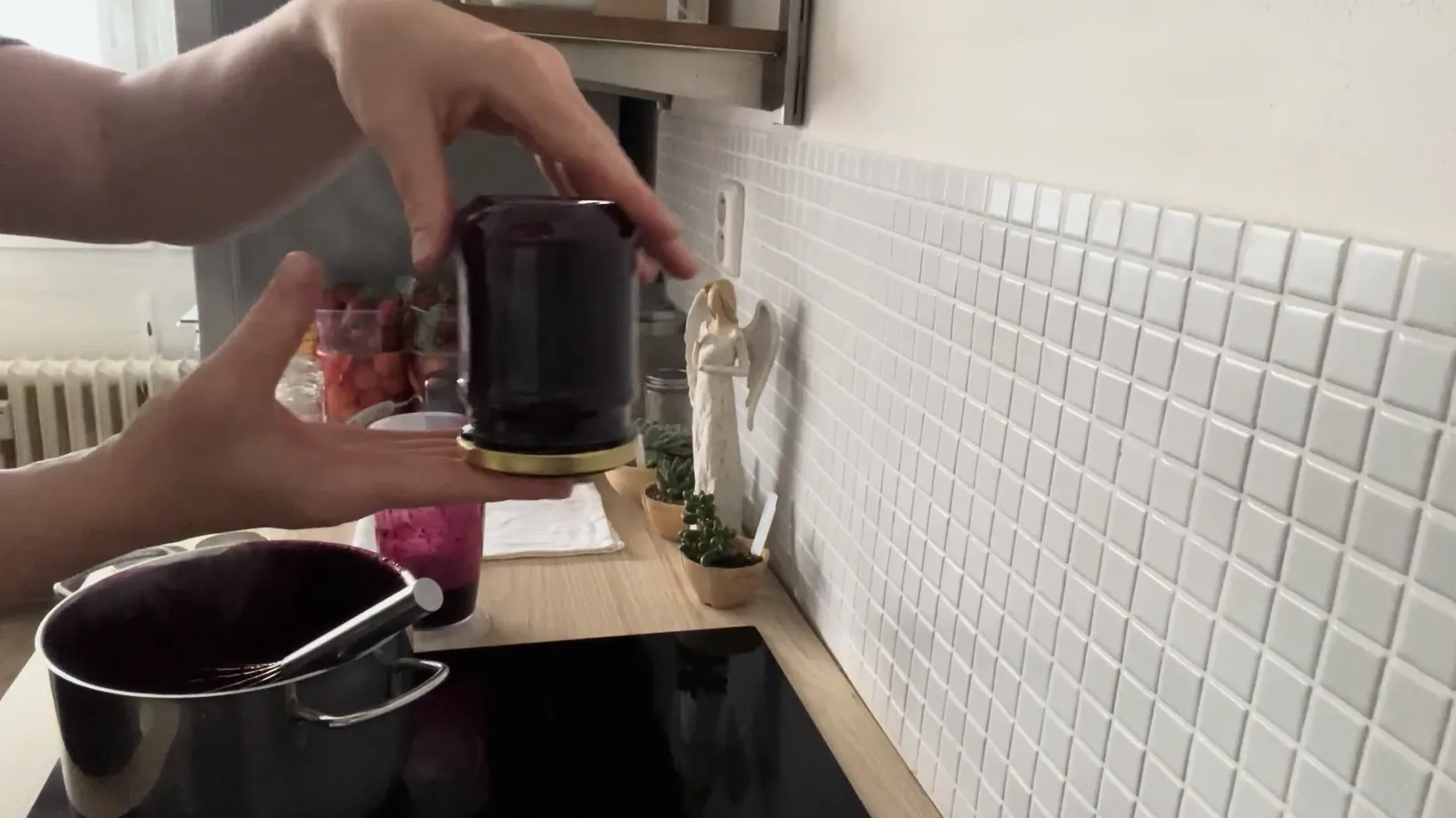
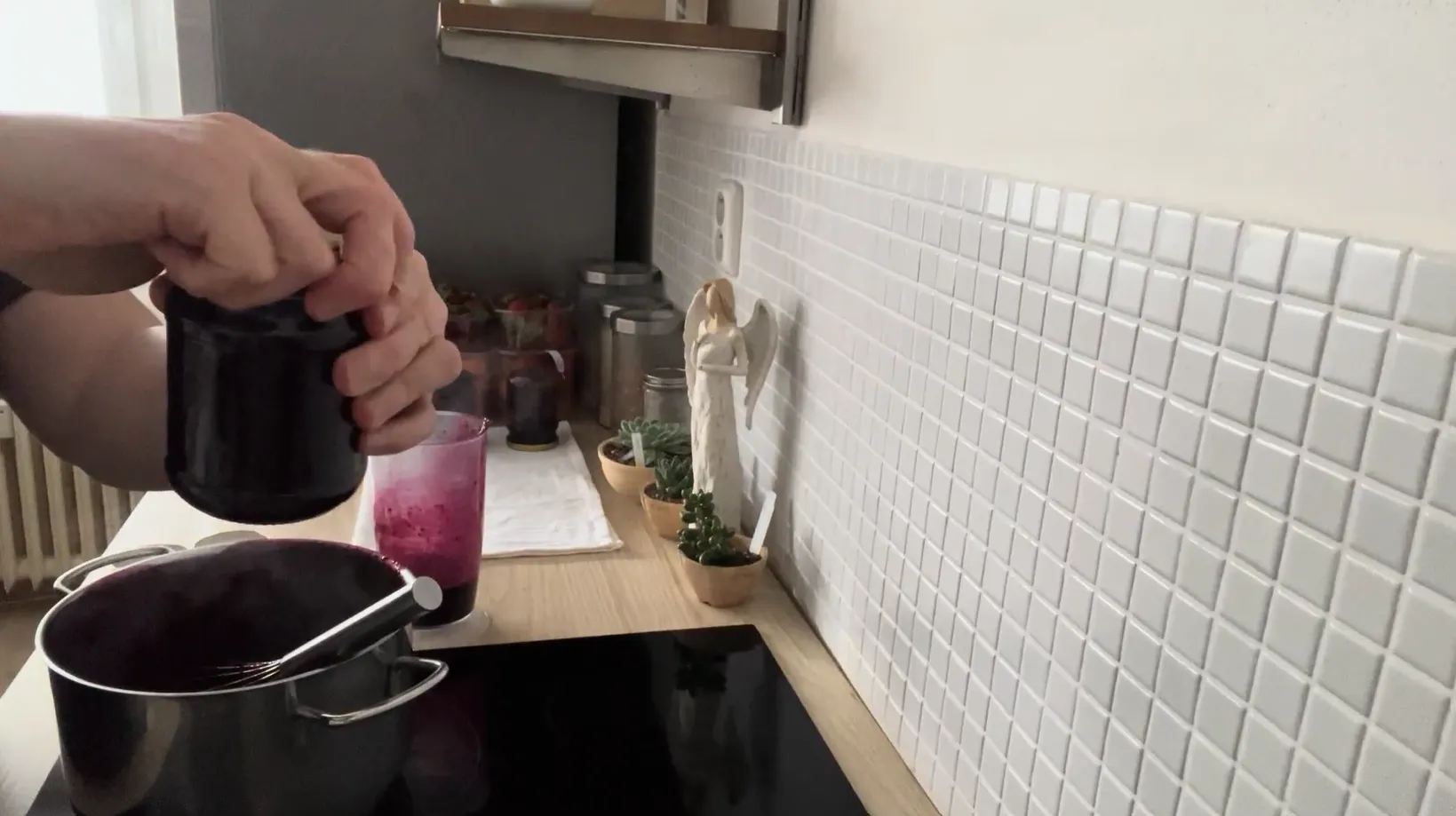
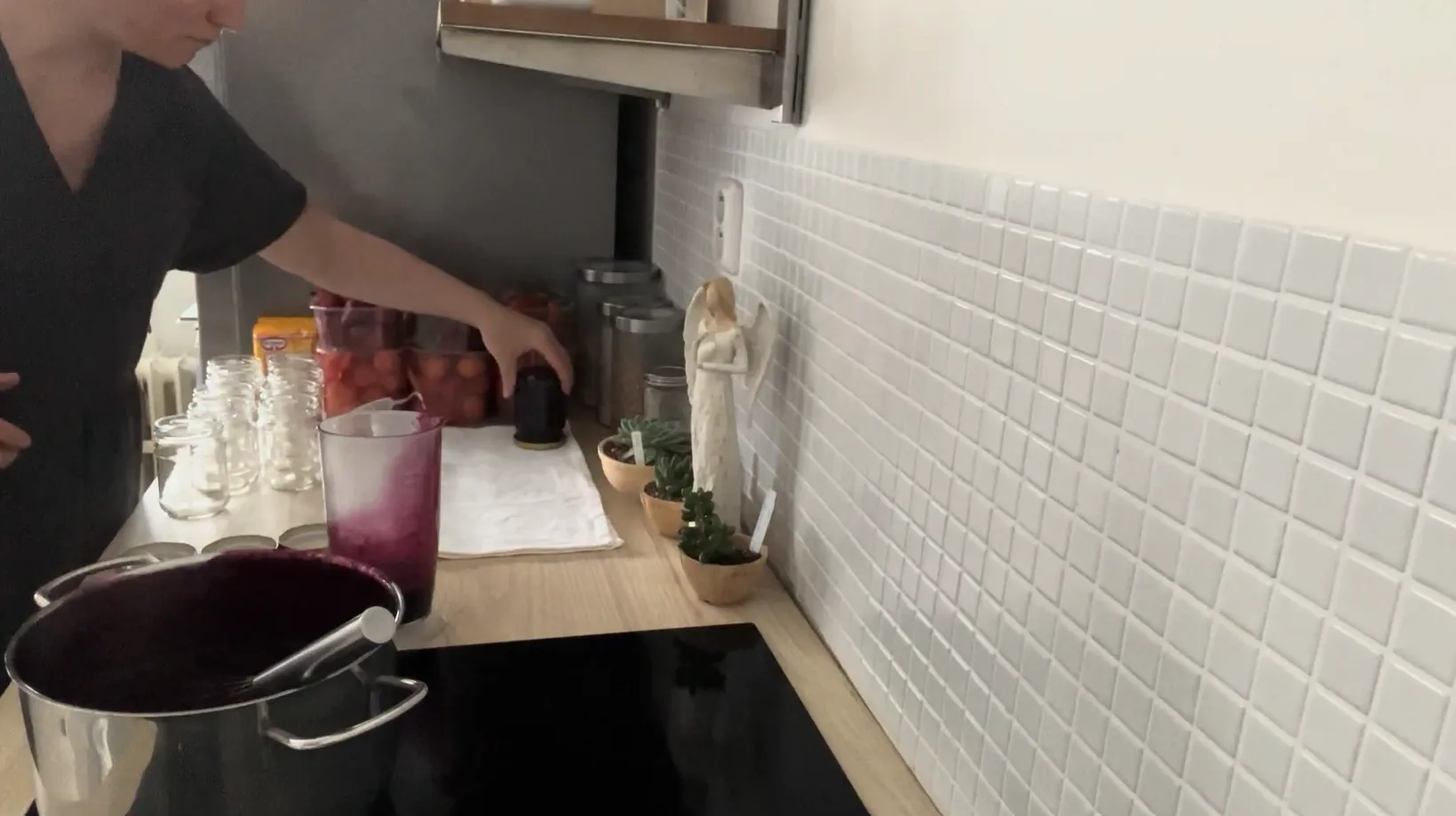
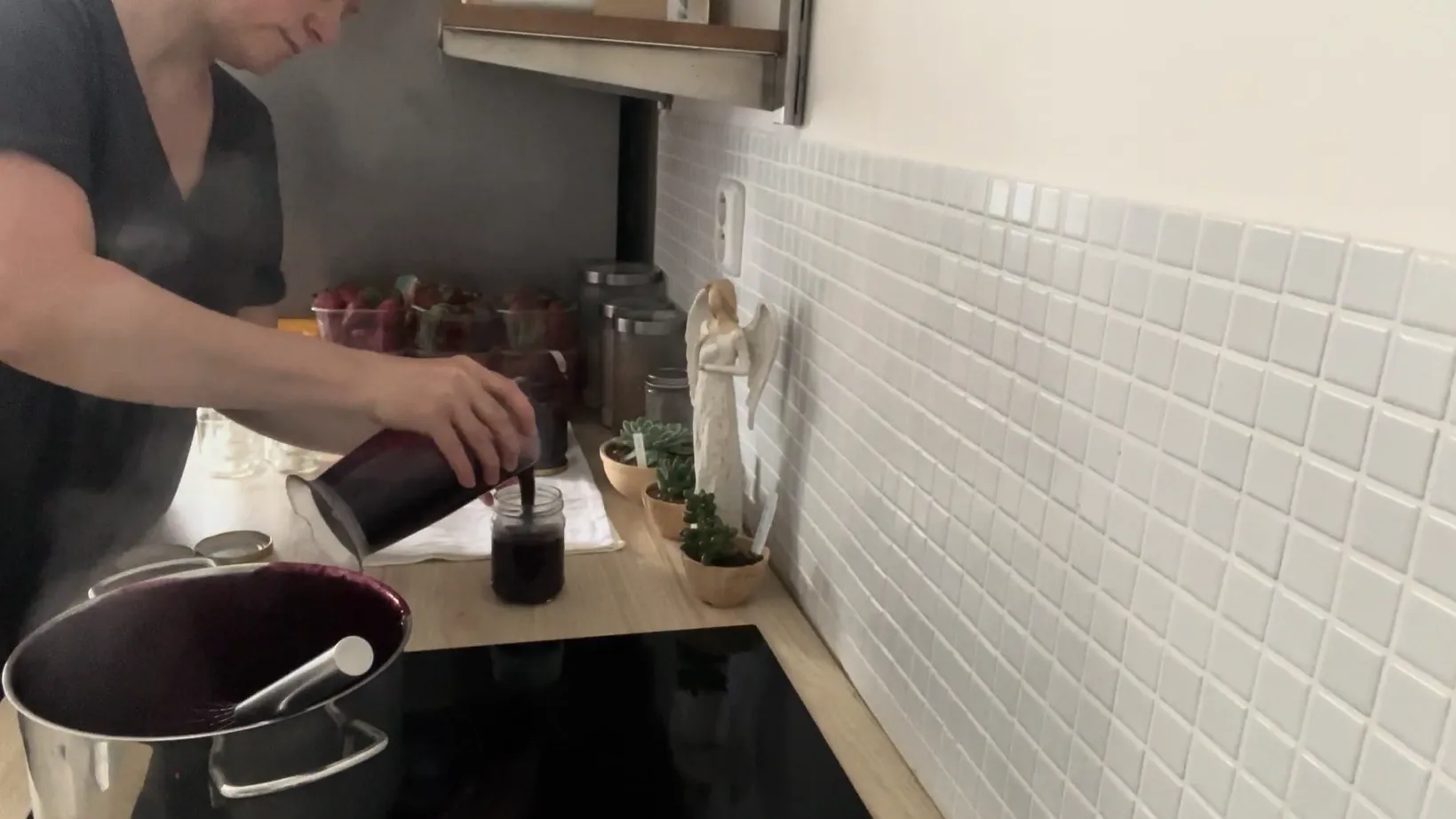
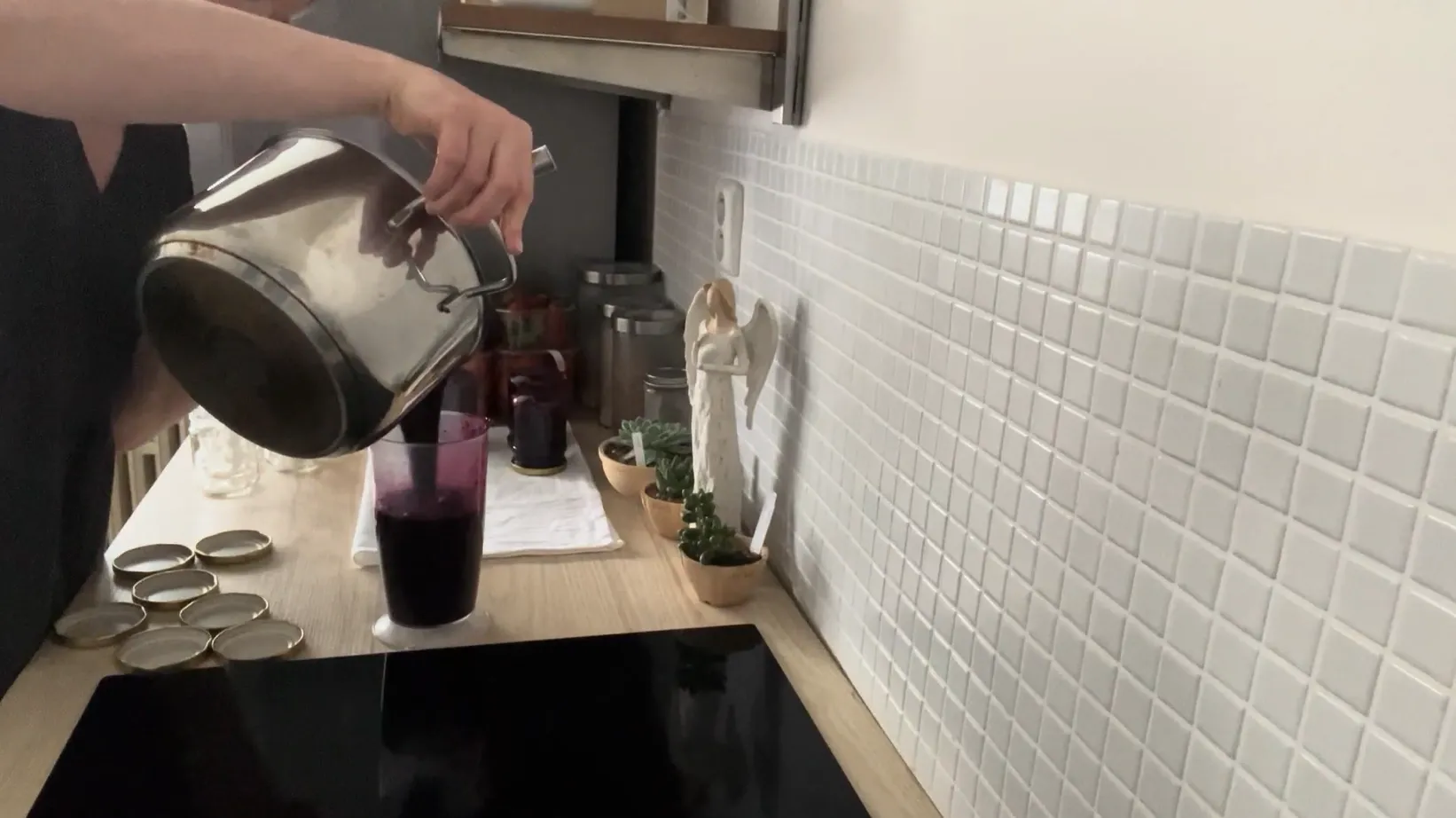
Homemade Blueberry Jam fill the jars quickly
Immediately fill the prepared jars with the mixture, close them, and place them upside down on a towel so the hot jars do not touch your beloved kitchen counter.
Let the jars cool down slowly.
After cooling, you can turn them upside down. If the jam stays upside down in the jar, that's also perfectly fine. At least you know that your jam has set nicely. It has no effect on the taste. Don't worry.
Now all you have to do is serve it.
What do we like to eat blueberry jam with at home? Especially on pancakes. Then we love it on fresh bread with butter. The main thing is to leave some for buns and Christmas cookies. But more on that another time. 🥰