Table of Contents
One of my biggest wishes was to sew my own coat or cape using Loro Piana cashmere, the ultimate name in "quiet luxury."
I wanted this so much because, in photos in fashion and business magazines, I saw the elegant sheen and sophistication of their pieces, garments that exuded quality without screaming a logo. That is exactly what I adore. We don’t need to shout with logos to be noticed.
Their premium materials speak for themselves.
What Makes Loro Piana Fabric the Pinnacle of Quiet Luxury?
Six Generations of Italian Textile Mastery
The Loro Piana brand has been on the fashion market for over 100 years. It has seen its ups and downs, yet it has always maintained superior textile quality. Setting aside the brand’s history and tradition to focus purely on the material itself, I was pleasantly surprised to learn that Loro Piana controls its entire production process, from the pastures in Mongolia and the Andes to the final weaving mills in Italy. This brand doesn’t just source its materials for its garments from different factories or mills based on price and appearance. Instead, it oversees the highest possible quality of its future products right from the start. Discovering this warmed my heart, as it showed that the brand is built on values, not just on profit. Marketing has its own role here, and I don’t intend to debate pricing or the company’s specific cost, but I find it fascinating that, for Loro Piana, the material and its quality serve as a signature, effectively replacing the need for a logo.
Unrivaled Raw Materials
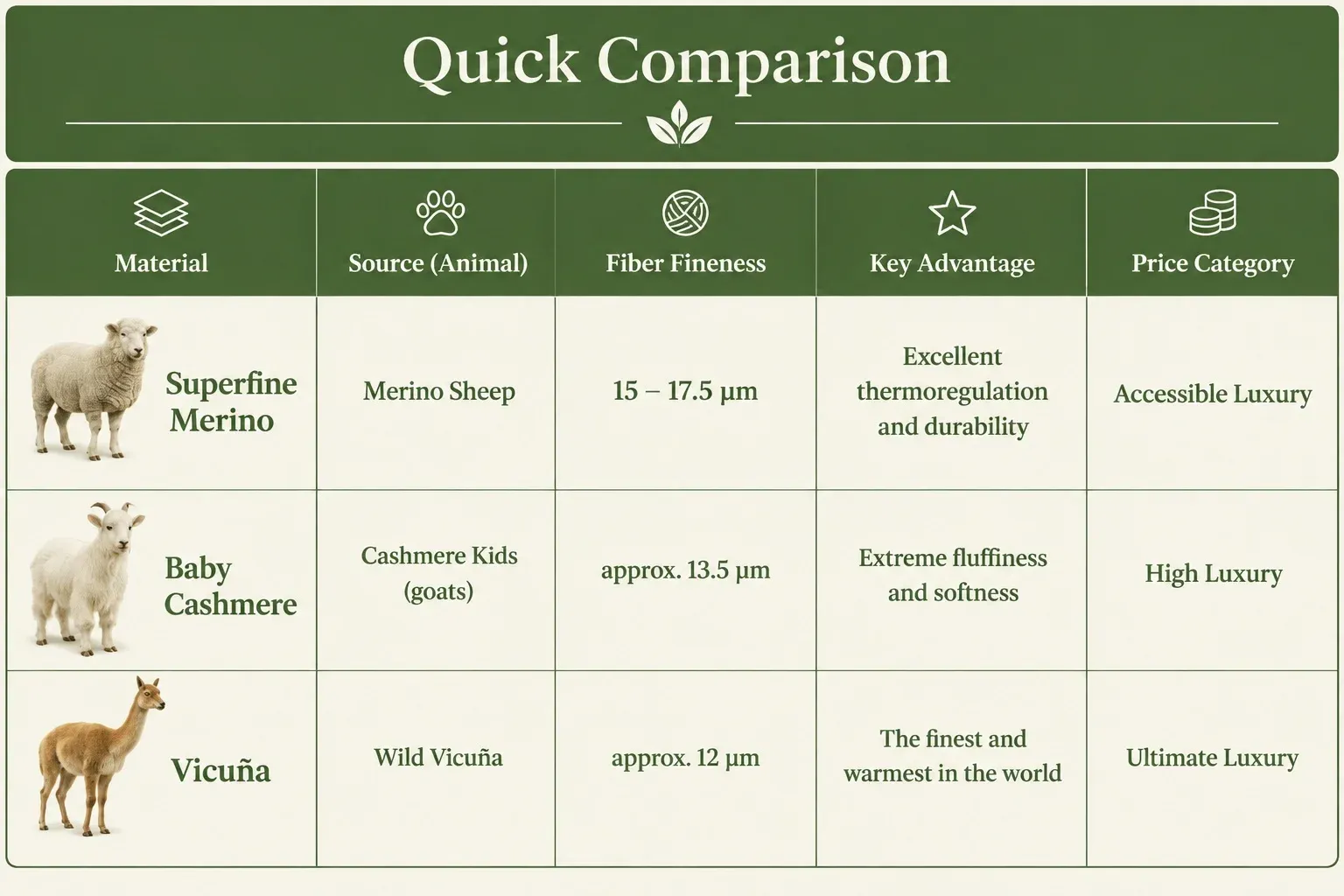
When I was researching which material to choose for the cape I’m planning, I had to do a bit of my own exploring. To make things easier, I’ve put together a clear comparison table.
"Super Merino" is wool from the Merino sheep breed. Compared with the other two materials, it offers less warmth, but it's an accessible, luxurious option. Most standard coats found in stores are either blends or made primarily from synthetic fibers, which provide very poor insulation. Merino, by contrast, is a natural material that offers significantly better thermal insulation than synthetics. Although it is considered a rather exclusive material, it can now be produced on an industrial scale, making Merino wool relatively easy to source for a coat.
It is a 100% natural material and, among the three options discussed here, Merino wool is the most affordable.
"Baby Cashmere" is exceptionally fine, perfectly smooth, and exquisite to the touch. While standard cashmere comes from adult Kashmir goats, Baby Cashmere comes from a rare undercoat combed exclusively from kids (young goats) under one year old. The fibers are incredibly thin, which makes the material so soft and smooth. The term "Baby Cashmere" indicates that the material is approximately 20% finer than standard cashmere. Anything crafted from this material feels perfect to the touch: smooth, with a subtle sheen, and offering excellent thermoregulation. What surprised me most is that each young goat can be combed this way only once, yielding about 30 grams of clean material. Consequently, if you are holding a piece of "baby cashmere" fabric, you are holding a very rare material that offers warmth and protection, regardless of the weather outside. This material was popularized, among others, by the brand Loro Piana.
"Vicuña" for me personally, vicuña is an entirely new material; I hadn’t even heard of it before. It is an exceptional material obtained by shearing the coats of wild vicuñas that inhabit the high-altitude regions of the South American Andes. By all accounts, this fiber is the finest in the world. Vicuñas cannot be farmed; they must live in the wild. They are captured and shorn only once every two to three years due to quotas. This is why the material is so rare and nearly impossible to acquire. It represents the absolute pinnacle in both quality and price. A standard vicuña wool sweater can cost over 3,000 EUR, while a winter coat can easily reach 20,000 EUR. Given its unique properties and origins, this material is not widely available.
The Longevity and Heritage Quality of the Loro Piana Brand
As I’ve mentioned, Loro Piana builds its foundation on material quality, overseeing the entire process, from the pastures to handing the bag containing a sweater or coat directly to the client. The craftsmanship is absolutely top-tier. The seams are flawless, the fit is incredibly precise, and, above all, everything is timeless. I have heard people describe the brand as "boring" or "bland", though usually from those who dress strictly according to the latest trends. In my view, having timeless pieces in one’s wardrobe is wonderful. It lets us focus on other, more important matters, since we feel comfortable in well-fitting clothing; personally, I couldn't care less what others think about the pattern on my dress. I am true to myself, and I don’t feel the need to justify my choices to anyone.
Quality matters to me. When I purchase Loro Piana fabrics, which admittedly fall into a higher price bracket, it is because the material is superior and the patterns will remain fashionable even 20 years from now. That is why I love this brand. It doesn't succumb to fast-fashion trends; it is a classic. When I sew, I want the result to last a long time while still feeling comfortable to wear.
Coat vs. Cape
You might think that cutting into such a luxurious fabric would be the real challenge. In truth, the daunting part isn't the cutting itself, but rather choosing the right garment design to create from it.
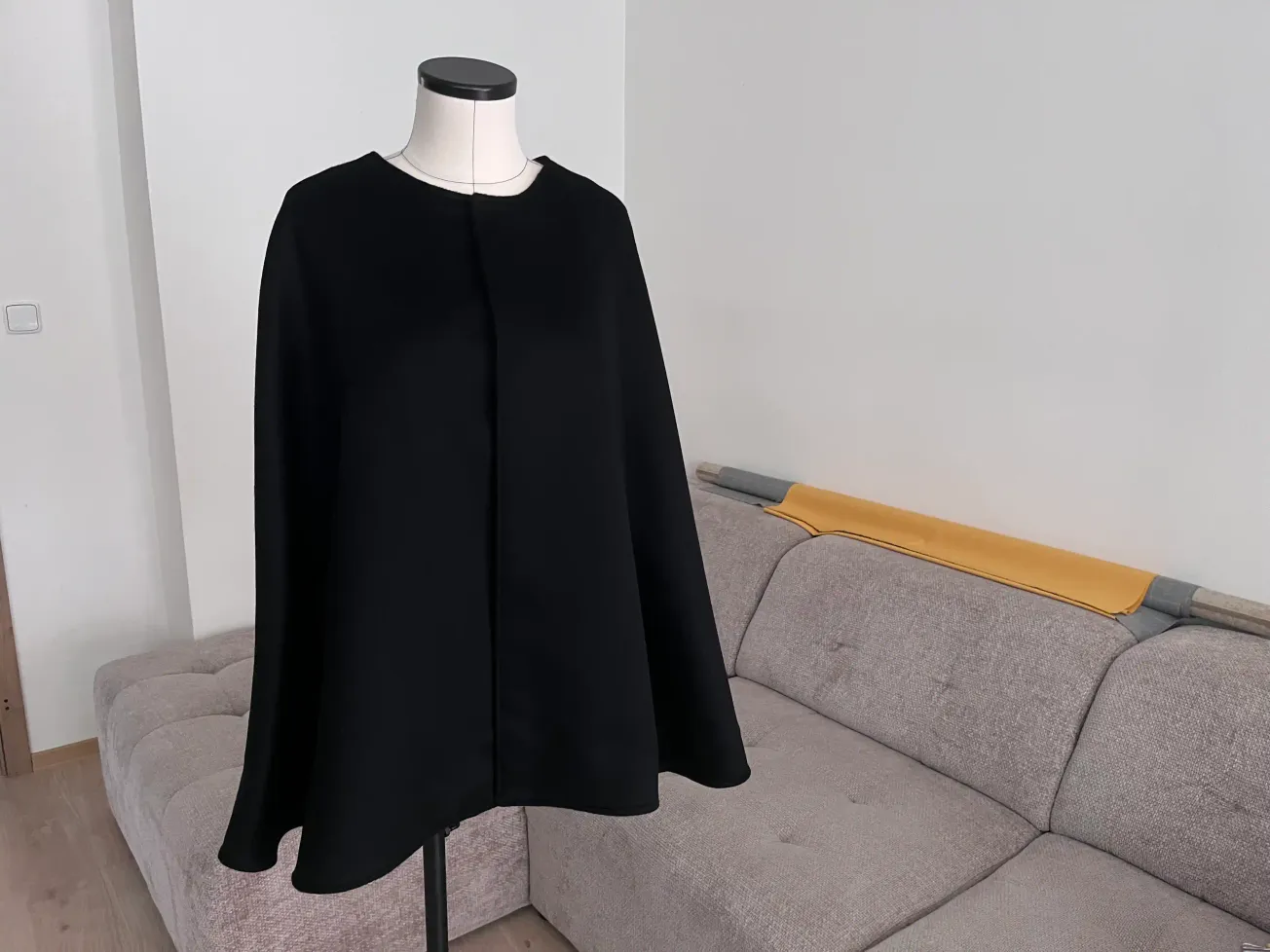
Whether to choose a coat or a cape depends, in my opinion, on where you plan to wear it. If you want to be wrapped up in warmth, a coat is the ideal choice. If, on the other hand, you prefer freedom of movement, go with a cape. I chose to sew a cape; my goal wasn't to create a piece for deep winter, but rather for autumn—and a cape won't cause me to overheat. Furthermore, the loose cut beautifully showcases the fabric’s drape—a quality that would be lost in a coat.
Both options are elegant and guaranteed to turn heads. However, for autumn weather, I find a cape more comfortable.
That said, this is purely my own subjective opinion. I’d love to sew a coat for winter as well, we’ll see if I manage to get around to it!
What It’s Really Like to Sew with Loro Piana Fabric
My personal experience with Loro Piana fabric has definitely convinced me to purchase more materials from this fashion house in the future. Yes, the price might deter some, but it’s worth viewing certain garments as an investment, using the logic of "cost per wear." The materials we wear say a lot about us; polyester and premium cashmere are two entirely different worlds. I’ll admit I can’t afford to buy fabric for a dress from this brand every week; however, I don’t regret investing in a timeless wardrobe, as I curate my collection with a long-term perspective. I believe that, every once in a while, it is perfectly fine to invest in yourself and treat yourself to something special.
Cutting, Stitching, and Finishing: My Sewing Process
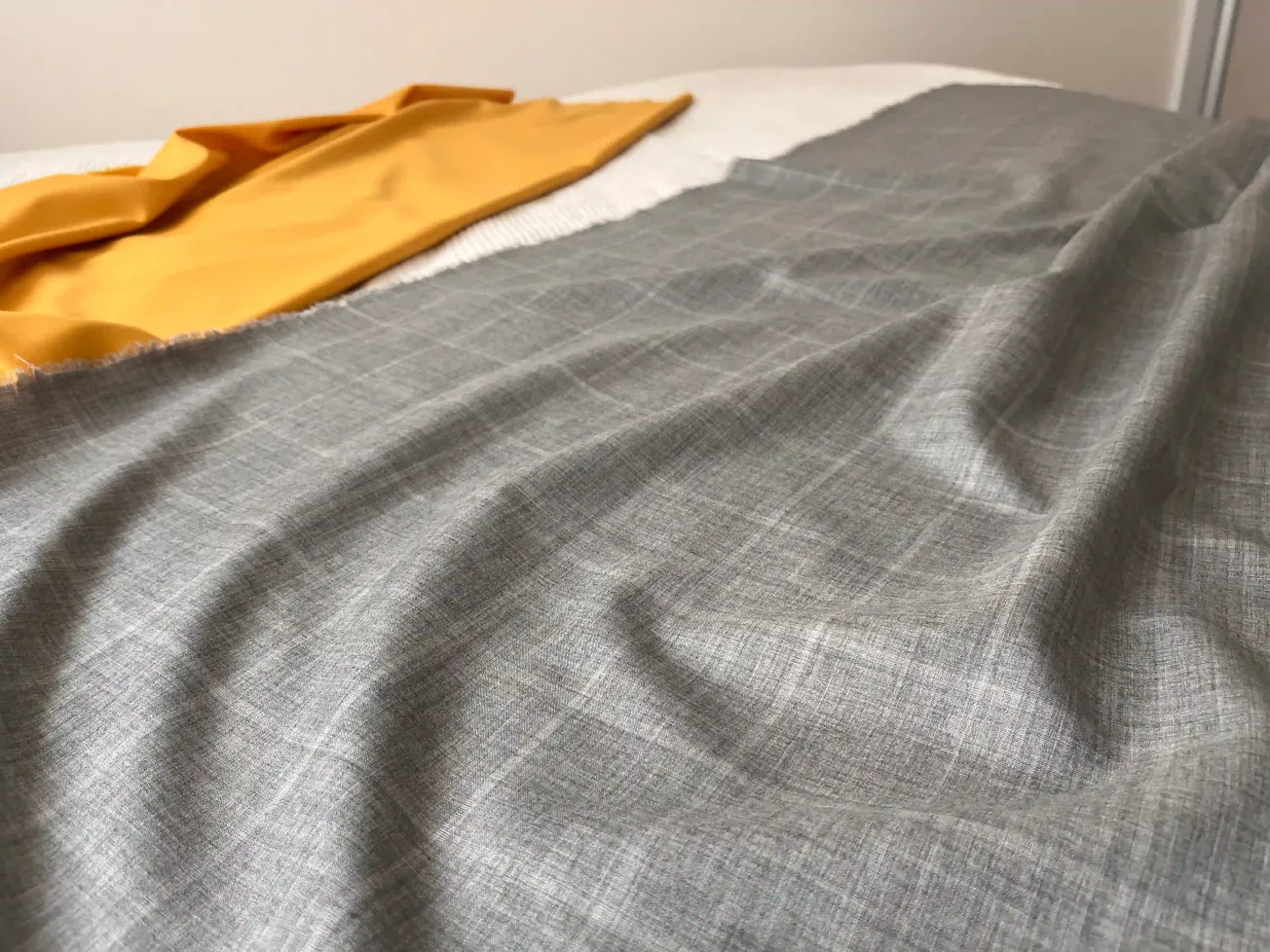
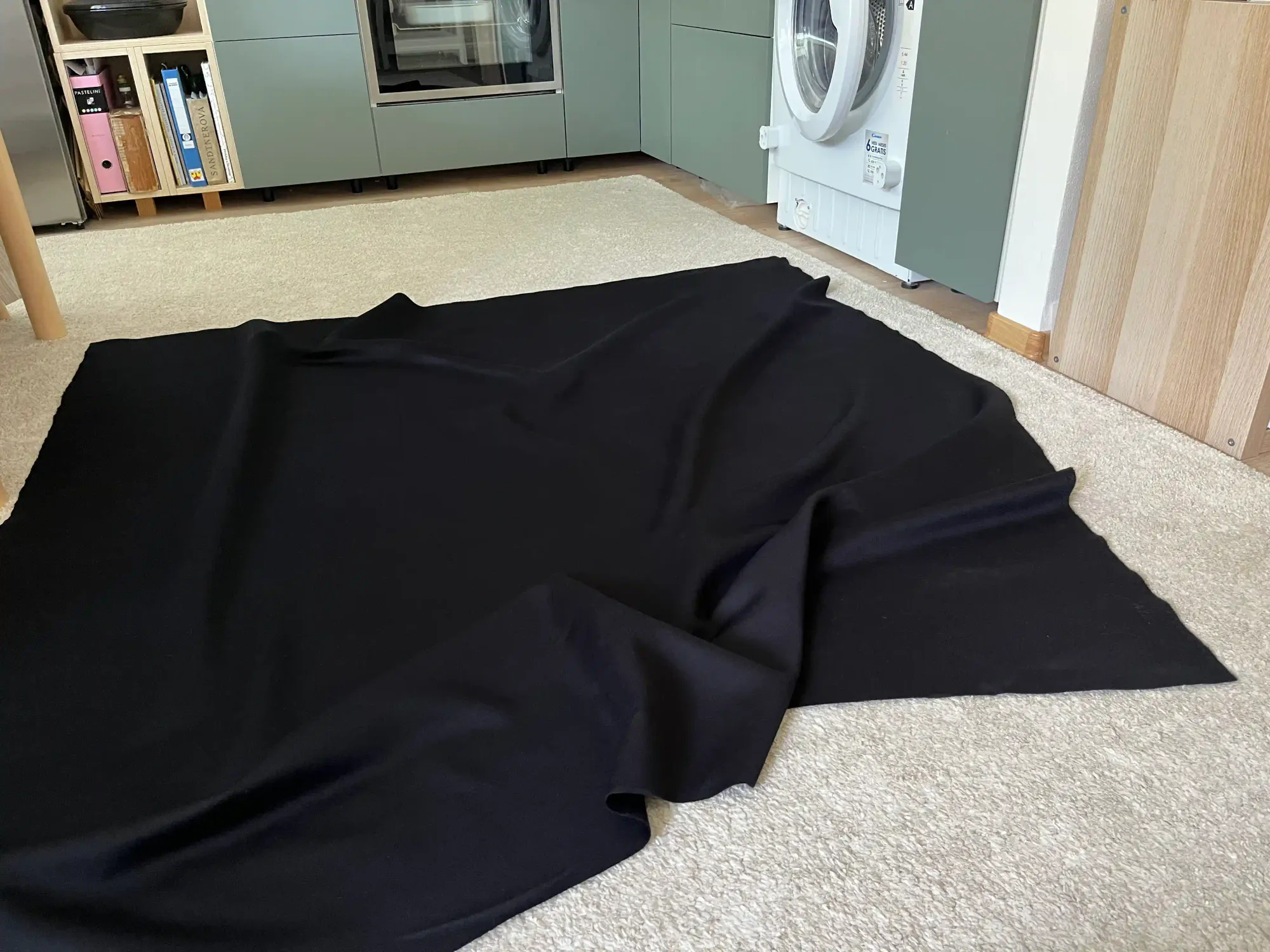
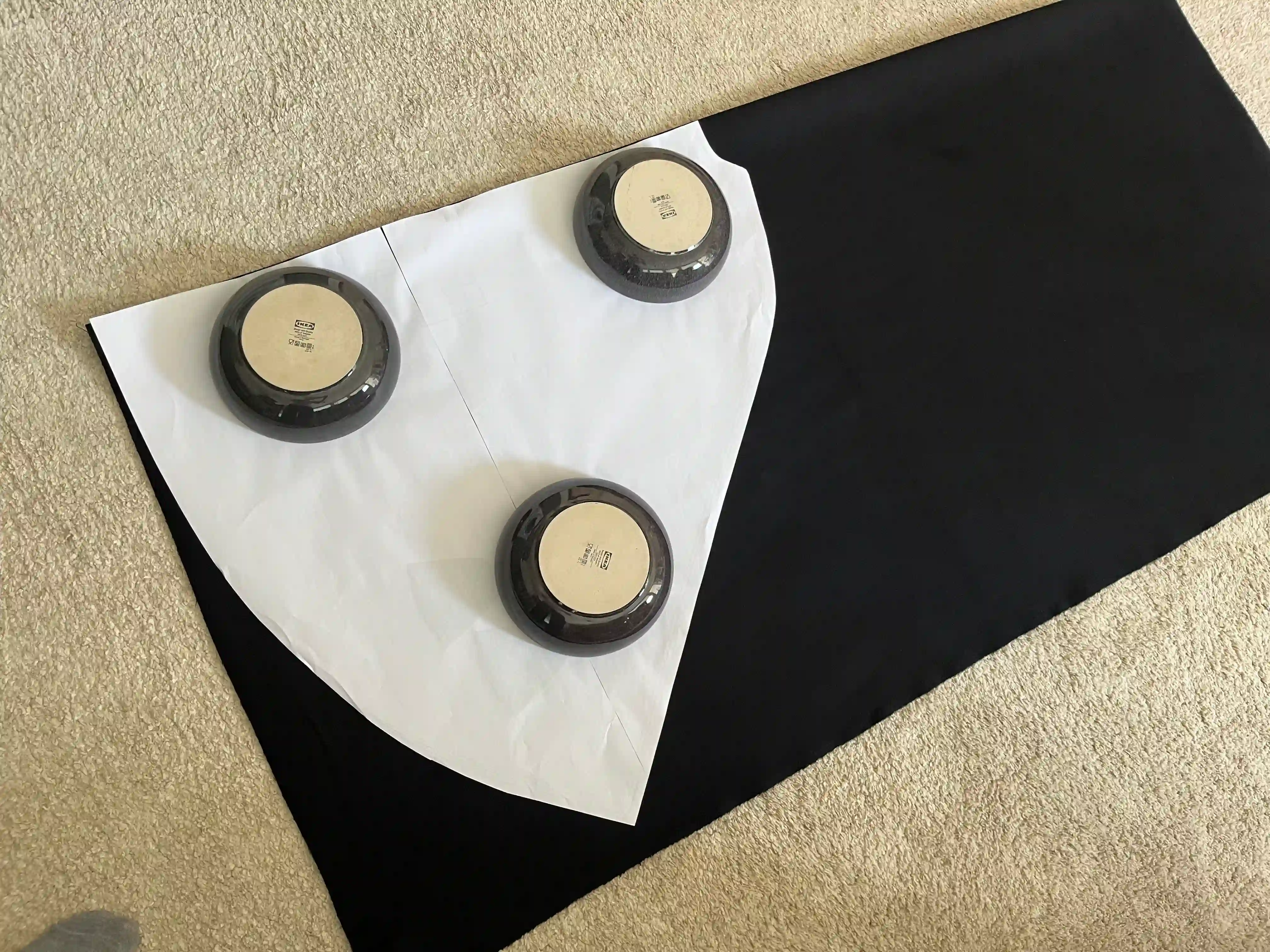
I was pleasantly surprised by how easy this fabric is to work with. I love the delicate sound it makes when being cut, hearing the scissors slice through individual fibers is, for me, a deeply satisfying form of ASMR. The sound of the shears moving through the fibers is almost therapeutic; it is the very essence of "Quiet Sewing." The fabric doesn’t stretch or shift while you work; it is beautifully soft and delicate. In fact, the tactile experience was so lovely that I almost didn’t want to sew; I just wanted to keep touching it! It is incredibly soft and elegant. When I was cutting out the pattern, the fabric didn’t slip or slide at all; it held its shape perfectly.
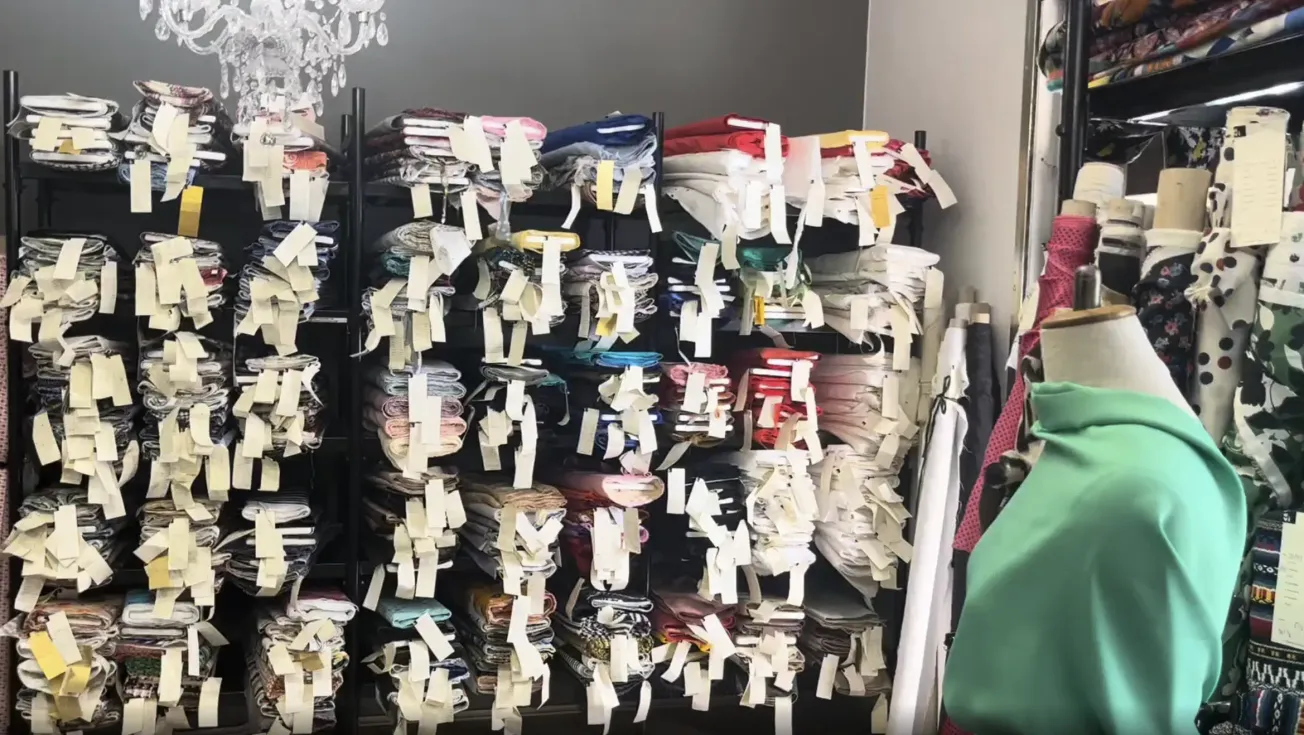
When I first saw the fabric in the store, I was completely captivated by its subtle, elegant sheen. It is immediately apparent that Loro Piana cashmere is in a league of its own, far superior to the polyester coats one might buy (complete with a brand logo) for roughly the same price as the yardage of this pinnacle of "quiet luxury." That was the most shocking realization for me: Loro Piana fabric isn’t actually all that financially out of reach for the average person; it simply requires an additional investment: the handiwork itself. After cutting out the individual pieces, I began working on the cape.
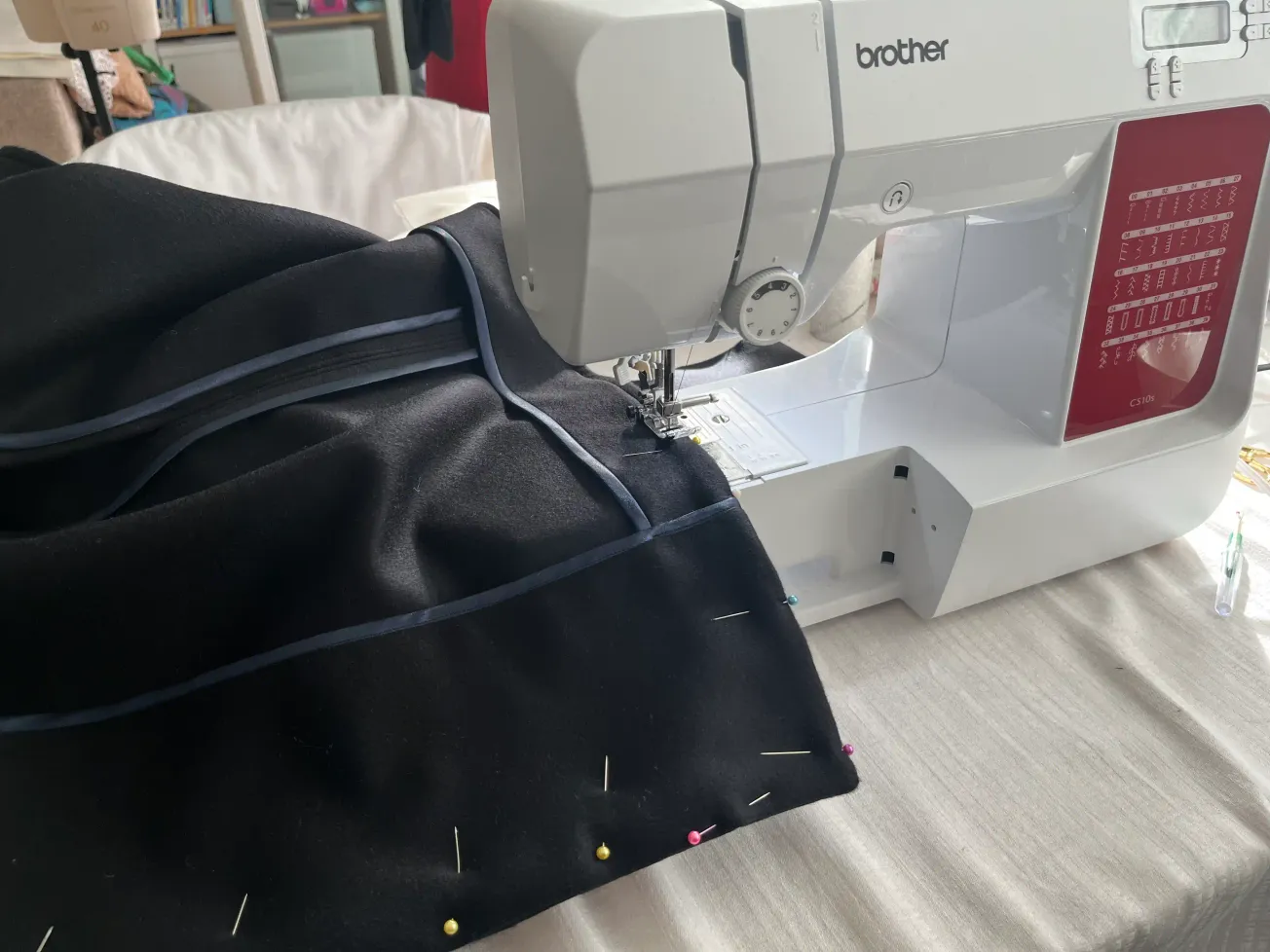
I finished all the edges with a Hong Kong seam; with such a luxurious fabric, I wanted the construction to reflect that quality. I deliberately chose a dark, night-sky-colored satin bias binding. If I were to make another piece using this or a similar fabric, I wouldn't hesitate to use chocolate brown, black, or, for a feminine touch, even baby pink.
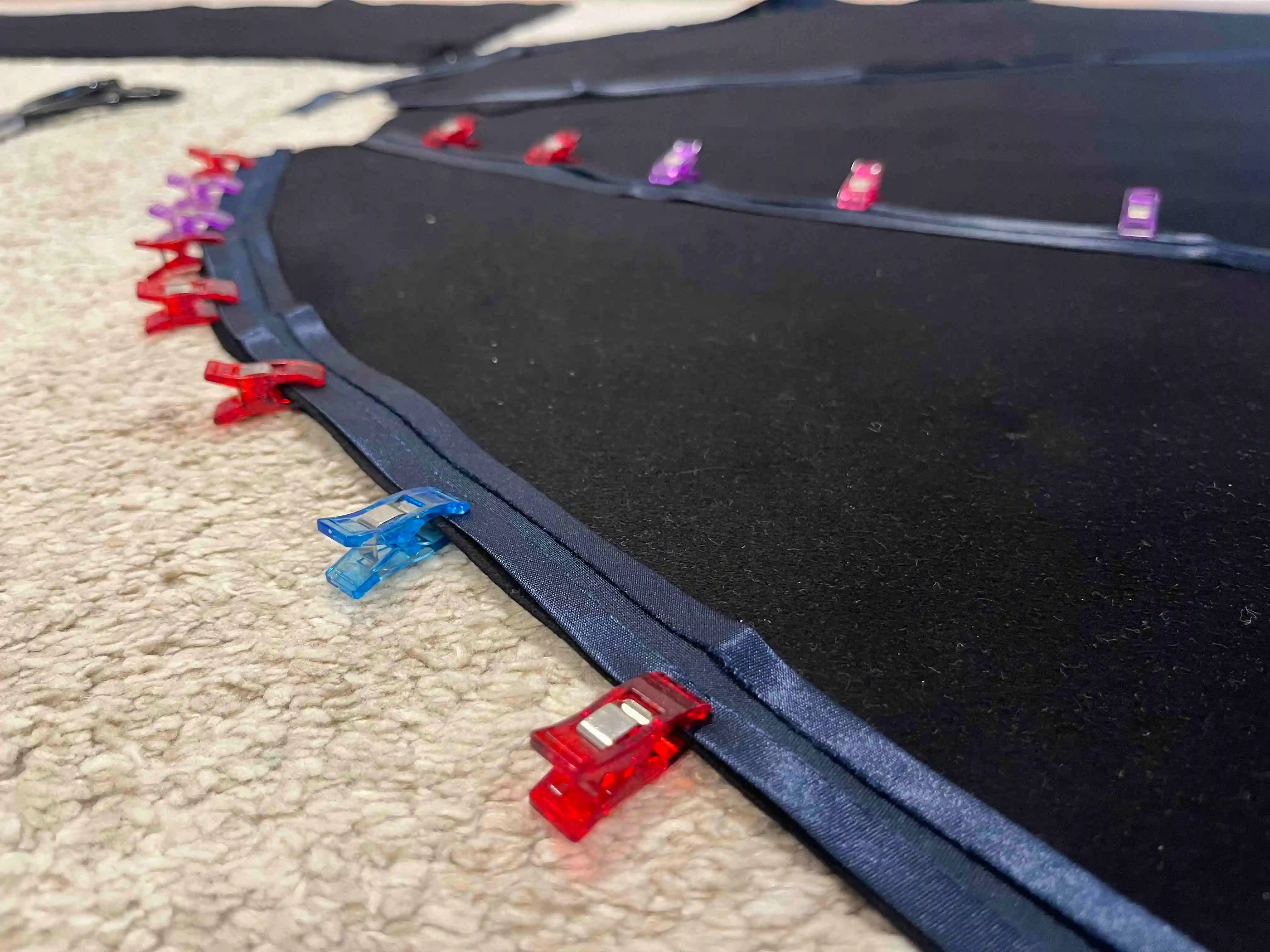
In any case, I would definitely stick with satin bias binding to ensure the coat or cape looks just as premium on the inside as it does on the outside. Using standard bias tape or an overlock stitch would detract from the overall elegance.
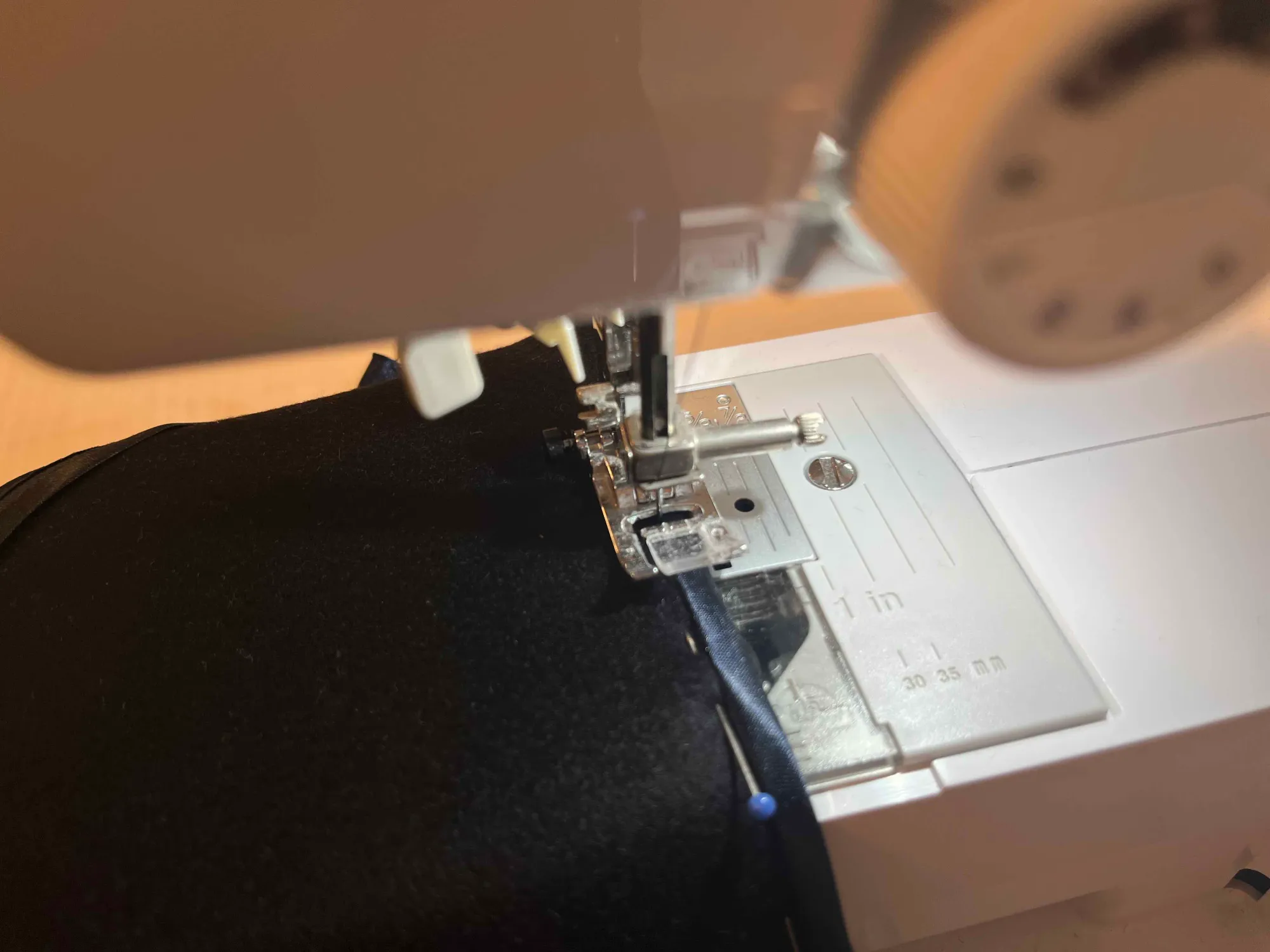
The Loro Piana cashmere runs perfectly under the sewing machine presser foot. The fabric never snagged or got tangled with the thread; it fed through the machine smoothly and naturally from the very first stitch. I breathed a huge sigh of relief when I discovered that the fabric was completely natural and easy to work with. I felt more confident and realized I had nothing to fear; I worked with this fabric without any issues, even though I am not a professional seamstress.
A pleasant surprise awaited me as I began putting the finishing touches on the cape. I ironed the fabric on the lowest heat setting, using a pressing cloth (a piece of plain cotton fabric that I keep specifically for ironing delicate materials).
I carefully pressed the fabric through a press cloth and then refined its final shape. If you plan to sew with cashmere, avoid using steam in combination with the pressure of a hot iron. You may press through a press cloth, but never apply steam directly. If you wish to use steam, apply it while holding the iron slightly above the surface, then follow up with a wooden tailor’s clapper. This method works for me, and it is also the technique I’ve seen used by professional tailors. Even when pressed gently through a cloth, the fabric releases a scent; I absolutely love it. It is very subtle, natural, and clean.
Since I was working with double-faced cashmere, I omitted an inner lining. I finished the edges with binding and left the interior unlined, letting the fabric's beauty truly shine. I know that experienced seamstresses typically work with double-faced cashmere by separating the layers at the edges, folding the ends inward, and securing them with an invisible hand stitch. Since I haven’t used this technique before, I decided to practice it on fabric scraps; for now, I’ve finished my cape using satin bias binding to ensure a fantastic result.
If I had to choose between buying a polyester coat for winter or purchasing yardage from Loro Piana, the choice is clear: I would choose the Loro Piana fabric and sew a winter coat or cape myself.
A standard home sewing machine can handle this fabric beautifully, allowing you to create a high-end piece for less than ten percent of the boutique price of a finished garment.
Frequently Asked Questions (FAQ)
Can original Loro Piana fabrics be purchased by the meter?
Yes, Loro Piana releases both deadstock fabrics and full rolls, intended for tailoring salons and general retail, into the retail market. However, these fabrics aren't available in typical fabric stores; you can only find them through a select network of top-tier fabric retailers and boutiques. I have noticed, for instance, that some sellers mark up prices extremely high, while others, in different countries, offer them at rates that are more reasonable for us mere mortals. It really comes down to finding the right shop. Loro Piana has a dedicated "textile" division that manages and develops this distributor network.
How much fabric is needed for a luxury coat or overcoat?
It depends largely on the cut. A long, voluminous coat might require 4 or 5 meters. For a cape, I needed 2.5 meters of standard-width fabric.
How should one care for a handmade Loro Piana cashmere coat?
Cashmere should not be washed. If absolutely necessary, take it to a dry cleaner at the end of the season. For routine maintenance, simply letting it air out in fresh air is enough; I also find it effective to hang the coat in a humid bathroom after a bath, leave it there for a while, then move it to a balcony to dry completely. If there is any lint or dust on the coat, I personally use a natural-bristle hairbrush to clean it. I have one I bought specifically for coats (even though the instructions say it’s for hair). With a gentle sweep of the bristles, the coat is instantly clean.
Have you ever worked with cashmere or luxury wool, or are you still gathering the courage to make the first cut? Let me know in the comments!
And stay tuned by creating a free account so you get all the news directly in your email.
I’ll be sharing the free pattern and video tutorial for this exact cape very soon!
Have a great day
Dana