Table of Contents
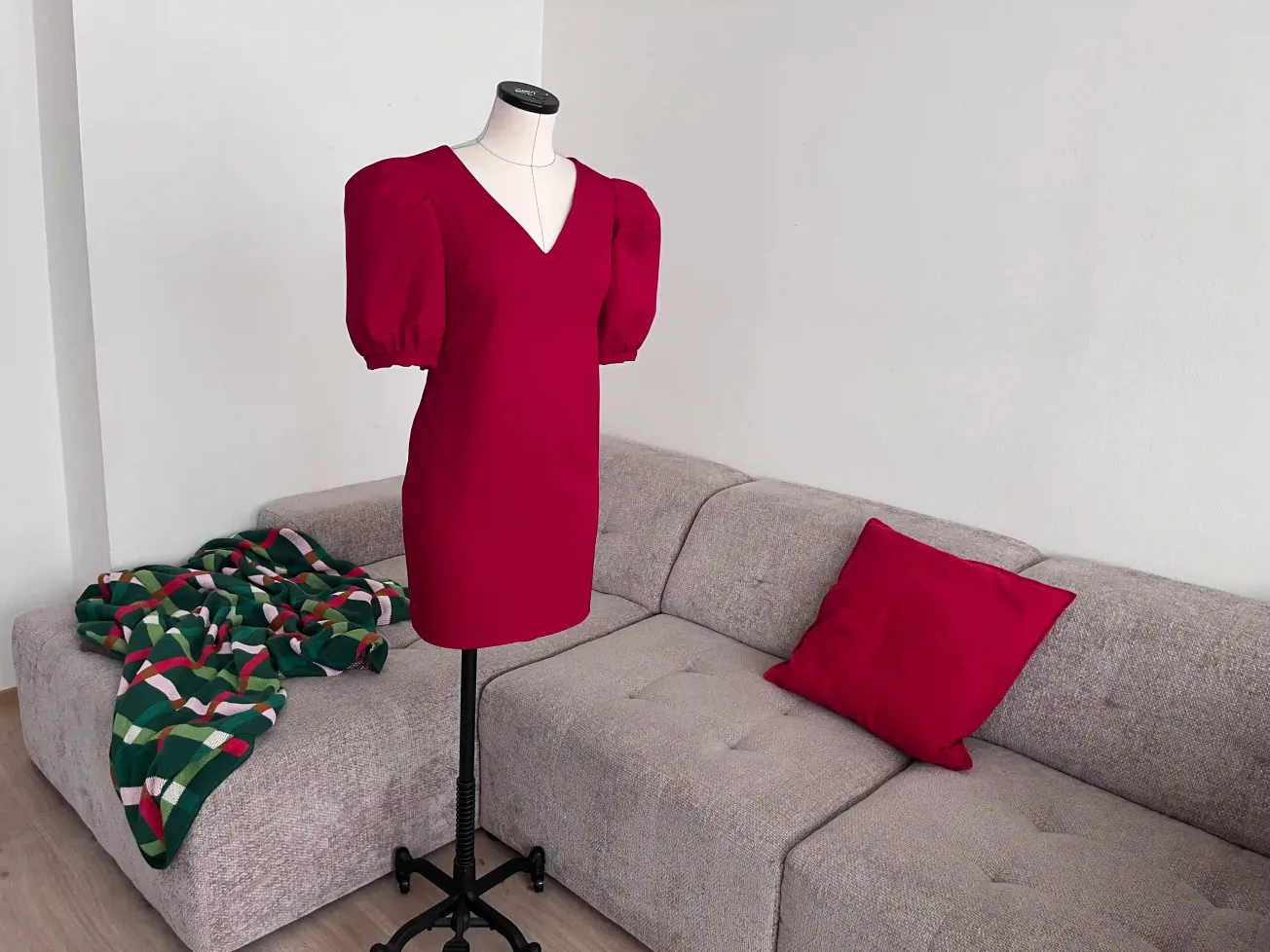
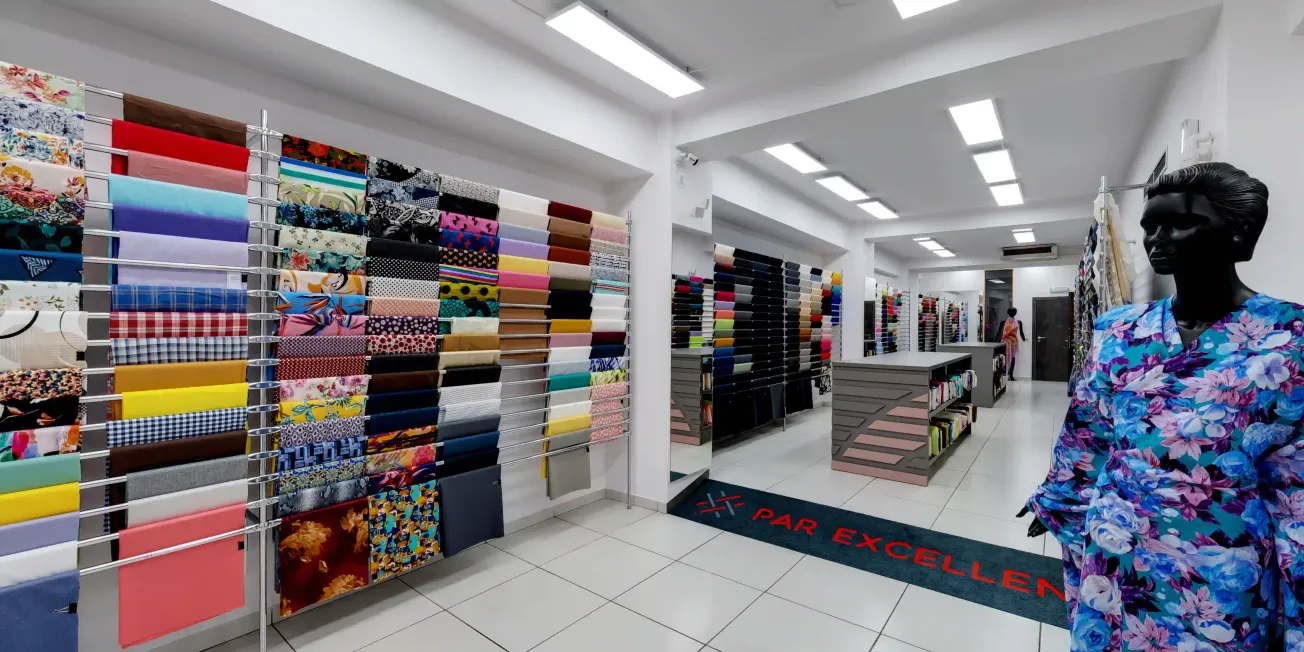
For years, I admired "balloon-style" sleeves (so-called balloon sleeves) on Pinterest and Instagram, but I assumed sewing them was beyond my capabilities. After completing a few other projects, I decided to give it a try. At the fabric store, I looked for a material that was sturdy enough to hold its shape, yet still easy to work with on a standard home sewing machine.
I had originally planned to choose one of my usual light-gray fabrics. I was so happy, the shop owner handed me a piece of ruby-red stabilized wool, a material I had no prior experience with. Given its firm structure, it immediately occurred to me that it would be perfect for balloon sleeves. While the color wasn't exactly within my "comfort zone," the fabric itself convinced me otherwise. After all, it’s good to step outside your comfort zone now and then, isn't it?
Stabilized Fabric
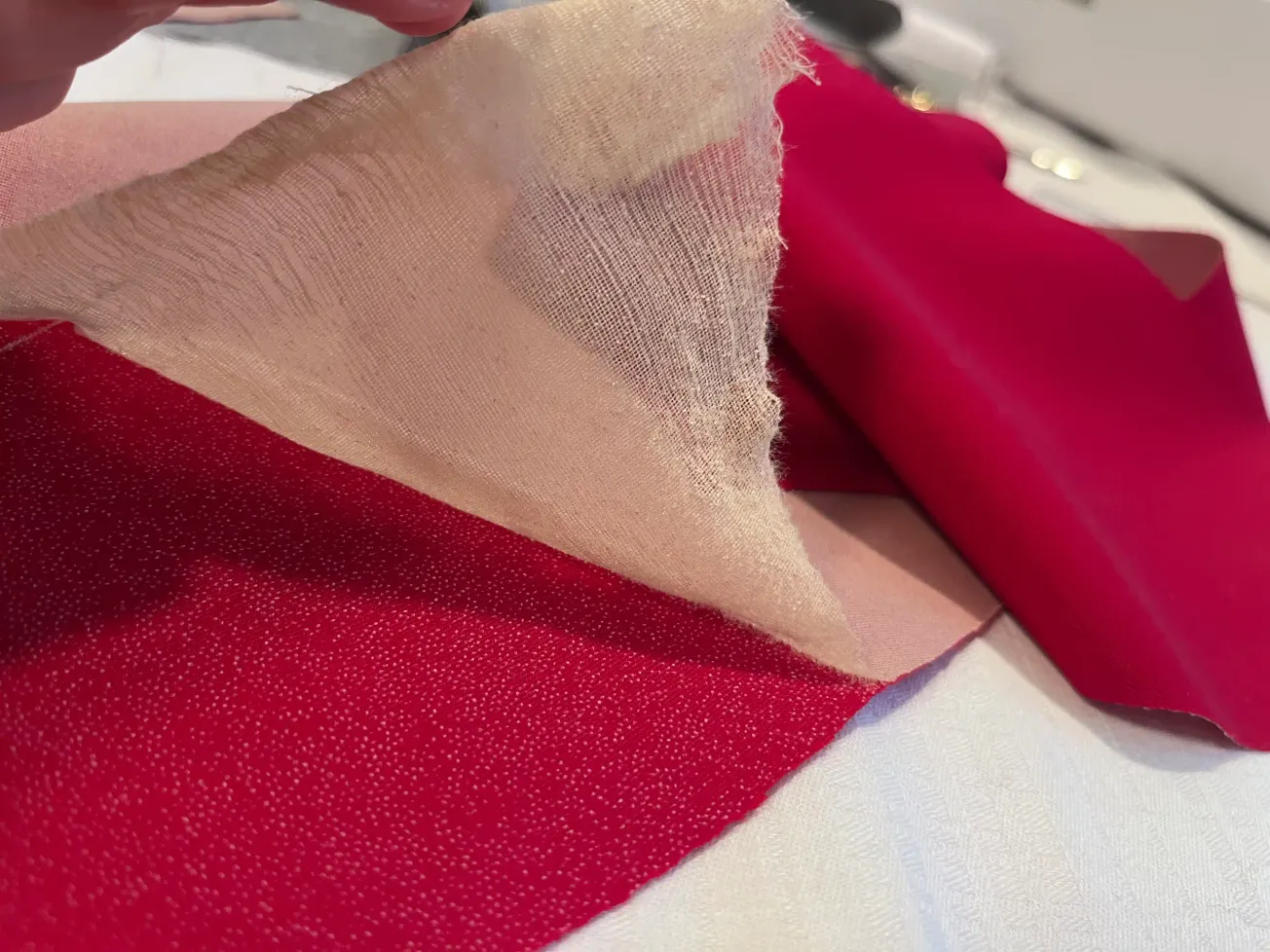
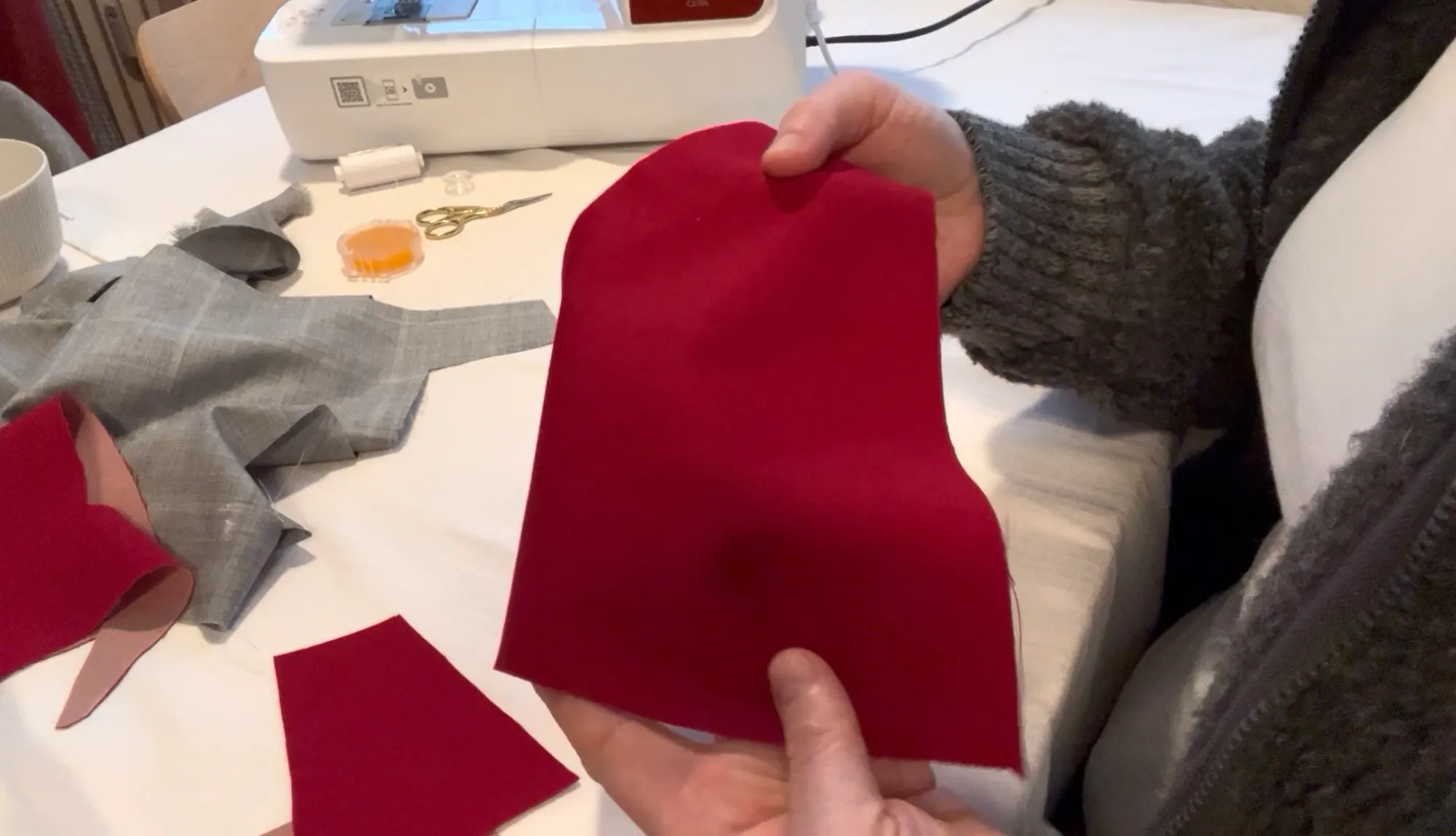
What makes stabilized fabrics from my opinion interesting for sewing? They possess a distinctly firm structure. As a result, they hold their shape exceptionally well and do not drape or flow. In general, stabilized fabrics maintain their form, primarily due to an internal reinforcing layer.
This consists of a fine layer of synthetic fiber bonded to the inner side of the fabric to provide reinforcement. This gives the fabric properties it wouldn't otherwise possess.
On the other hand, one challenge when working with stabilized fabric is ironing. You may iron the fabric on the reverse side, using only the lowest heat setting and a pressing cloth; avoid leaving the iron resting on the fabric for any length of time. The internal stabilizing fiber is highly susceptible to heat damage. Only one second, whether due to an incorrect temperature setting or failing to use a pressing cloth, can cause total damage to this internal stabilizing layer. While it is possible to iron from the right side using a pressing cloth, I personally avoid ironing the front side altogether; I prefer not to risk damaging any of the fabrics I work with.
The fabric has a medium weight and virtually no stretch. It is essentially opaque, making it an ideal choice for structured dresses, voluminous sleeves, lightweight coats, or jackets.
Cutting, Unpicking, and Thread Slippage
Thanks to its structure, the fabric does not slip. It stays exactly where you place it for cutting, making it very easy to transfer garment patterns onto the material. When unpicking stitches, exercise the same care as you would with any other fabric, though it does not require the extreme caution needed when unpicking silk.
When working with other premium fabrics in the past, I sometimes had to be exceptionally careful. For instance, fabrics with a Panama weave are prone to thread slippage once cut; in such cases, it is advisable to reinforce the edges as quickly as possible using an iron-on stabilizing tape. With a stabilized fabric, the manufacturer has already done this work for you. When cutting delicate fabric, we typically reinforce only the seam areas; with stabilized fabric, virtually the entire surface is reinforced this way. Consequently, it naturally does not fray or shed threads, even when handled quite vigorously. I really appreciated this.
Wrinkle resistance: The fabric is wrinkle-resistant. Wool itself is high-quality and naturally wrinkle-resistant, but when stabilized, it holds its shape even better.
YouTube
Testing of Stabilized Wool Twill
Sewing with Stabilized Wool
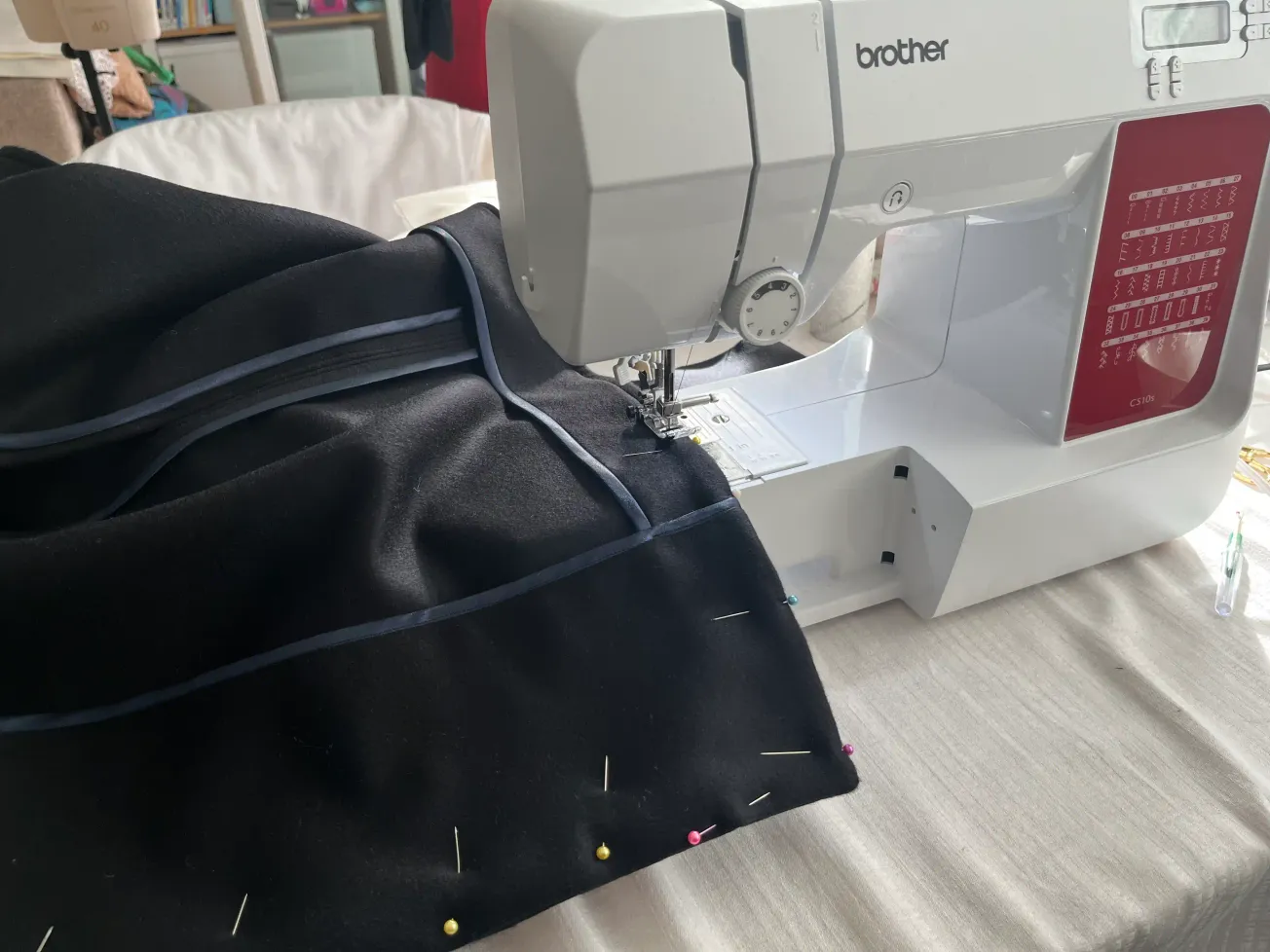
The fabric was easy enough to pin, much like any other. However, during the sewing process, specifically around the bust darts and the inner edges of the sleeves, I had to go back and add a crosswise stitch to ensure the internal seam allowance lay flat and opened up correctly.
Using a French seam is not recommended for this material. Given the fabric’s medium weight, folding and re-stitching the seam would be difficult and result in an unnecessarily stiff, bulky seam. A "Hong Kong finish" is a much better choice; it yields beautifully finished edges and a professional look. Alternatively, you can finish the edges using an overlocker (serger). If you don’t have one, you can use an overlock-style stitch on a standard sewing machine, or simply a zigzag stitch. It is best to avoid folding and stitching the edges, as this creates unnecessarily thick and rigid seams. Needle size: Universal or Microtex 80/12.
Washing Stabilized Wool
I hand-wash all specialty fabrics, a practice I learned from my mother. That said, I know that by setting the washing machine to a delicate cycle, with the temperature and spin speed turned off, I could machine-wash this wool, provided I use a dedicated laundry bag. I would also use a suitable detergent to nourish the fibers, ensuring the fabric retains its beautiful color and structure for a long time.
Wringing/Spinning
After washing, drain the water and wrap the fabric in a cotton towel. Do not squeeze. Gently press the towel to absorb excess water, then lay the fabric flat on a drying rack.
The Fabric in Action
I used this fabric to create this red dress. Thanks to the fabric’s medium weight and the added reinforcement, the sleeves hold their shape perfectly. If you’re intrigued by balloon-sleeve construction, feel free to draw inspiration and try making them yourself!
If I had to sum it up in one sentence, I am incredibly glad I discovered this type of fabric. It requires proper handling, but if you respect its characteristics, you can create beautiful things with it, even as a beginner.
Have you ever worked with a similar type of material? Let me know in the comments!
Enjoy happy Quiet Sewing