Table of Contents
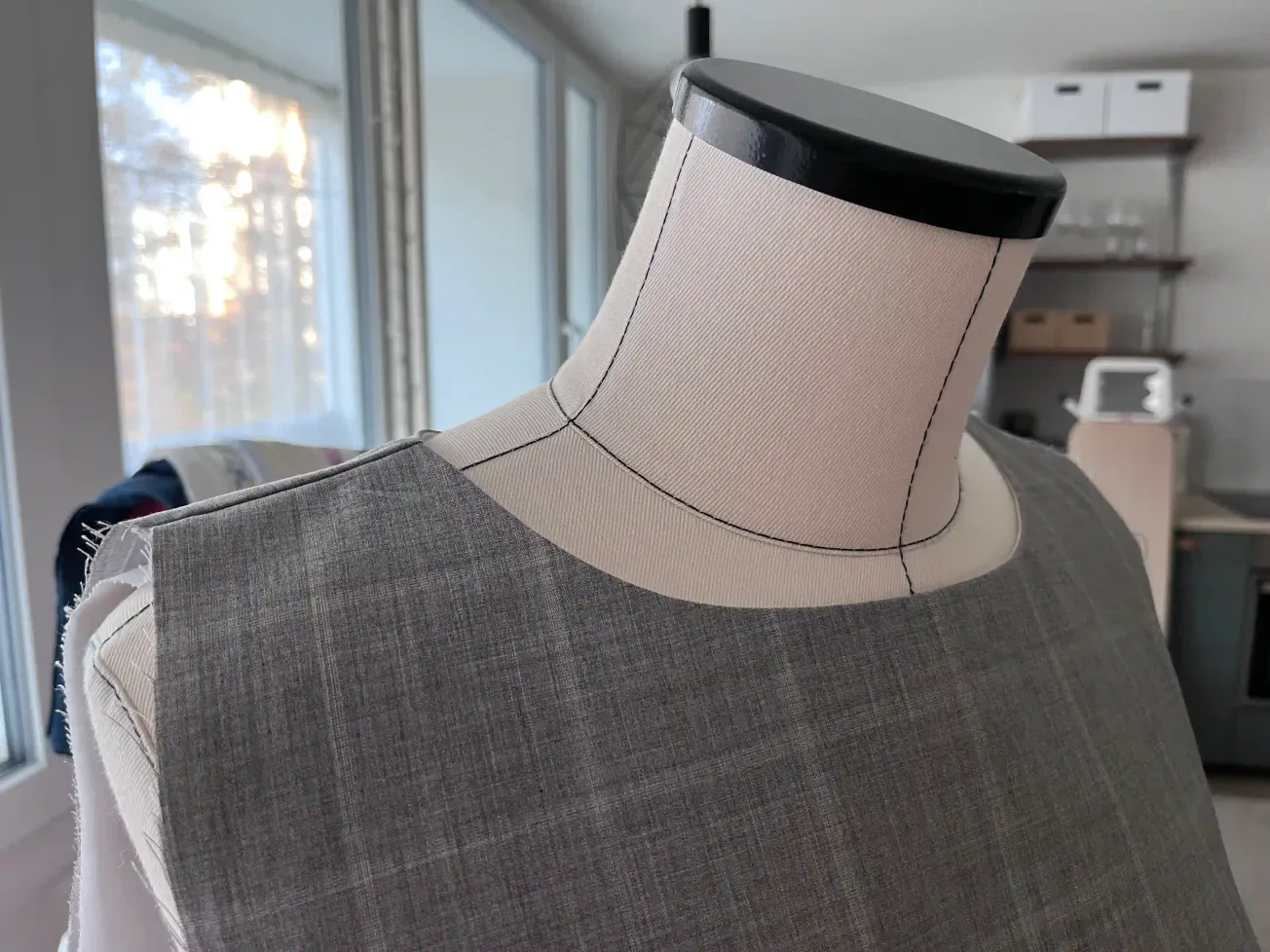
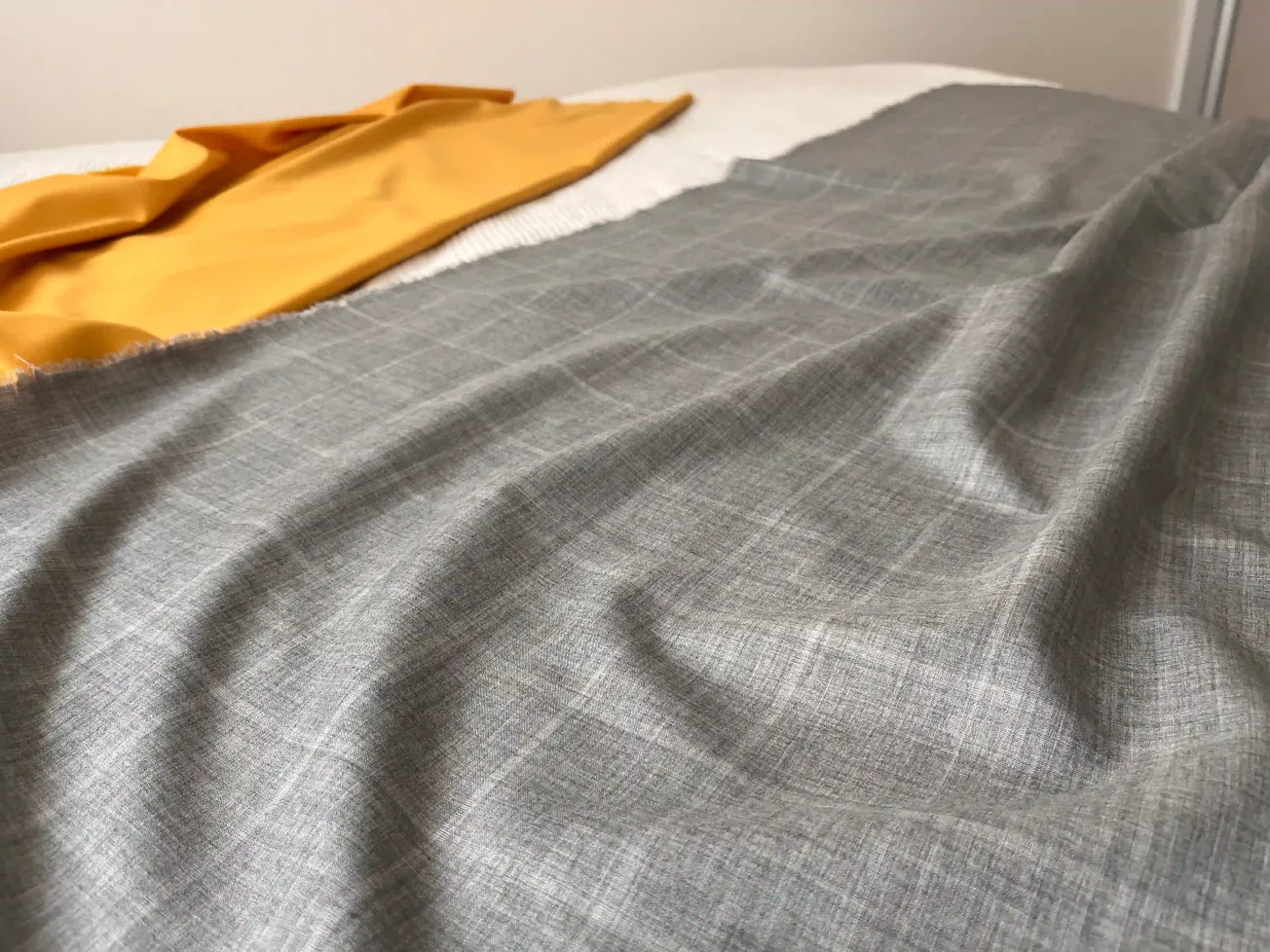
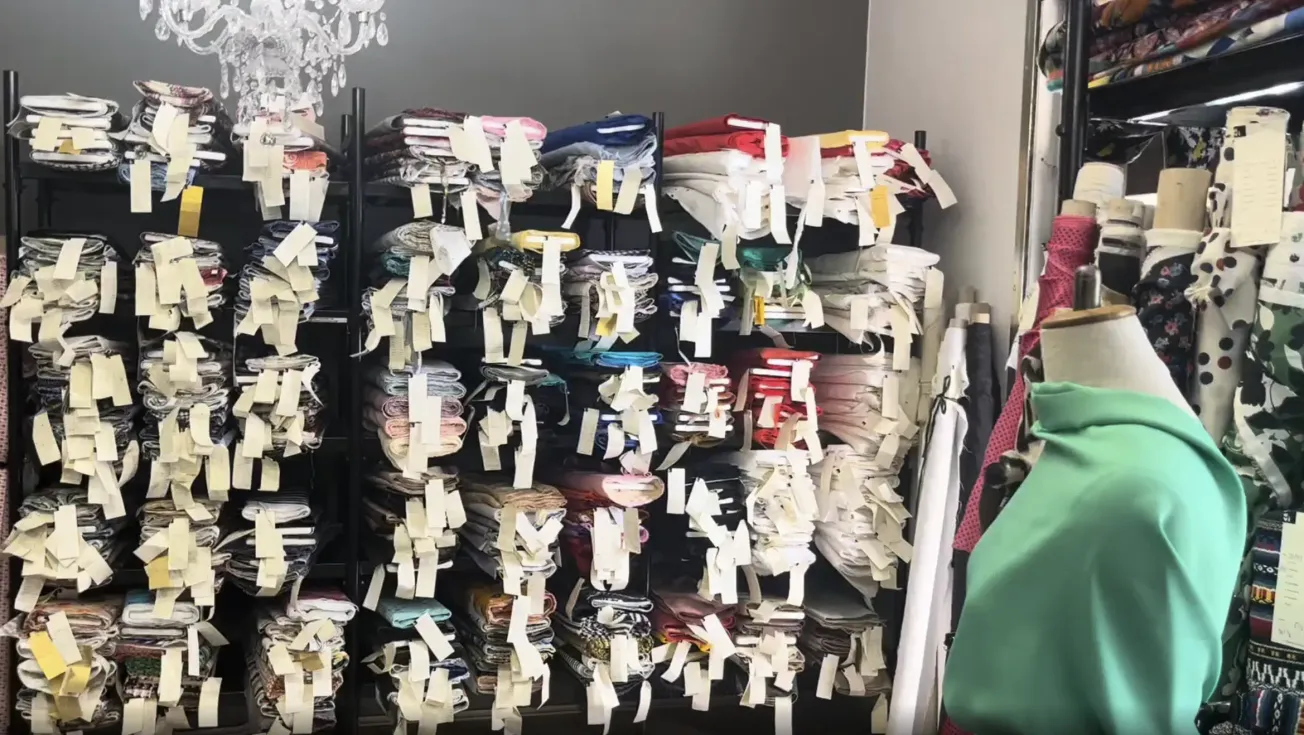
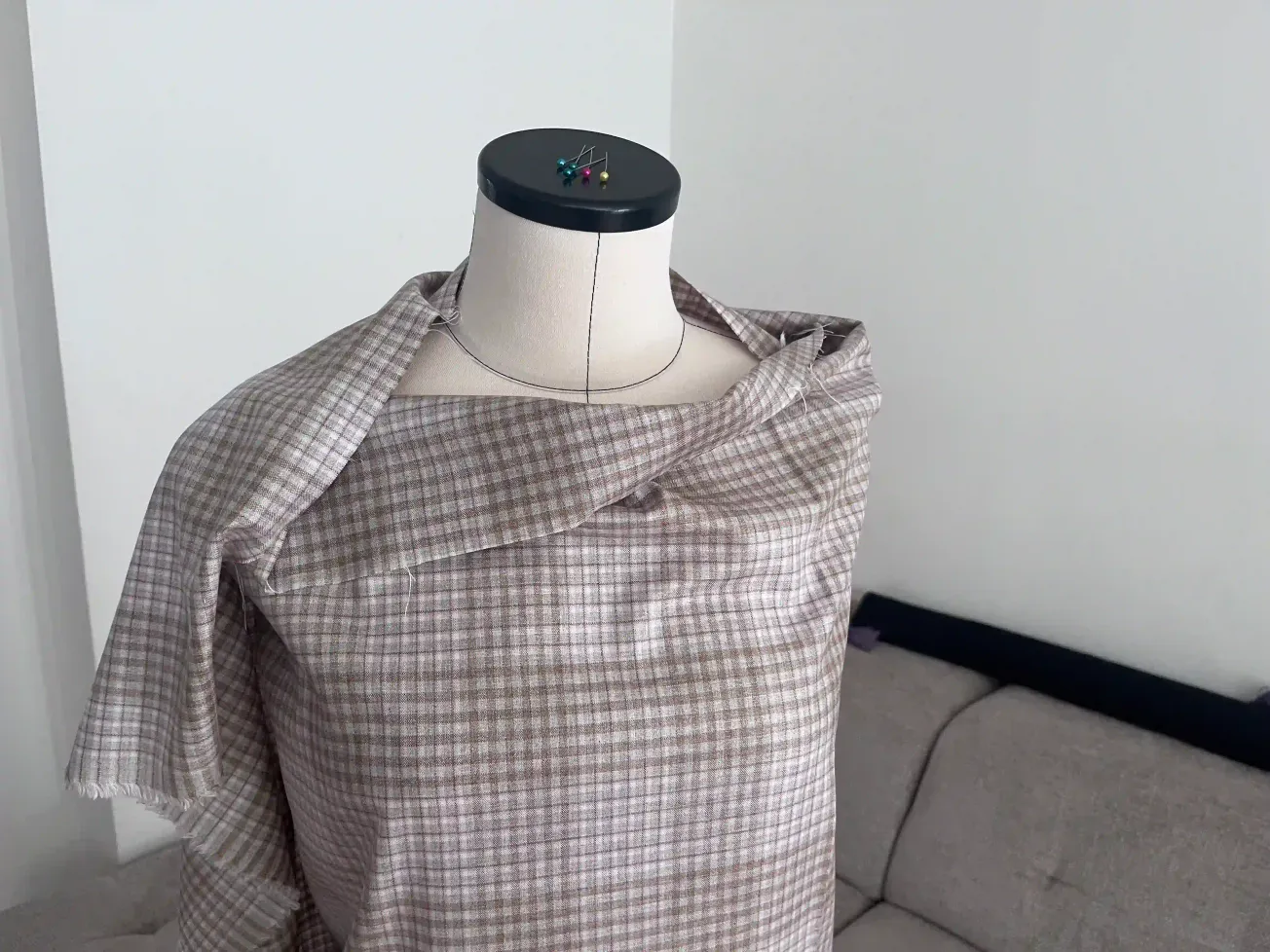
Imagine holding a fabric in your hands and clearly seeing a beautiful basketweave pattern. Until recently, I didn’t even know fabrics with that kind of structure existed. They are truly stunning. I spotted a Loro Piana fabric at my favorite shop, Par Excellence; it wasn’t so much about the brand as it was about how irresistible it looked online. It featured a delicate, subtle check pattern, a style I hadn’t worked with before, though I had secretly longed to create something from such a fabric. At the time, I didn’t yet know what a "basketweave" was. But the moment I arrived at the shop and held the fabric in my hands, I knew I would be taking it home.
What is a basketweave fabric
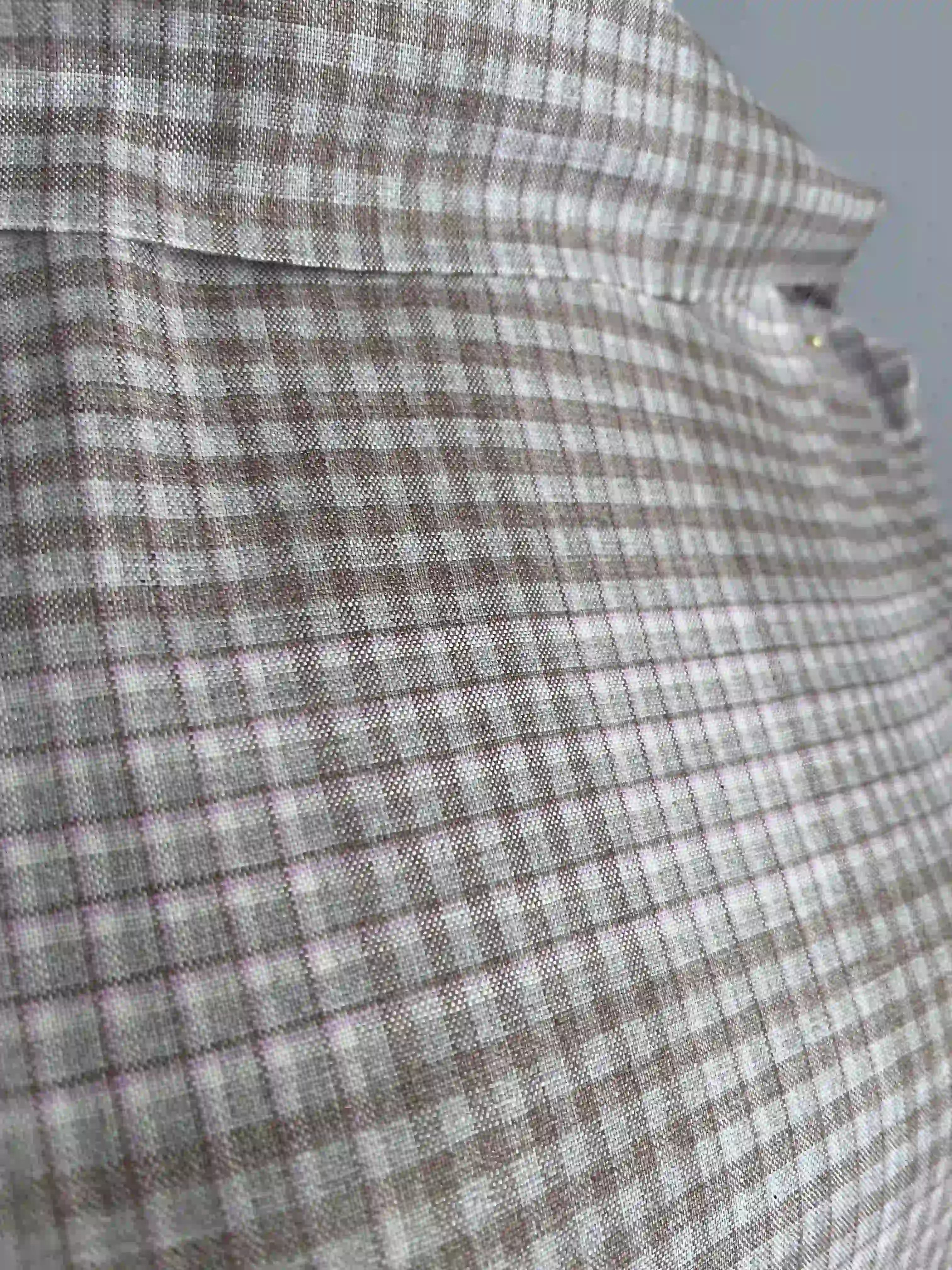
This fabric has a truly unique structure. Unlike standard fabrics, where threads are interlaced one by one, the threads here are grouped in sets of two or more. Even on close inspection, the structure was beautifully apparent. This method of interlacing the threads during weaving gives the fabric its distinctive, basket-like appearance.
I was so happy to find that, while durable, the fabric remains highly breathable and supple. My fabric was a cashmere-silk blend, offering warmth and a beautiful, feminine shine. On the other hand, one immediate challenge was the fraying. I’m an advanced beginner, so I was incredibly worried that I wouldn’t be able to handle working with the fabric. On the way home, however, I recalled a few great tips, which I’ll share with you here, to show you that you, too, can work with fabric without any trouble, and even truly enjoy the process as a relaxing way to spend time on a favorite project.
Choosing the Right Project for Basketweave Fabrics
Basketweave fabrics are best suited for jackets, dresses, or skirts, or, if the material is particularly sturdy, even for a bag. However, I always consider both the weave and the material itself. If I have a basketweave fabric made of cashmere, I would choose to make a dress or a jacket. Cashmere is a rare, precious fabric with exceptional thermoregulating properties; using it for a bag would be a waste. On the other hand, if the basketweave is made of hemp, I might well use it, with a lining, to create a bag.
You can recognize basketweave at a glance; it resembles the weave of a wicker basket. It is visually striking and works beautifully for minimalist dresses, coats, jackets, or simple bags. A minimalist cut lets the weave stand out, creating a garment that is unique yet understated.
Essential Preparation: Before You Start Cutting
Pre-washing the Fabric
I highly recommend this. A basketweave is looser and tends to shrink slightly. No harsh machine wash is needed; the goal is to rinse the fabric in water to stabilise its fibres gently. I always wash these materials by hand in lukewarm water. My mother always told me that it is better to wash any delicate or sensitive materials by hand. While you could use a washing machine on a delicate cycle, provided you turn off the spin cycle and set the water temperature accordingly, I personally enjoy handling the fabrics while they are wet. Their texture changes; they feel different to the touch. For instance, washing cashmere, such as a Panama weave, is an amazing experience. When it meets water, the fabric releases a beautiful, natural smell. I love that smell. It is remarkable how such small details can brighten one’s day.
Never wring out fabric with this type of weave, whether by machine or by twisting it by hand. Instead, gently squeeze out the excess water or let it drip-dry; then, lay the fabric on a towel, roll it up, and press it into the towel.
Once the fabric is dry, lay it flat on a drying rack to finish drying.
Iron the fabric once it is dry.
Interfacing and Reinforcement
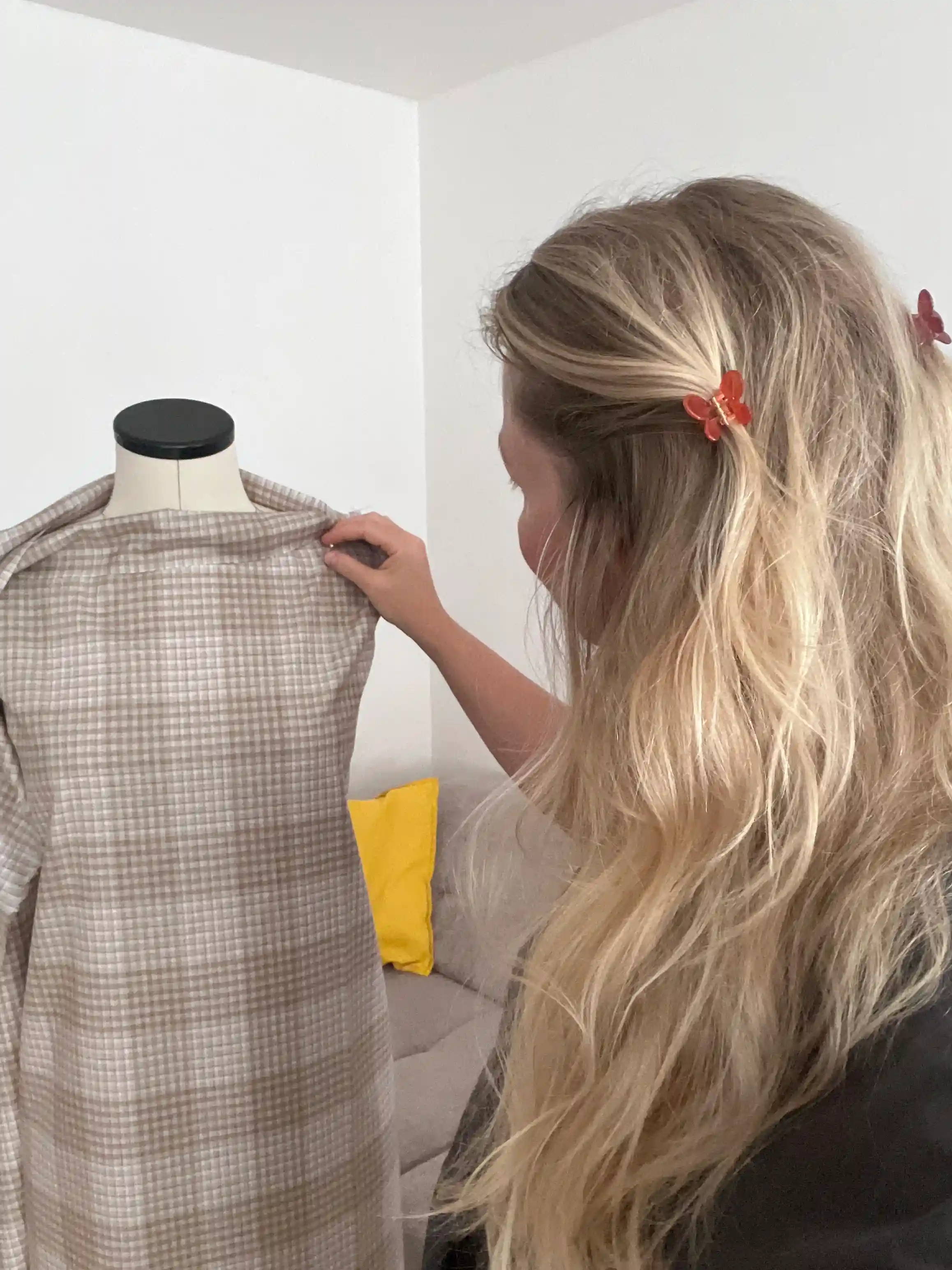
Fabrics with a basketweave are beautiful. They pair perfectly with minimalist cuts and silhouettes. I have observed that their primary characteristics are high pliability and, due to their specific weave, a tendency to fray, which can be an unpleasant surprise. Consequently, when working with this material, I always reinforce all seam lines and stress points. By applying fusible interfacing or stabilising tape to these high-stress zones, I prevent fabric fraying.
The fabric also becomes much easier to handle; the reinforced sections hold the threads firmly in place. This makes the material manageable even for a complete beginner.
If you fail to reinforce the fabric in these areas, you will significantly shorten the lifespan of the garment you are crafting with such love and care.
How to Cut and Work with Basketweave Fabric
Securing the Edges
When cutting the fabric, I recommend having plenty of space available (such as on the floor) so that you don’t have to handle or shift the fabric around. When cutting out the dress pattern, I prepared everything in advance, laid the fabric out on a clean floor (over a carpet), and then cut. I tried to handle the fabric as little as possible to prevent the threads from shifting and causing the fabric to fray.
I later realised that using pinking shears would have helped reduce fraying; if you have a pair, don’t hesitate to use them. Even so, I still recommend moving the fabric as little as possible. Immediately after cutting, I reinforced all the edges with fusible interfacing tape, and I applied interfacing across the entire surface of high-stress areas, such as the armholes. All other sections held their shape on their own.
Since the basketweave structure makes the fabric quite pliable, use a very lightweight fusible interfacing. This ensures that you don’t create any "stiff" spots that would be visible on the finished dress.
A major advantage when laying out the pattern pieces is the fabric's texture; the weave makes the grain easy to see, so you can align the pattern pieces precisely with the grainline. In this respect, the basketweave structure actually made the process easier.
Step-by-Step: Sewing with Textured Fabrics (Main Technical Guide)
Choosing a Needle and Thread
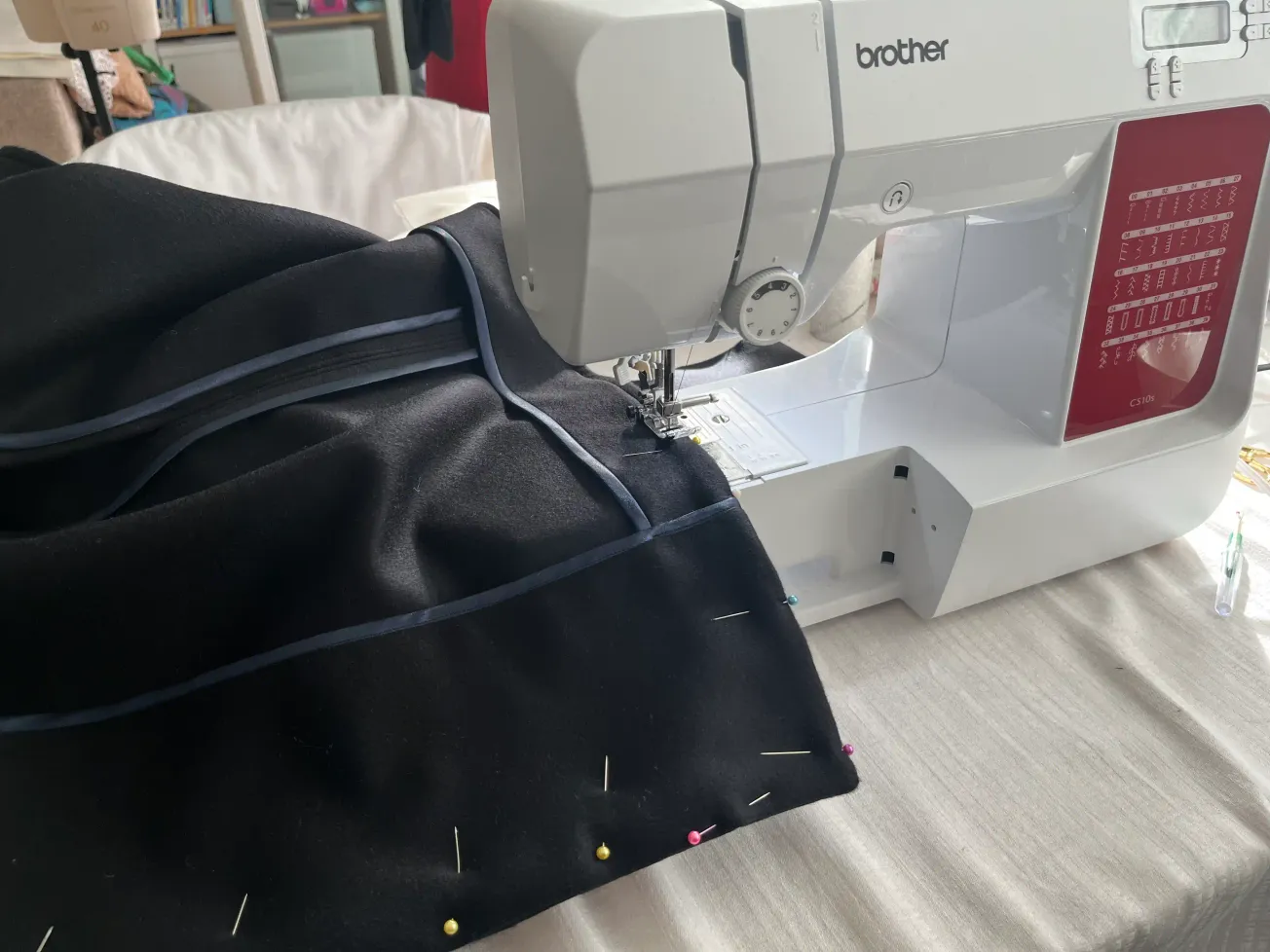
How to sew basketweave fabric? I sewed the dress using a Universal needle. I could have used a Sharp or Microtex needle, which are designed for delicate materials, especially since my fabric contained silk. However, given the weave, I opted for a size 80/12 Universal needle and cotton thread.
I kept the stitch length at a standard setting. That said, I highly recommend sewing a test sample on a fabric scrap before starting.
Once stabilised, the fabric held its shape very well under the sewing machine presser foot. Had I skipped stabilising those areas, the process would have been significantly more challenging.
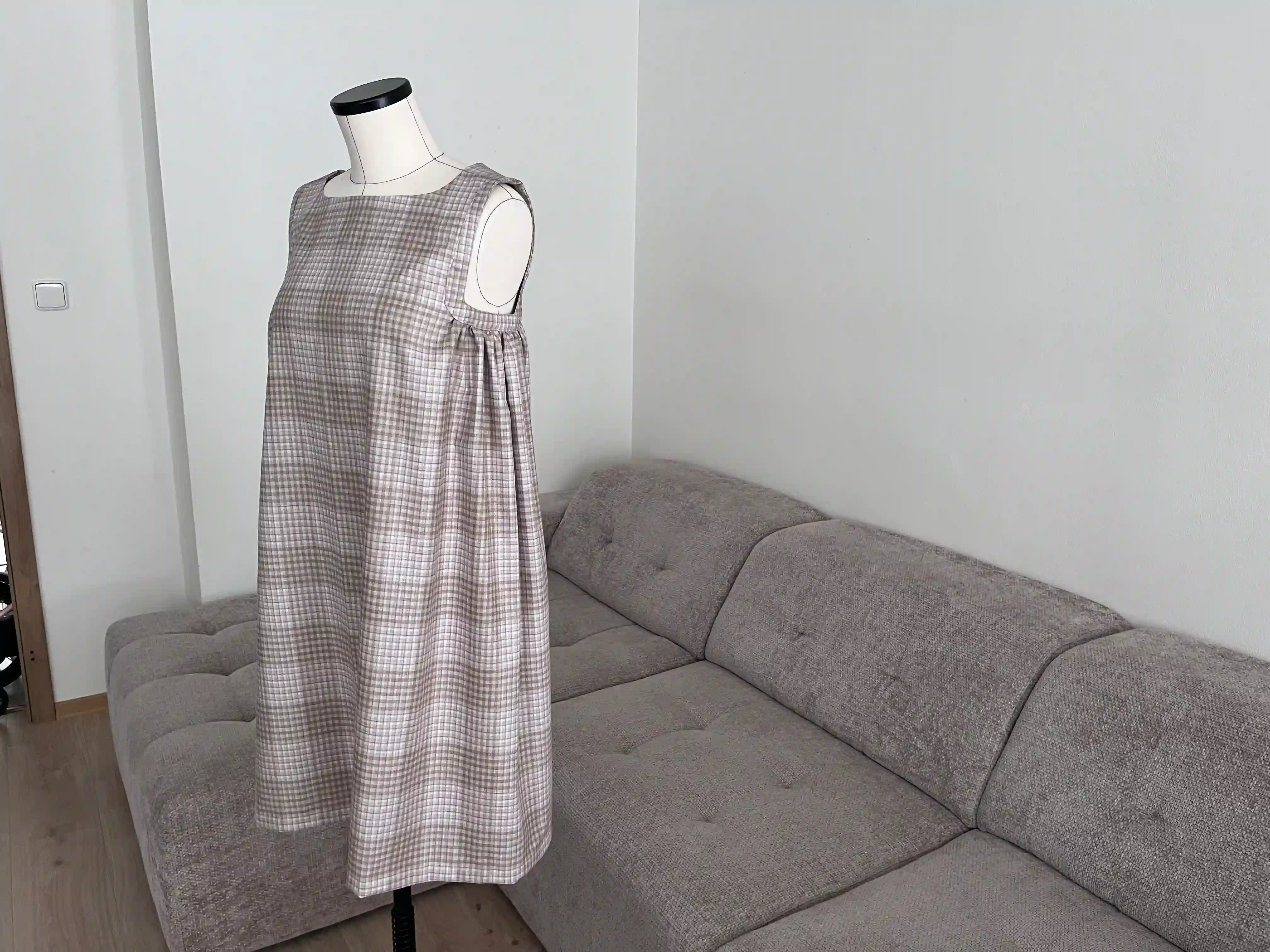
For the seam finishes, I used French seams to make a perfect-looking result. While working on these internal details can be a bit fiddly, I love wearing garments that I know are crafted with care, not just on the outside, but on the inside as well.
Although I own an overlocker, I didn’t need it at all for this dress.
Pressing and Aftercare
Fabric with this type of weave requires careful pressing. Fortunately, my fabric was a cashmere-silk blend, so I treated it with extra care, using a pressing cloth and the lowest heat setting.
I keep the dress on a hanger so it maintains its shape perfectly. We don’t need a mountain of items in our closets; a few truly high-quality pieces that mix and match are enough. I think that’s wonderful. I don’t have to spend time in the morning wondering what to wear, because everything in my wardrobe pairs easily, and I always feel like myself.
There’s no need to create a vast array of outfits. Just a few that make us feel fantastic and can be combined are plenty. To me, this is "Slow Fashion" combined with "Quiet Sewing."
If you are interested in how I sewed from this fabric, you can take a look at A-Line Dress Beginner-Friendly
Have you ever sewn with a basketweave fabric? Or are you planning to work with this beautiful material soon?
Do share your thoughts!
If you have any questions, I’m here to help. 😉
Happy "Quiet Sewing" 🌸
Dana