Table of Contents
a How to properly care for cashmere sweaters so that they last a long time?
When I bought my first cashmere sweater, it was clear to me that I had to care for it differently from the sweaters I had in my closet up to that point. As I mentioned in my previous post about recognizing cashmere quality, better fibers require specific care. Sweaters made of plastic keep their color and shape, but sweaters made of natural fabrics? They behave differently.
I knew from home from my mother that when you wash a hand-knitted sweater (she was a passionate knitter), it's a whole different story. You can't throw it in the washing machine and let it spin. That's legitimate sweater murder. That would ruin it all. When I was about 8 years old, a million years ago, my mother started teaching me how to care for knitted things so that they last. They kept their shape, color, and pilled as little as possible. Pilling is a natural part of clothing, and even the best sweater develops it over time because fine fibers tend to stick together at points of contact.
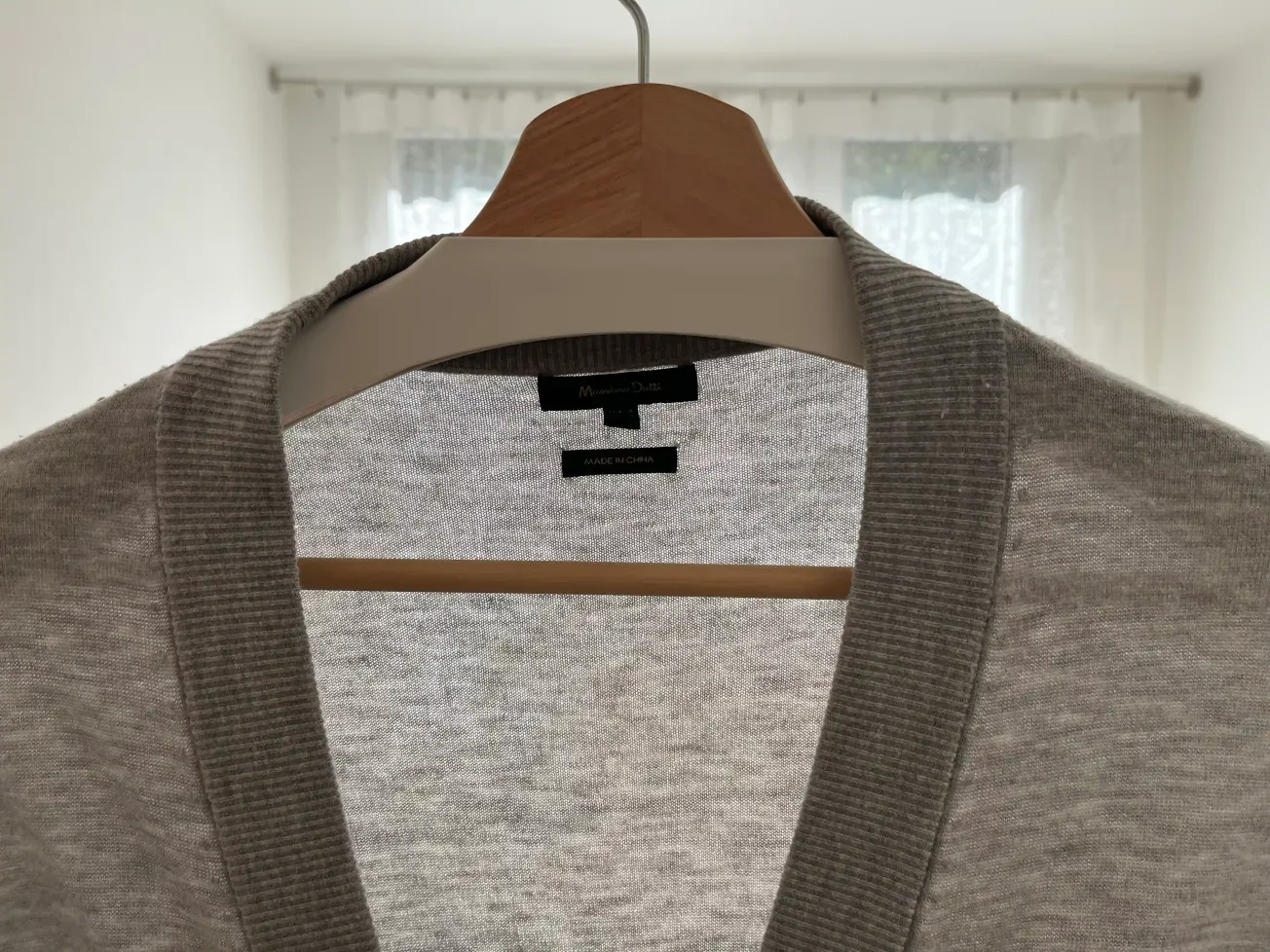
So when I went to Massimo Dutti to buy my first cashmere sweater, I also thought that I would have to buy the right care product for it. I guess we all want the things we invest in to last, right? I love cashmere because it doesn't scratch anywhere. It makes me feel softer, and it's incredibly cozy.
Choosing the right accessories to wear with cashmere
What I've learned over time, apart from a good washing powder and a lint remover, is the following:
When I choose what to wear, if it includes a cashmere sweater, I always consider the accessories. As you already know, cashmere is a very sophisticated material. It's soft and comfortable, but also sensitive to friction. So if I were to wear a thick shoulder bag or a belt with a thicker buckle over a cashmere sweater, I would put more strain on the sweater where it comes into contact with the thicker material, and the sweater would naturally start to pill. Last winter, I wore a cashmere sweater and a coat with a thicker lining. It wasn't too thick, but I still had a heavy backpack on my shoulders, and when I took off the jacket, I had lumps in my shoulders. That made me freeze. It was quite a schoolboy mistake on my part.
How to wear cashmere correctly?
I only wear cashmere accessories that don't create high friction, so that the sweater can breathe and isn't exposed to unnecessary strain.
I also make sure I always have enough space in my jacket.
I stick to the 24-hour rule. If I wear a cashmere sweater, I leave it at home the next day. It's kind of my rotation rule. I let the sweater rest so that the fibers in the areas of strain (e.g., shoulders, elbows) have a little time to regain their shape.
The most important thing, of course, is washing and subsequent care. What I will share applies, to a large extent, to silk sweaters, not only to cashmere but also to all other luxurious materials.
How to hand-wash cashmere at home
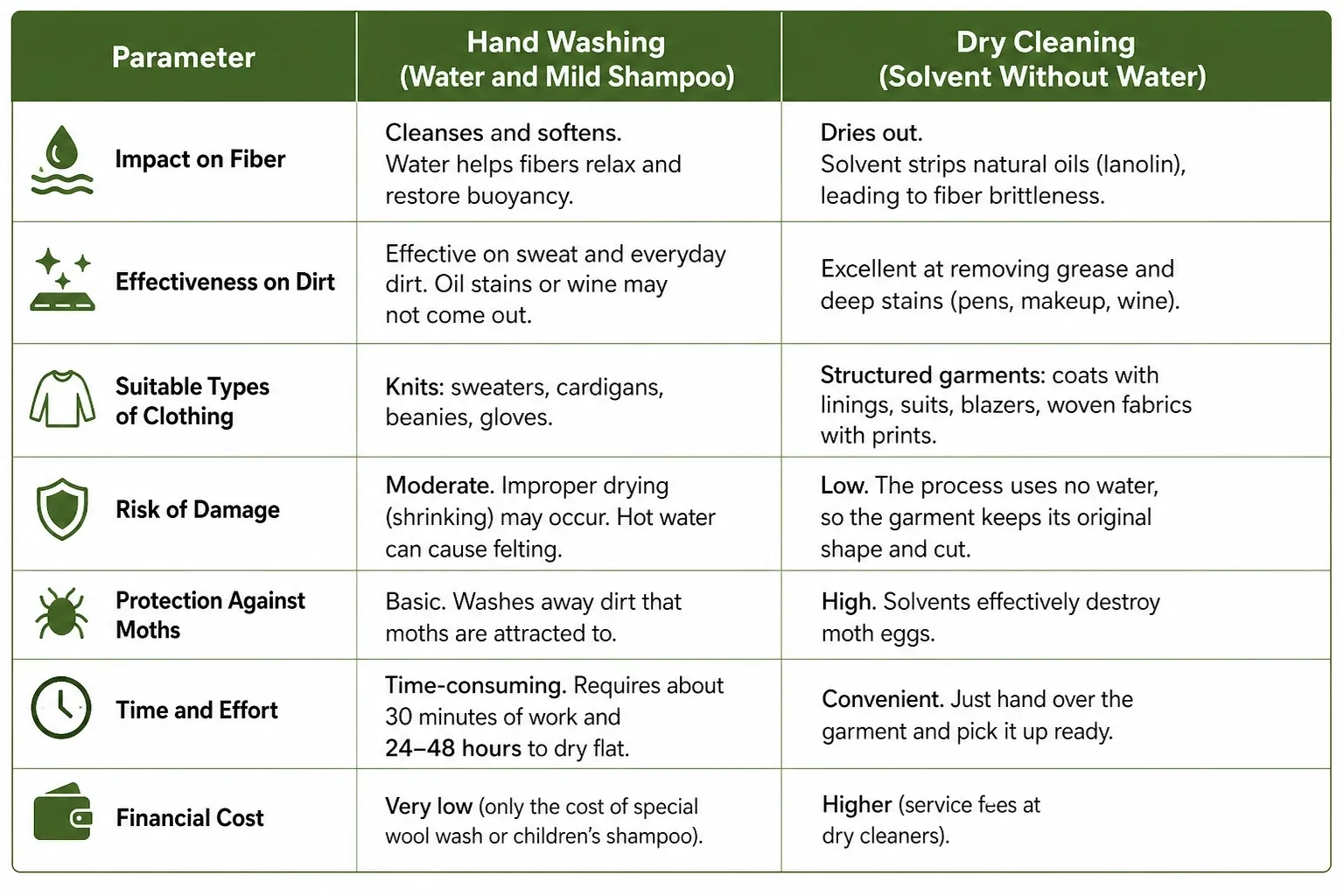
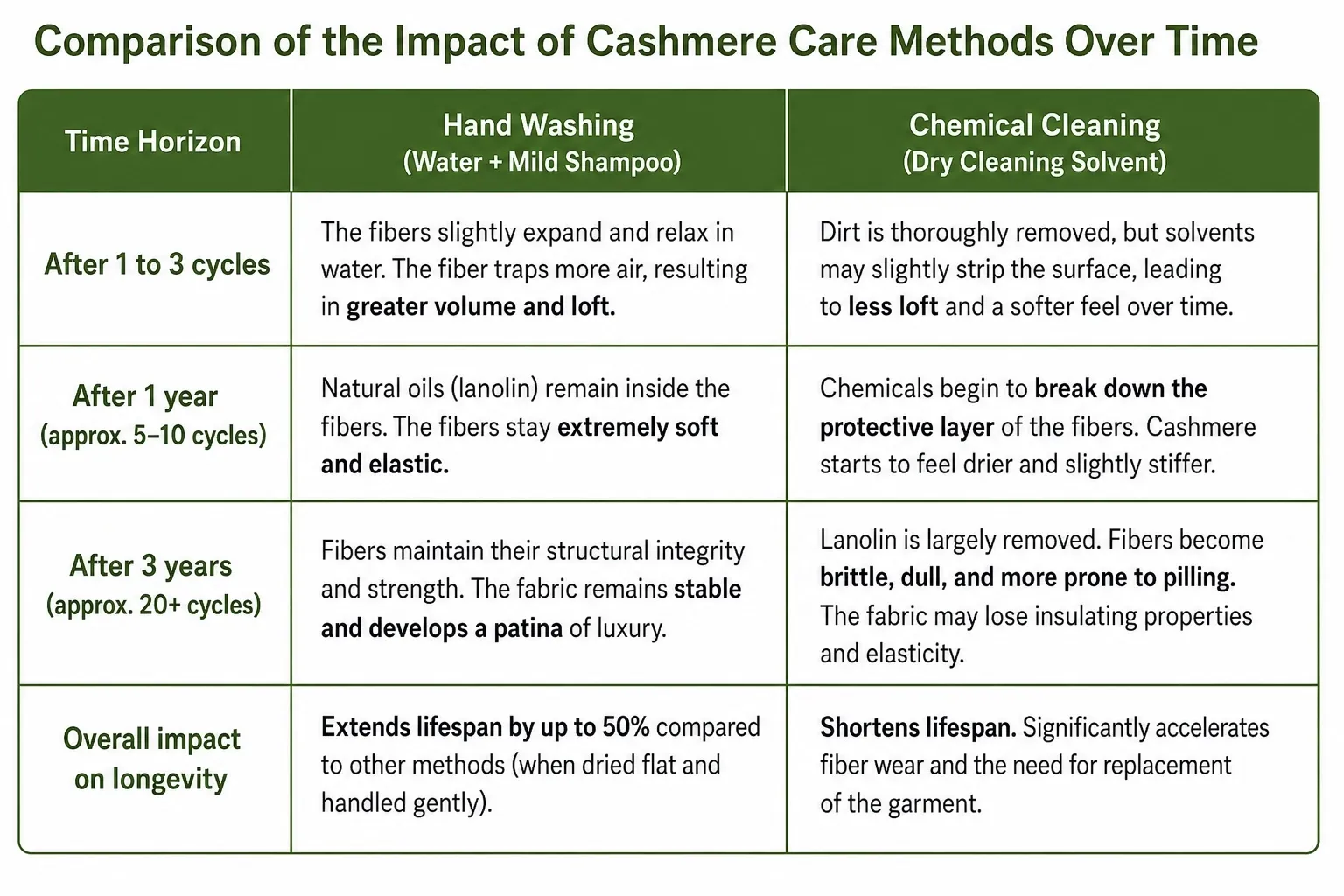
You don't need to wash a cashmere sweater after every wear. Cotton T-shirts, for example, wrinkle after every wear, but cashmere really doesn't need washing after one wear. Thanks to its natural composition, it doesn't retain human odors, such as sweat, because its structure prevents bacterial growth on sweat. Cashmere is a natural fiber of animal origin. It is made from the hair of Kashmiri goats and, therefore, like other hairs, contains keratin and lanolin, which have antimicrobial properties.
Very often, it is enough to just "air it out", i.e., let it rest for 24 hours, for example, by hanging it on a hanger in the bathroom after a shower or bath. For cashmere, it's an opportunity to "cleanse" itself. 🤩
I also find it very good to stroke the sweater with my hand in the places where it was stressed. I do this by putting my hand into the sleeve, spreading my fingers inside, and gently stretching my hand outward to help the fibers in the sweater return to their original place.
When it comes to washing, even though I've seen "delicate wash" on the label a few times, I ALWAYS wash cashmere by hand. I never put it in the washing machine, where it would be exposed to even a delicate cycle. If there's no other way, and you have to put cashmere in the washing machine, always choose a delicate program without spinning.
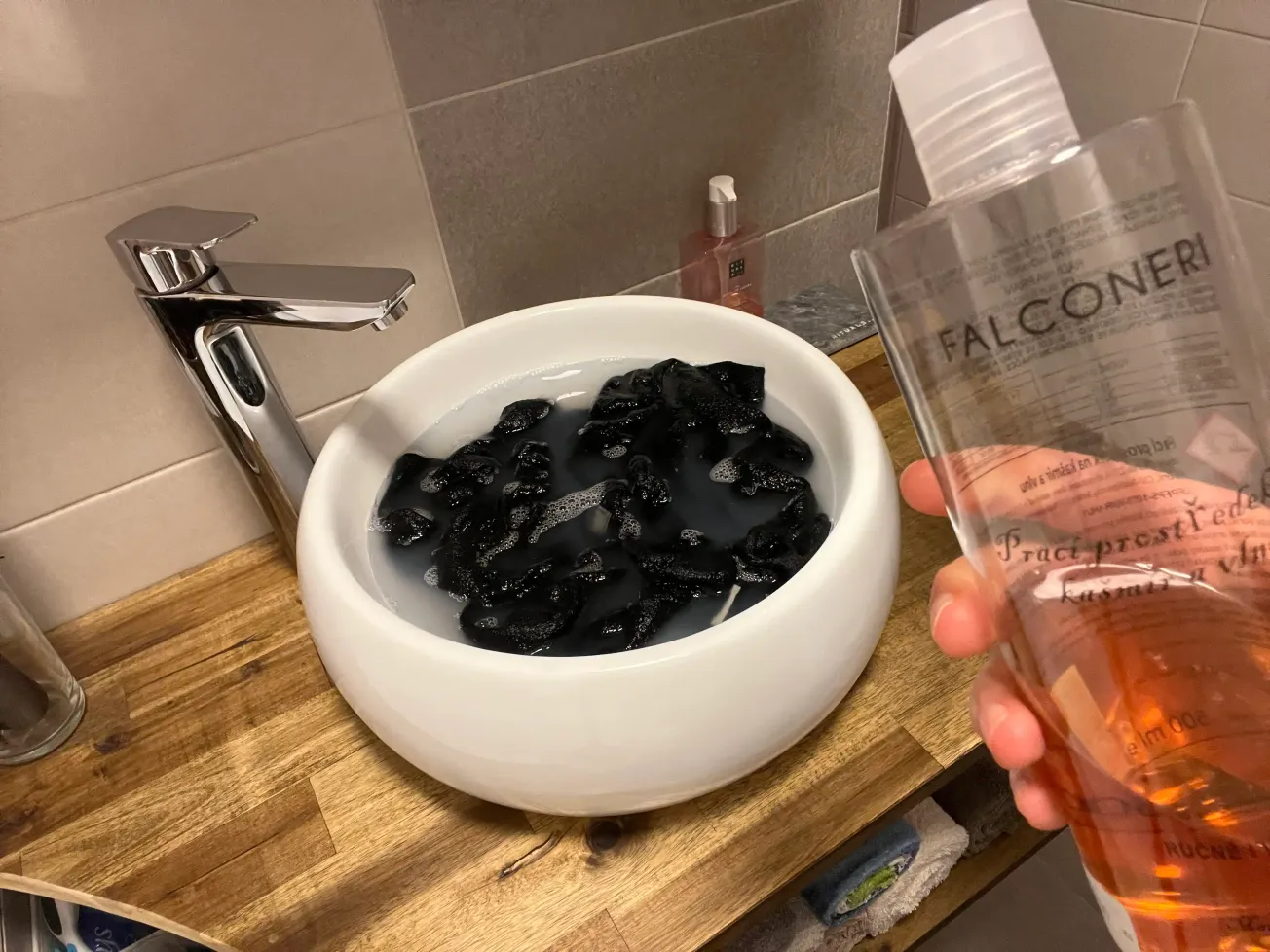
For example, I always wash by hand in lukewarm water. Never hot. The sweater would then start to bleed a little. But that's natural with natural materials. That's why I chose a lukewarm one to keep the color.
Best detergent for cashmere
I have a special, gentle soap from Falconeri for this and delicate laundry. I am very happy with it, and I can also wash silk or lace with it. Plus, it smells wonderful. When I wash sweaters, I always just wring them out gently. I never rub the individual sides together, like when I have to pre-wash my youngest daughter's socks when we come back from the playground. 😆 Cashmere only needs to be just squeezed, not wrung out after it has rested in water for a while, and the dirt has been loosened.
How to wash cashmere properly.
The correct way to dry cashmere (Don't hang it!)
What is essential! Never wring out cashmere. Not even any other knitted sweater, let alone a hand-knit sweater. Air dry anything knitted, either indoors or outdoors. Never dry knits in the dryer, as they can shrink. My mother taught me that when I was really little and had to learn to take care of things myself. If you wring out a sweater, stretch its fibers, the sweater will lose its shape and never return to its original form. I personally dry my sweaters the way my mother taught me, and it works great. Gently wring out the washed sweater, place an absorbent towel on the floor, place the sweater on it, and roll it up. Then wrinkle this roll along its length (don't wring it, just wrinkle it), or step on it and walk on it so the towel absorbs the excess water remaining in the sweater. Then untangle the roll, throw the towel on a line, and hurray to dry it! Here, many of us make the most fundamental mistake: drying the sweater on a line. The fibers are very delicate, and the sweater is still relatively heavy with a high amount of water. By hanging it on a line, you practically stretch it out, and it loses its shape. I always dry cashmere and other delicate sweaters flat. I have a drying rack for this, a classic, foldable one. With my first sweater, I dried it on an unfolded drying rack, and stripes appeared on my sweater like the remains of a metal cord. That's why I always unfold the drying rack, throw a towel over it, and dry the sweater on a dry towel. If it's cloudy, I leave the sweater on the balcony. But if it's sunny, I dry it at home without direct sunlight. (to maintain the color)
Ironing 😬
Please, never do this 🙏🙏🙏.
Only for fine knits for summer or blends with silk, wool or other materials, always use the lowest setting and iron over another fabric so that the hot surface of the iron never touches your sweater directly and you don't needlessly ruin your favorite sweater. However, when it comes to classic, warmer cashmere, it is not ironed.
How to remove lint from a cashmere sweater.
How to store cashmere sweaters in a closet
I never hang cashmere sweaters or other luxury knitwear (for long periods of time). Over time, the fibers would stretch, and the sweater would change its shape. Just fold the sweater neatly and store it in your closet. I think I'll mention one more important rule: I also use "moth protection" for my luxury sweaters. A natural lavender bag or other form of moth repellent is enough. If you're organizing your summer and winter wardrobe, remember that you need to wash these sweaters before storing them, because decomposing human sweat (even if it's covered in perfume, so you don't have to smell it) attracts moths that can make holes in your cashmere, and you'll then have to laboriously repair your sweater.
How to remove pilling from cashmere
As I mentioned at the beginning, it's a natural part of cashmere. It appears over time due to wearing the sweater. Pills are created when fine, loose fibers rub against each other and get tangled. This is a common property of cashmere. When pilling occurs is primarily influenced by whether your cashmere sweater is of high quality and how you care for it, of course.
There are several options for getting rid of pilling. I will describe them all to you and what I think about them:
Plucking pilling by hand
An old method and the fastest way to ruin your sweater. What you are actually doing by plucking pilling is pulling on the tangled fibers, which you will break and get rid of the pilling, but by pulling on it you will pull out other fibers, which may be more than there were originally, so the pilling will return in a moment, and after years of this behavior, your sweater will be quite thin and ruined in this place.
Cutting with scissors
A friend of mine had this epoch-making idea. I found it quite strange and scary. I told her it didn't sound safe, but she had her own mind. Well, you can probably guess how it turned out. She made a hole in the sweater and eyes for crying. Then we were trying to figure out how to carefully grab the eyelets to fix the sweater. For a moment, I really thought she knew what she was doing. She had the sweater in a good position, but then she accidentally put a piece of those tiny scissors in the wrong place, and that was it. Luckily, it was a very tiny hole, so in the end everything was fine, but it could have been quite a mess. So I'm mentioning this method. Yes, it exists. But I definitely don't find it safe, which is why I'm talking about it here.
Lint comb
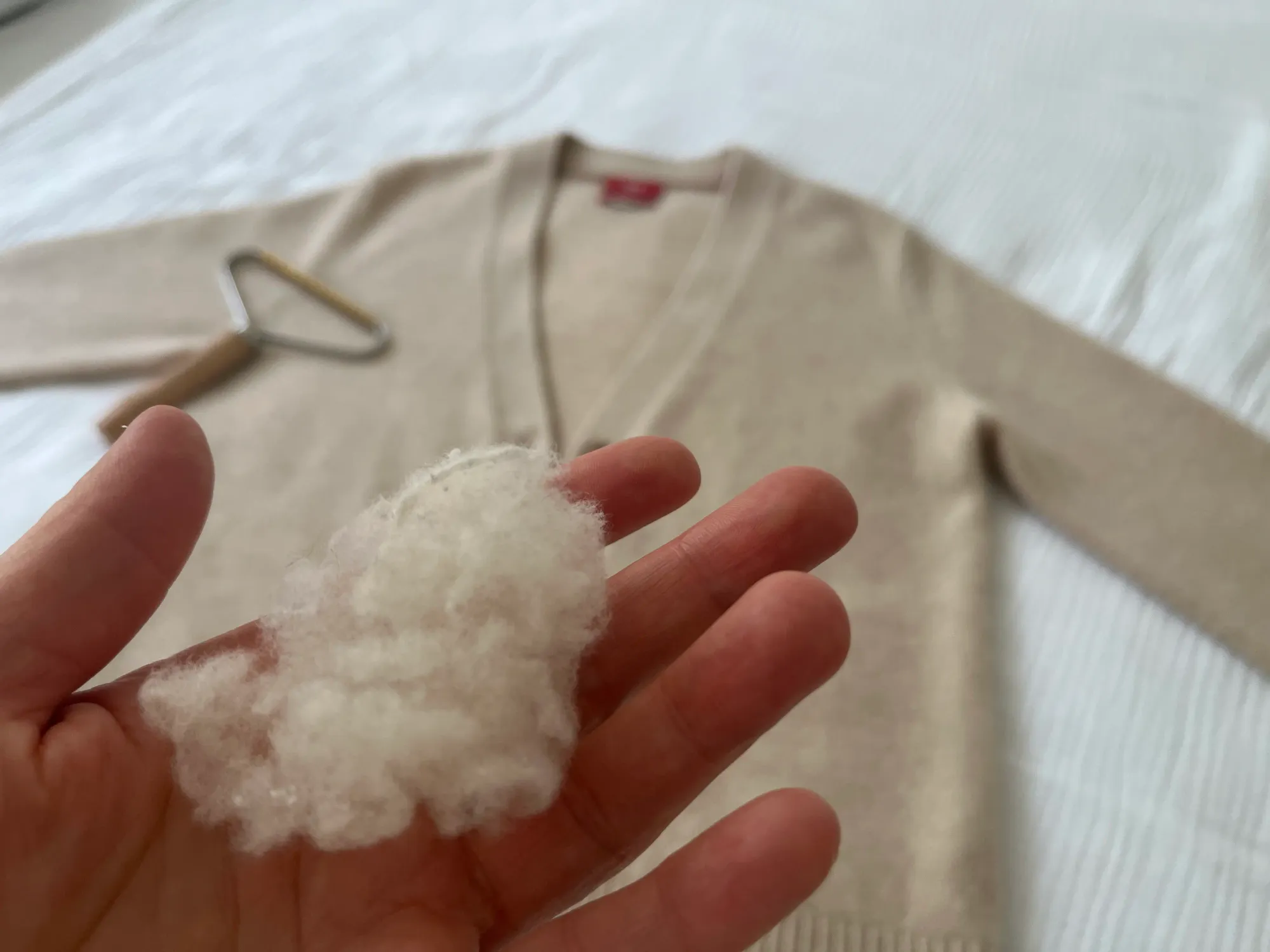
I have one. It's a manual "comb", see the photo below. It didn't cost that much, so the investment was definitely worth it. :) Just use careful, gentle strokes to go over the place where the lint is a few times. Never push; always just go over it gently. Because the comb is manual, I can easily regulate and monitor everything. It's not time-consuming.
Electric depilator
A former colleague from work has one at home and couldn't praise it enough. I'm more traditional in this regard and prefer to stick to traditional manual methods for my luxury sweaters. 🤭 But if you have any experience with them, I'd be happy if you could share it.