Table of Contents
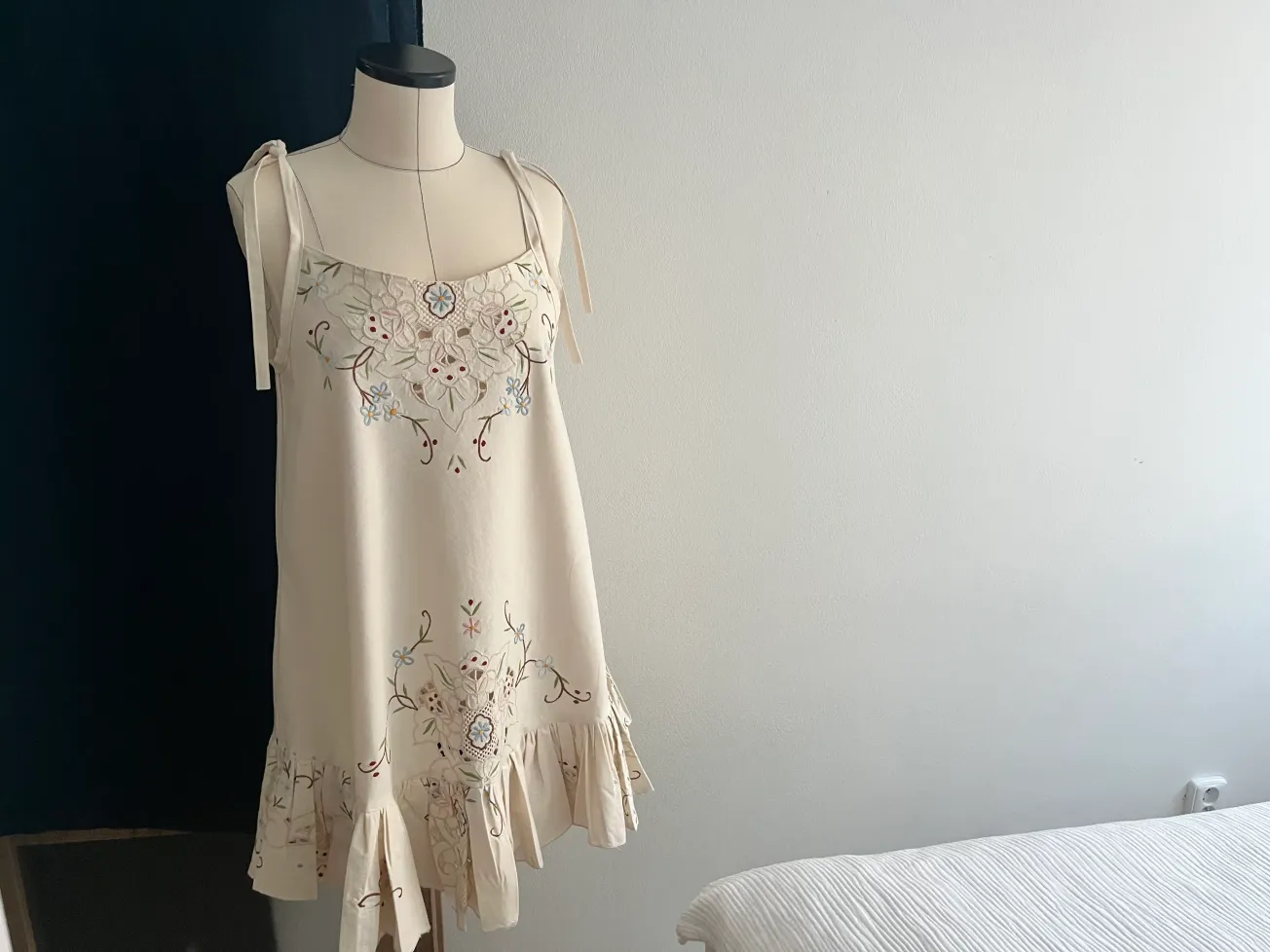
Upcycling a tablecloth into a dress is something I've been wanting to try. The videos and photos on Instagram and Pinterest tempted me. Recycling damaged, torn, or stained tablecloths is an amazing idea.
Usually, it's a hand-embroidered piece that, when turned into a dress, becomes a unique model that combines the skill of the seamstress who sewed it with the historical charm and touch of the woman who once embroidered it.
A few weeks ago, I had the opportunity to buy one of these tablecloths from an inheritance.
Personally, I deeply appreciate human work. Especially when it comes to handcrafts such as knitting, crocheting, embroidery, or sewing. It is a huge job that is not seen for a long time, and the person who does it usually spends very long hours and entire evenings on its creation. But sometimes damage happens. Nothing lasts forever… From my perspective, recycling might be an absolutely brilliant idea. I love DIY Eco-friendly fashion. All you need is a little imagination, and you don’t even need a pattern.
I am a beginner, and in this article I will show you how you can sew a similar dress at home.
DIY tablecloth dress
Let me show you how to reuse old tablecloths into a beautiful dress.
What you need:
An old/vintage tablecloth (linen or cotton works best)
Sewing machine
Tailoring scissors
Measuring tape & Tailor's chalk
Thread (matching the embroidery or base fabric)
A basic T-shirt (to use as a template) or a sewing mannequin
Estimated Time
Around 10 hours of your time.
DIY tablecloth dress step-by-step tutorial
The most important thing is the pattern's layout. Every embroidered tablecloth is unique, and dresses are usually made to suit the shape, and type of embroidery so the embroidery makes the dress stand out.
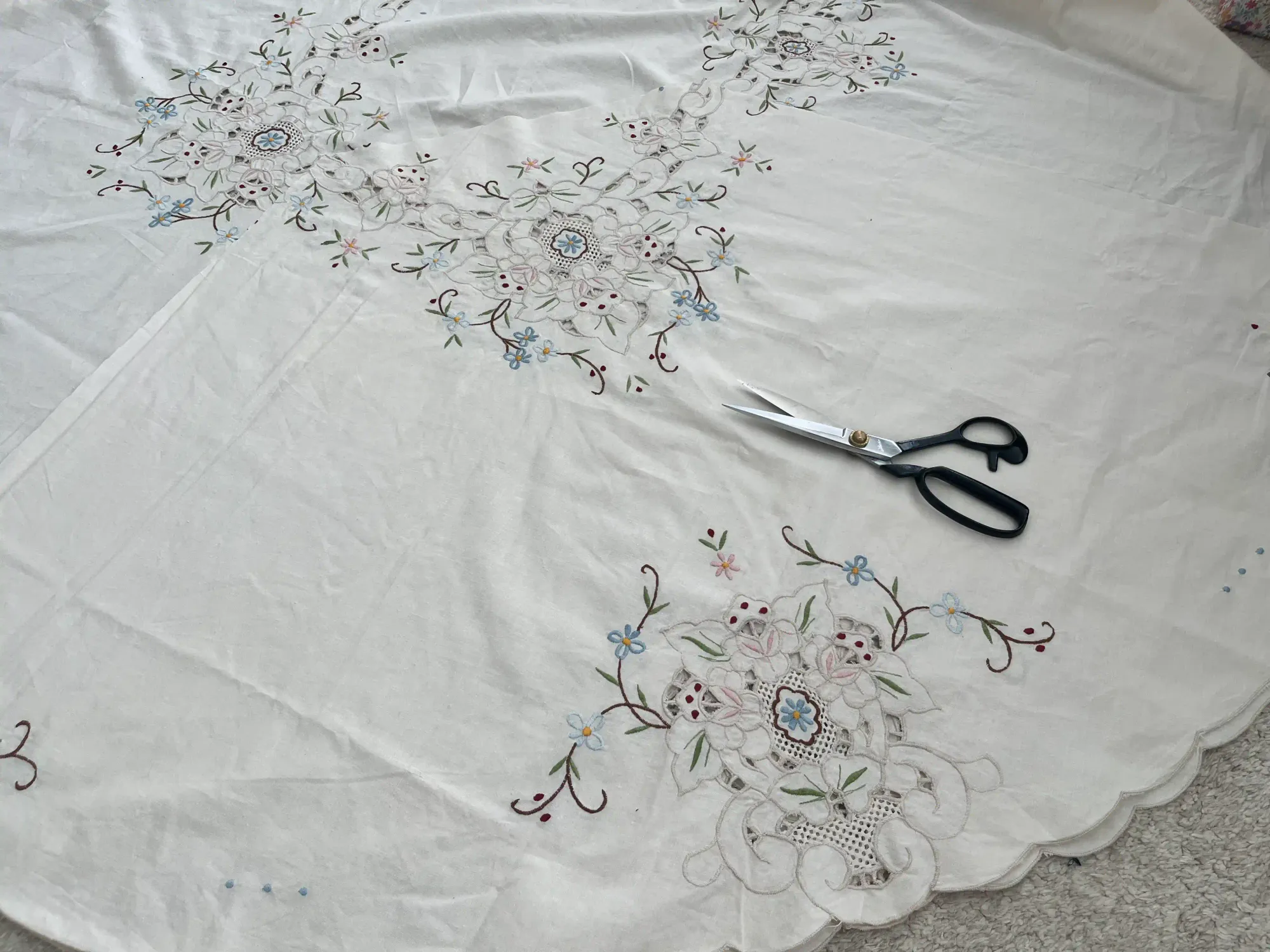
Laying the Pattern on the Tablecloth
The most important part of a DIY tablecloth dress is the layout. Before cutting, wash and iron your fabric. Lay it flat and study the embroidery and its pattern. I chose a simple A-line silhouette to avoid complex seams and to highlight the floral patterns. I strategically placed the pattern to avoid the worst stains while keeping the best embroidery on the chest and hem. As a beginner, I wanted to be sure my dress would look the way I wanted.
Cutting an Old Tablecloth with the T-shirt Hack
If you are cutting according to a T-shirt, place the T-shirt on the tablecloth and trace its shape with tailor's chalk or pencil. Don't forget to add a piece for darts. At the bottom, add the necessary length of the dress, which corresponds to how long you want the dress to be.
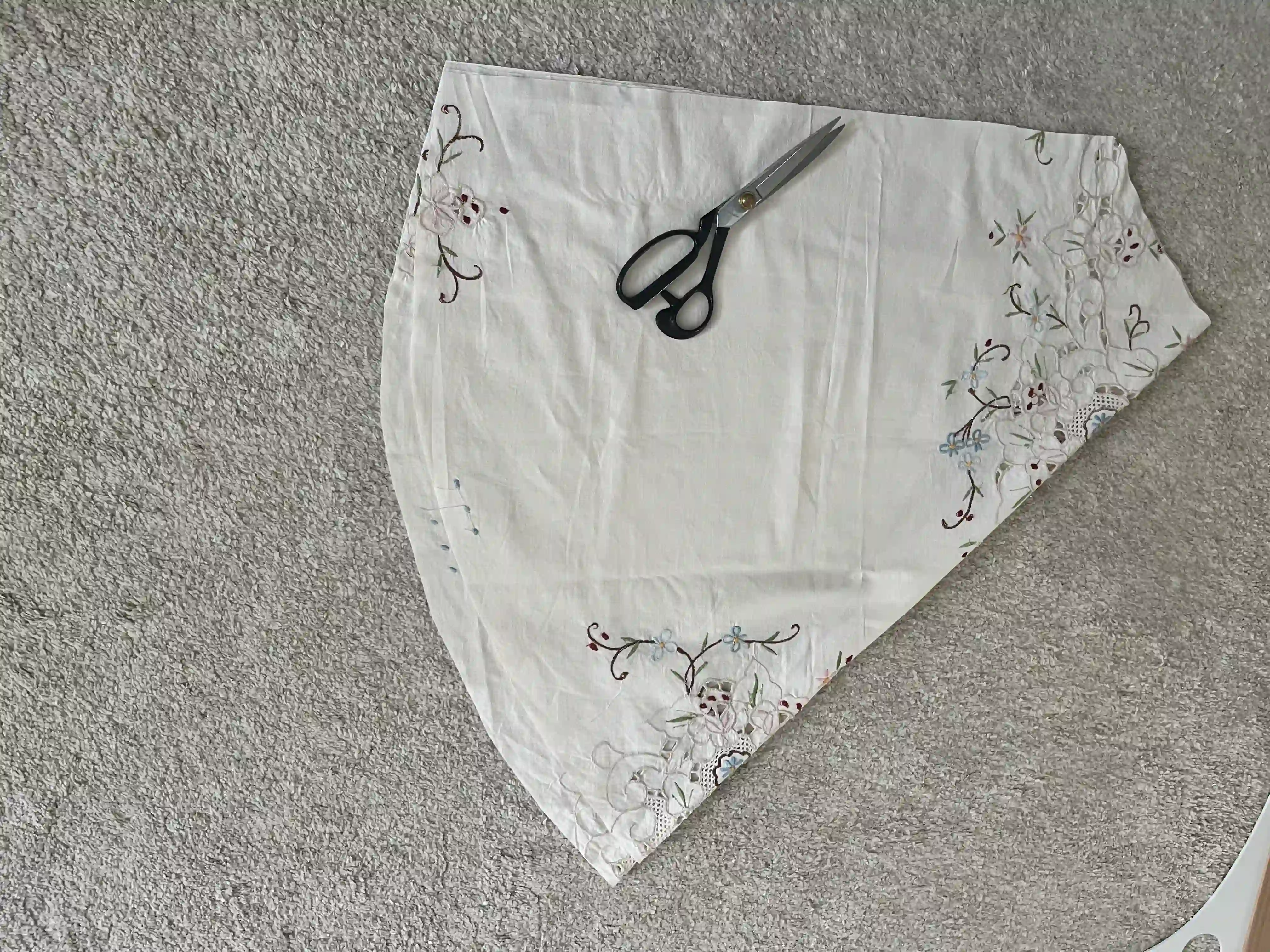
You need a front and back piece for the dress. When laying out the pattern, the individual sides of the tablecloth may not match. That was exactly my situation. The tablecloth was rectangular, and the embroidery respected this shape. Therefore, it is important toconsidert the shape and cut of the dress so the embroidery is where you need it. That's why I went with the simple route: an "A" shape dress.
Checking the Cut Pieces
Before sewing, I folded the front and back pieces in half to check that both sides of each piece were the same and that the "A" shape would fit my DIY tablecloth dress.
Why a Sewing Mannequin Changes Everything
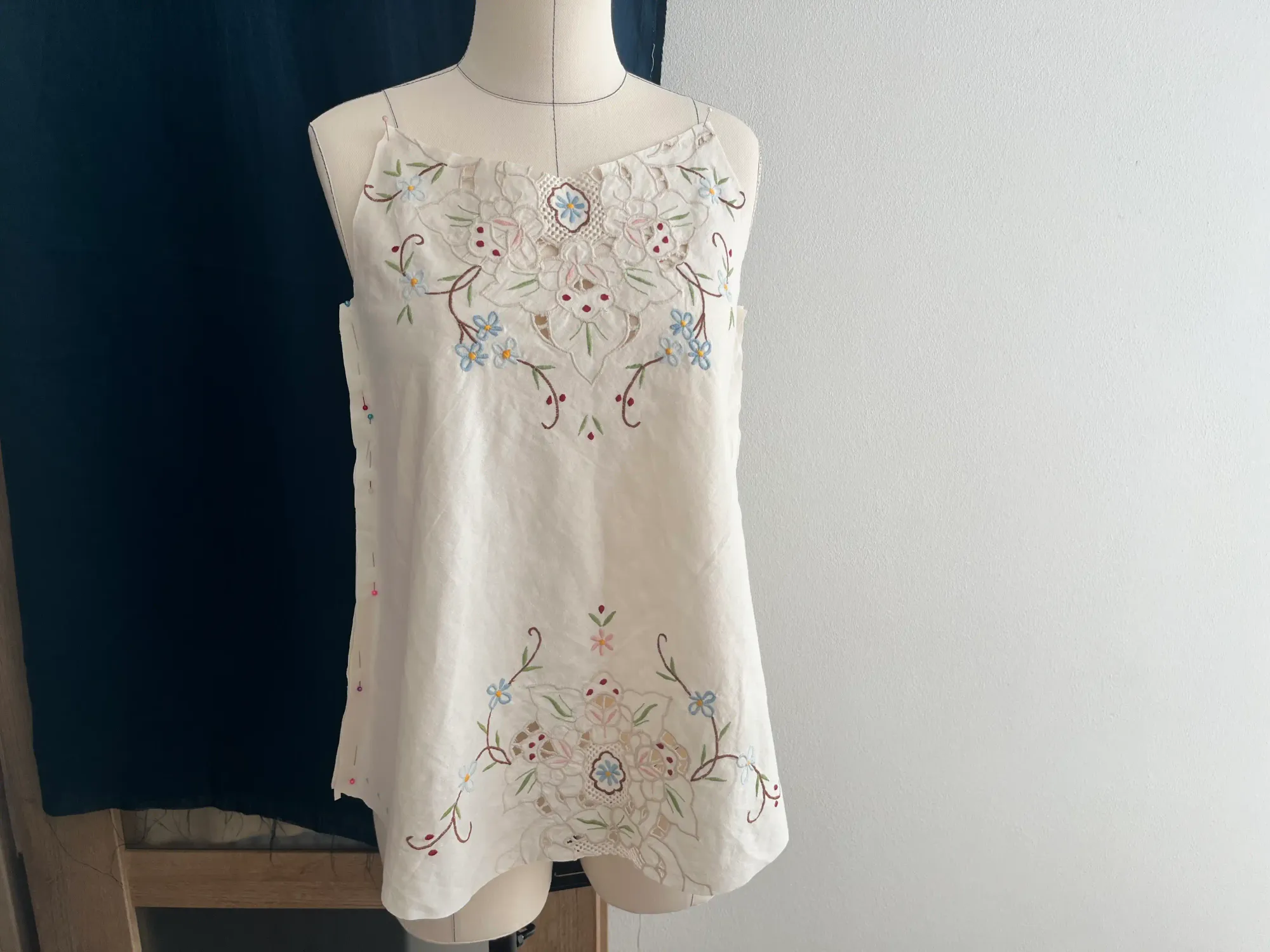
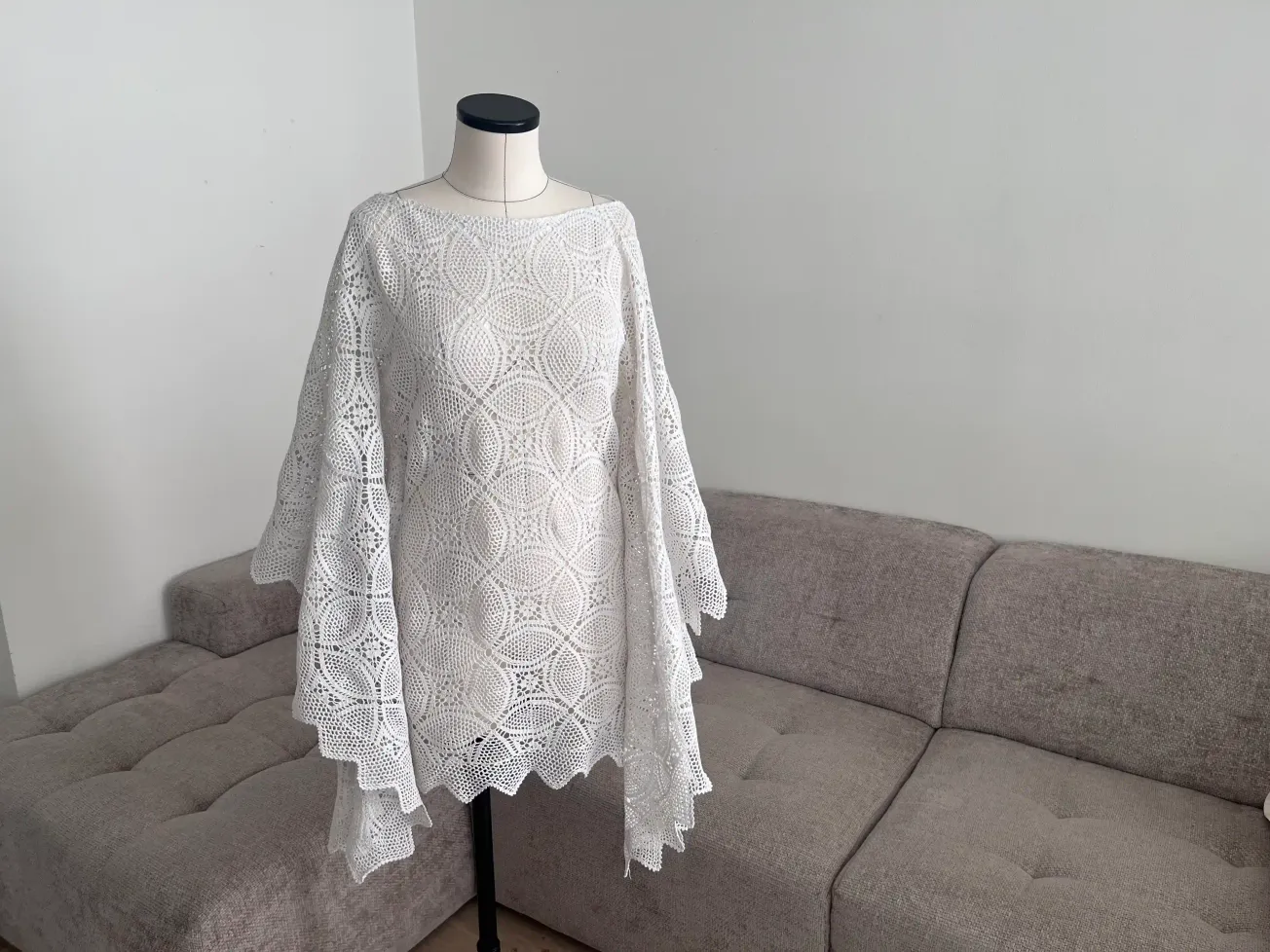
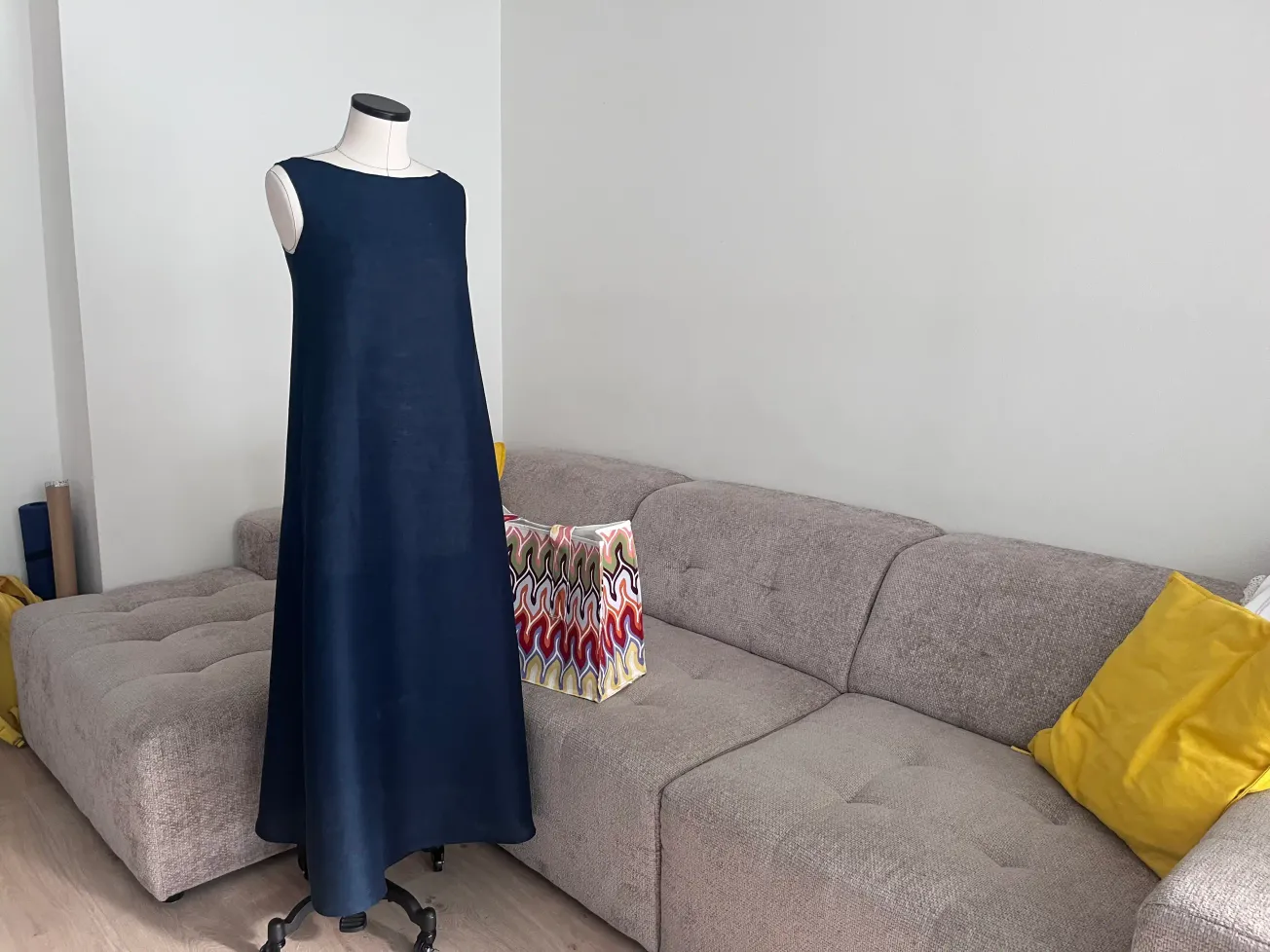
I pinned the pre-cut pieces onto a sewing mannequin to finish the dress according to the desired result. I'm not a professional seamstress. I still consider myself a beginner. That's why it was essential for me to get a sewing mannequin.
I've sewn a few projects in the past, and my results were not wearable. I had a problem with the silhouette shape. I had crooked lines on all of them. If you're sewing without anything, it's hard to get the shape and cut right to fit your figure. You don't pin anything straight on. That is, you pin, but as you move while pinning, you shape the dress, blouse, or anything else crookedly, because you move yourself. That was not the way for me. That's why I bought a sewing mannequin. Today I won't let it go. It was the best thing I could have done in my creation after the sewing machine and scissors!
So I pinned the dress parts to the mannequin and finished them so I could start sewing.
Preparing the Tie Loops for my DIY Cottagecore dress
I had space left in the middle of the tablecloth to cut out the loops. Fold the loops in half along their length, then in quarters, and iron them so they hold their shape.
The Zero-Waste Ruffle Hem
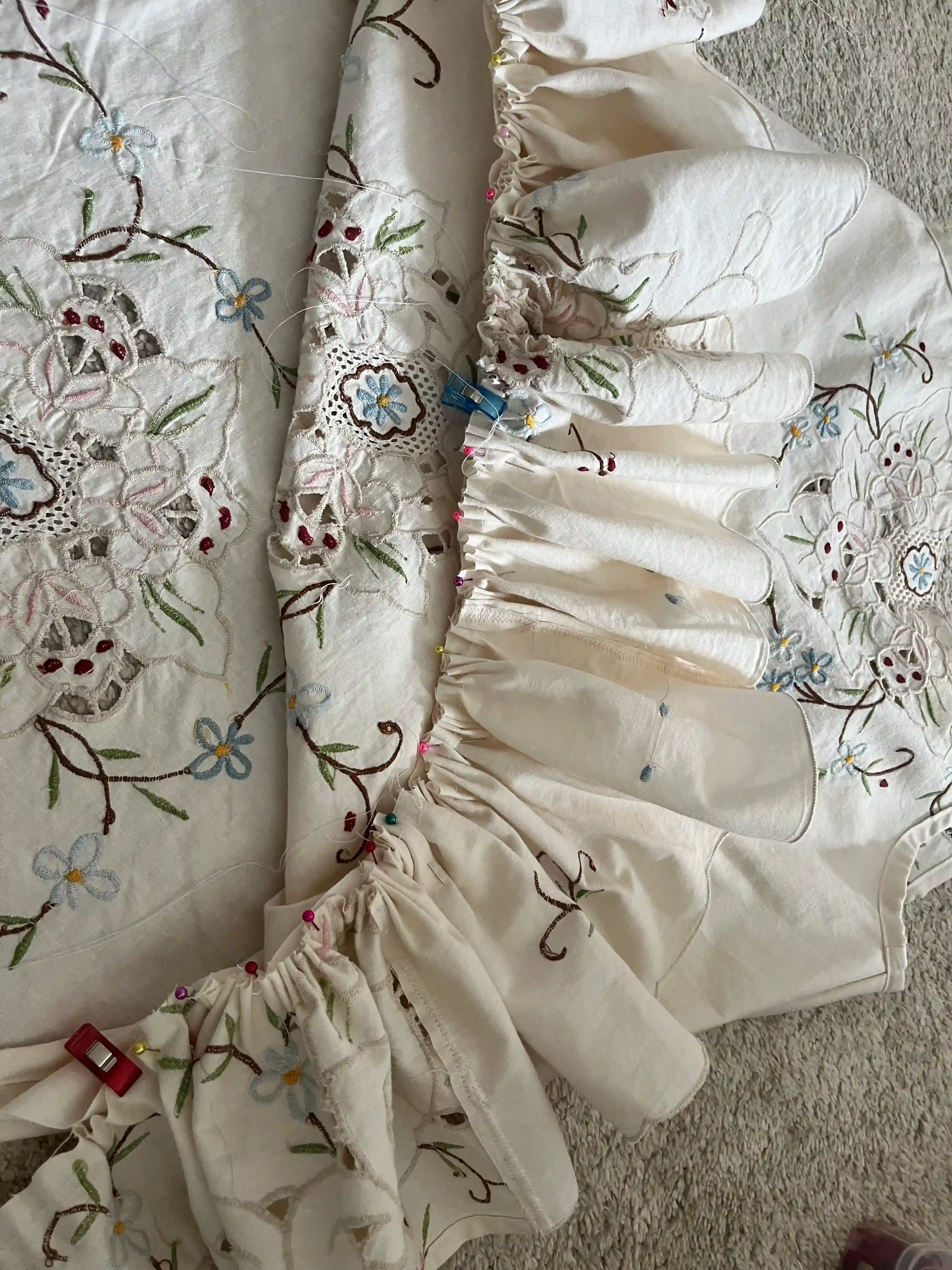
I wanted to make this sewing project zero-waste. I used the leftovers to create a bottom ruffle. I prepared a strip 1.5 times longer than the circumference of the dress bottom. How tall you want the ruffle to be is entirely up to you. Mine was approximately 17 cm / 6.7 inches.
My Tip: If your tablecloth has a decorative border, use it for the ruffle! Sew a long straight stitch and gently pull the thread to gather the fabric until it matches the width of your dress.
Final Assembly of My Cottagecore Dress
Join the front and back pieces together on the sides with the wrong side out. Sew both pieces together.
Attach the prepared ruffle to the dress with the wrong side out along the entire circumference of the dress. Sew on a sewing machine.
You can fold the top of the dress and sew it with the wrong side out. I had embroidery in this area of my dress. So I cut out a strip of about 5 cm / 4 inches, sewed it to the right side, then turned it to the wrong side and sewed it to create a nice hem.
Sewing the loops was the last part of my Cottagecore dress. I put the dress in the open side of the prepared drawstrings and sewed the drawstrings along the open side.
I just ironed the dress and was ready to go.
I am thrilled with my Cottagecore dress.
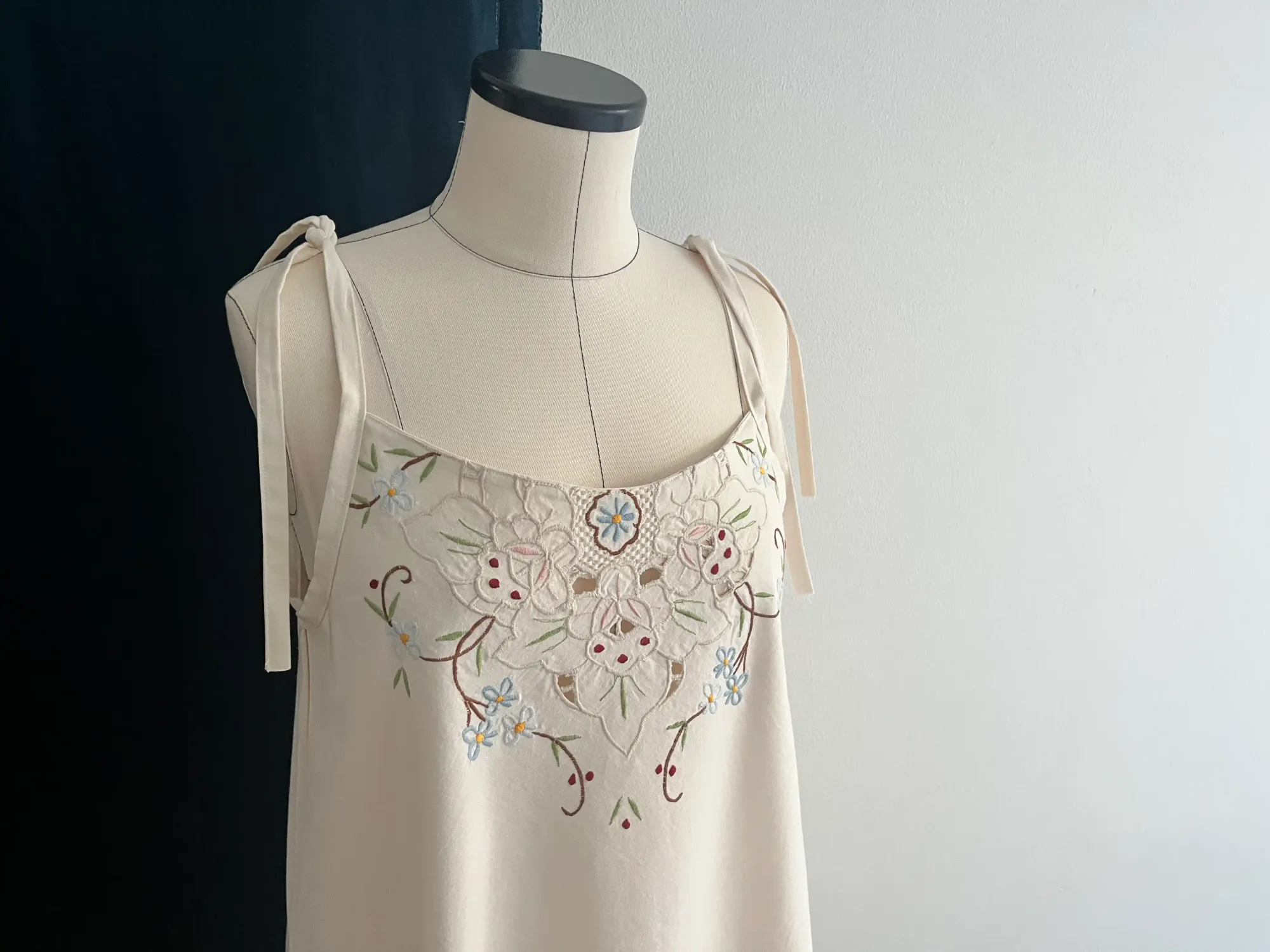
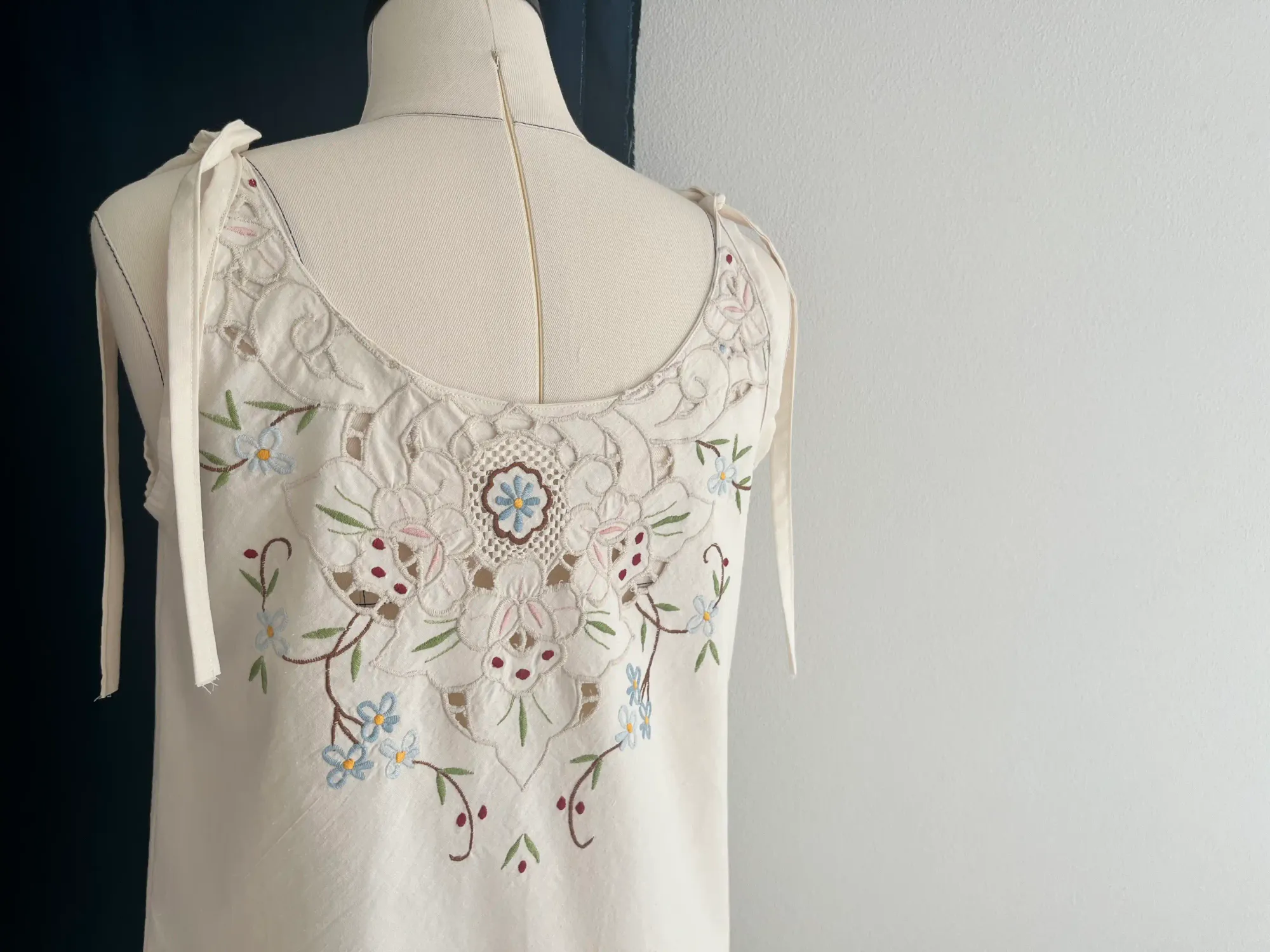
I managed to sew a wearable piece of art without buying a single yard of new fabric, and it perfectly fits with another masterpiece in my wardrobe: an upcycled, stylish DIY Tote Bag from a vintage cross-stitch tablecloth.🌸
What do you think of this transformation? Do you have an old tablecloth hiding in your closet? If you are planning to sew your own dress from a tablecloth or linens to wear and want to discuss it, feel free to write. I am here.
Dana

)