Table of Contents
I recently had the rare opportunity to purchase an old, hand-crocheted tablecloth as a family heirloom.
The owner had the tablecloth in a closet for many years, where it gathered dust because it had several holes and also had several stains that could not be washed out.
I love quiet sewing. It is about one's own creation, about the peace that sewing brings. About love and relationships with the material and respect for the old craft.
Working with premium material does not always have to be only about silk and cashmere.
Premium material can be lying in an old closet from grandma or in a chest in the attic.
For me personally, these are huge treasures from a moral point of view. It is not about the financial value at this point, how much you bought the tablecloth for, but about respect for the work of a woman who sat many evenings or nights many years ago and crocheted the entire tablecloth by hand.
For me personally, I see these special pieces as absolutely unique and one-of-a-kind.
I don't have to make an entire wardrobe out of these old pieces from my grandmother, but if I have the opportunity to transform a hand-crocheted tablecloth into something new and give it another life, and not just let it stay at the bottom of the closet, I will do it with joy in my heart.
What you need
Main material - if you want a dress like mine, you need a size of 170 cm x 142 cm / 66.93 inches x 55.91 inches or more
Iron-on reinforcement strip
Scissors
Spool of thread in the color of the fabric
Measurement tape
Tailoring scissors
Sewing machine
Estimated time
Around 3.5 hours of your time
Free downloadable pattern:
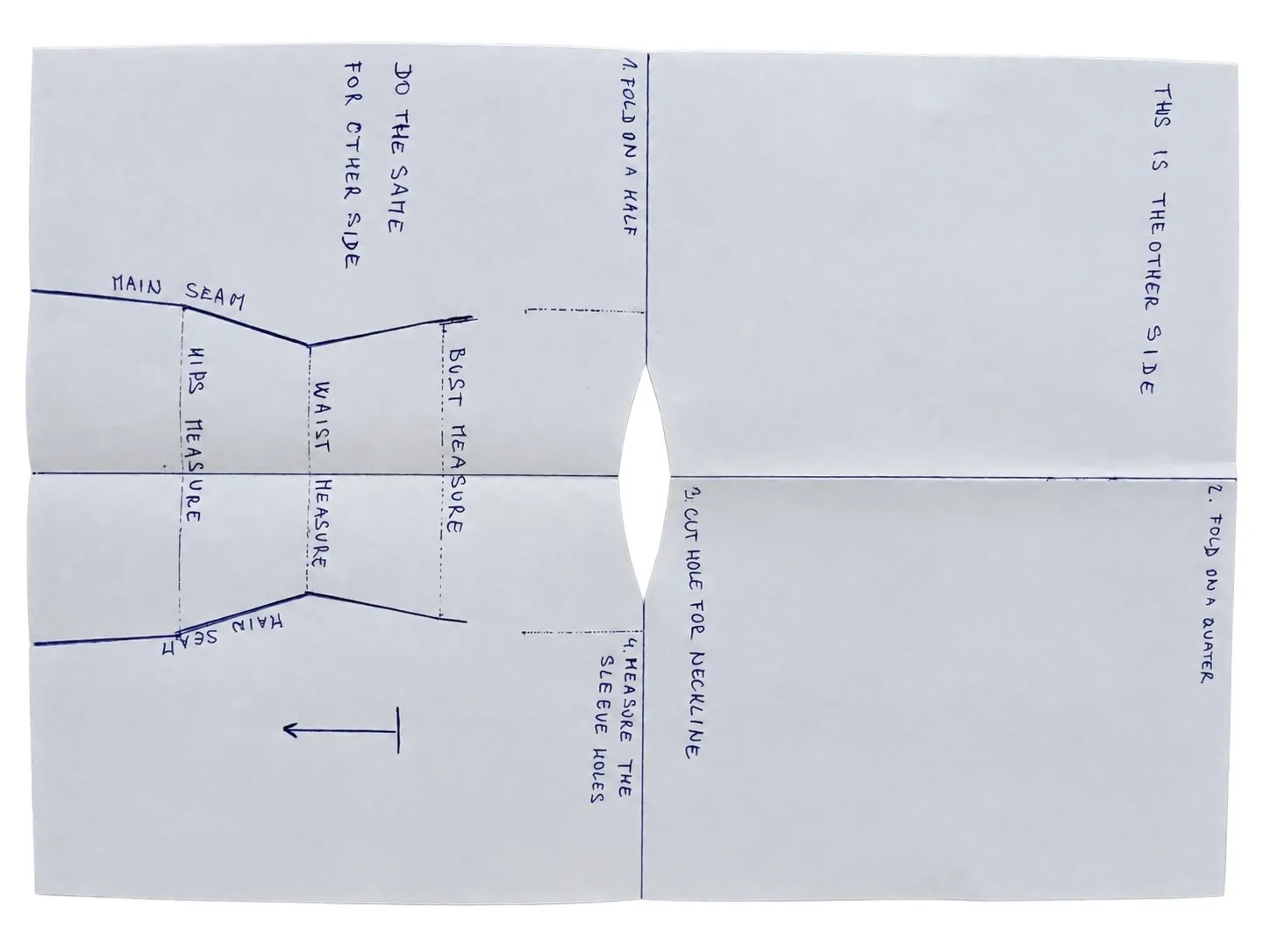
How to Sew a Boho Dress From a Vintage Crochet Tablecloth
Washing the fabric
Crochet tablecloths are usually starched to make them strong and withstand the pressure of the dining table. Before you start, wash the tablecloth.
Hand wash the tablecloth in mild detergent and let it soak to loosen the starch. Do not put the tablecloth in the washing machine or on a delicate program. The fabric has been in the closet for many years and could be damaged. So rinse the tablecloth gently.
When I wrung the tablecloth, I gently squeezed the fabric. Never wring the fabric classically. The tablecloth could stretch into an unwanted shape. When most of the water is gone, place the tablecloth on a large towel, roll it up, and stand on the roll. By gently stepping on the towel, the towel will suck the water out of the tablecloth without stretching it unnaturally.
Dry it horizontally on a clothes drying rack or place it on a towel on the floor. Don't hang the tablecloth on a regular line; it could pull out.
Preparing the pattern for cutting directly on the tablecloth
Place the ironed tablecloth on the floor or on a large table.
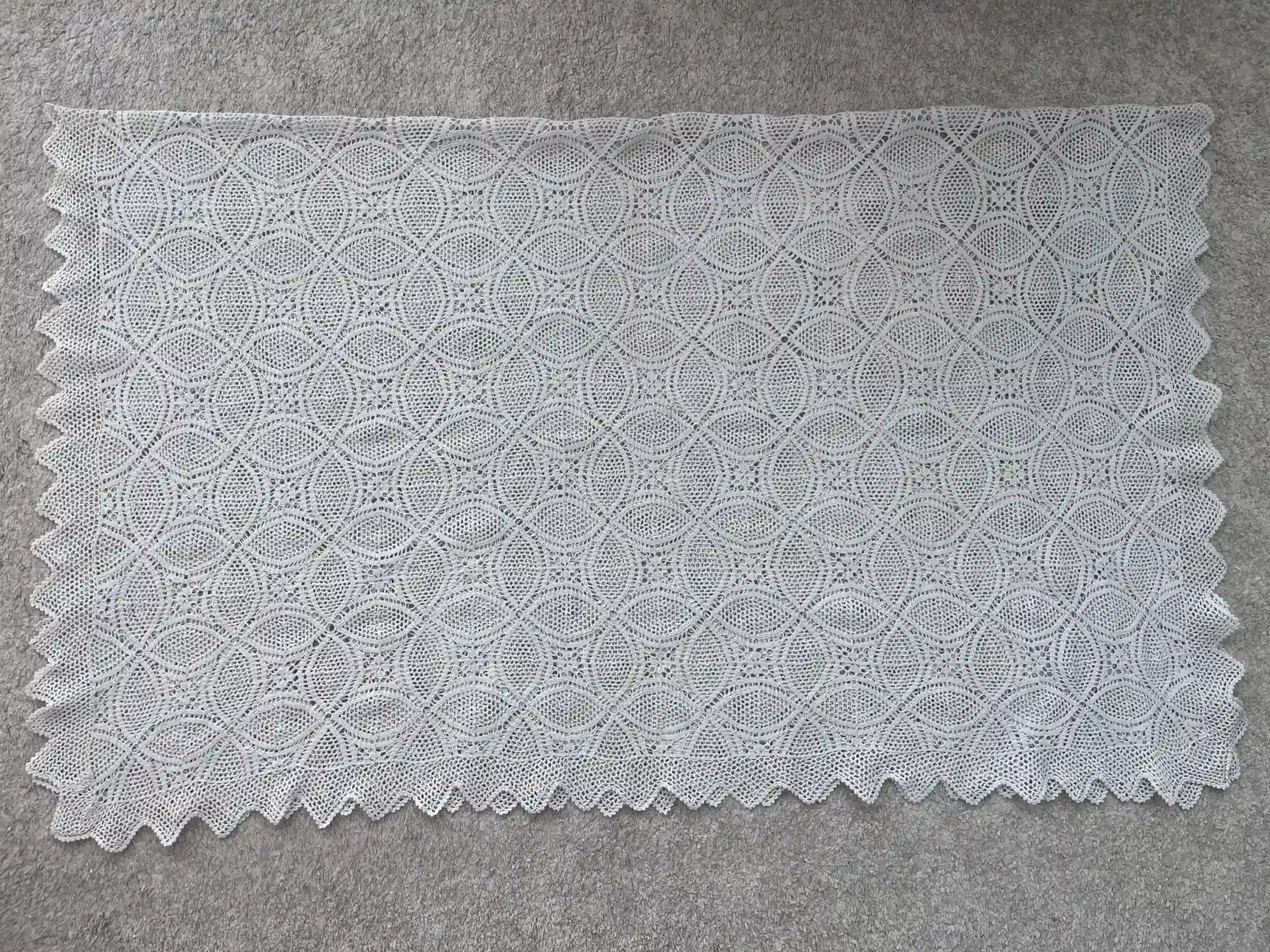
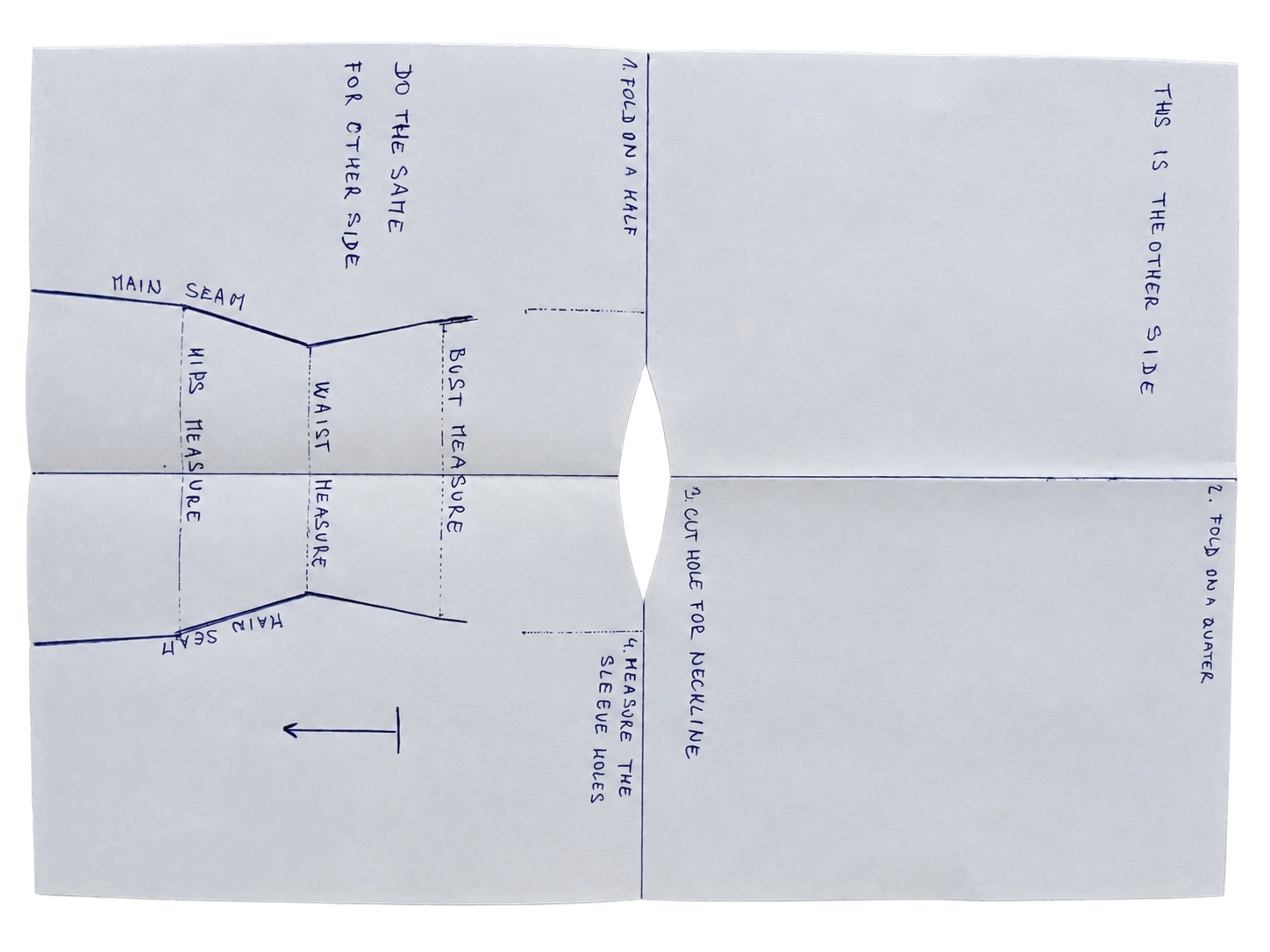
Fold the long side of the tablecloth in half. This will be the length of your dress.
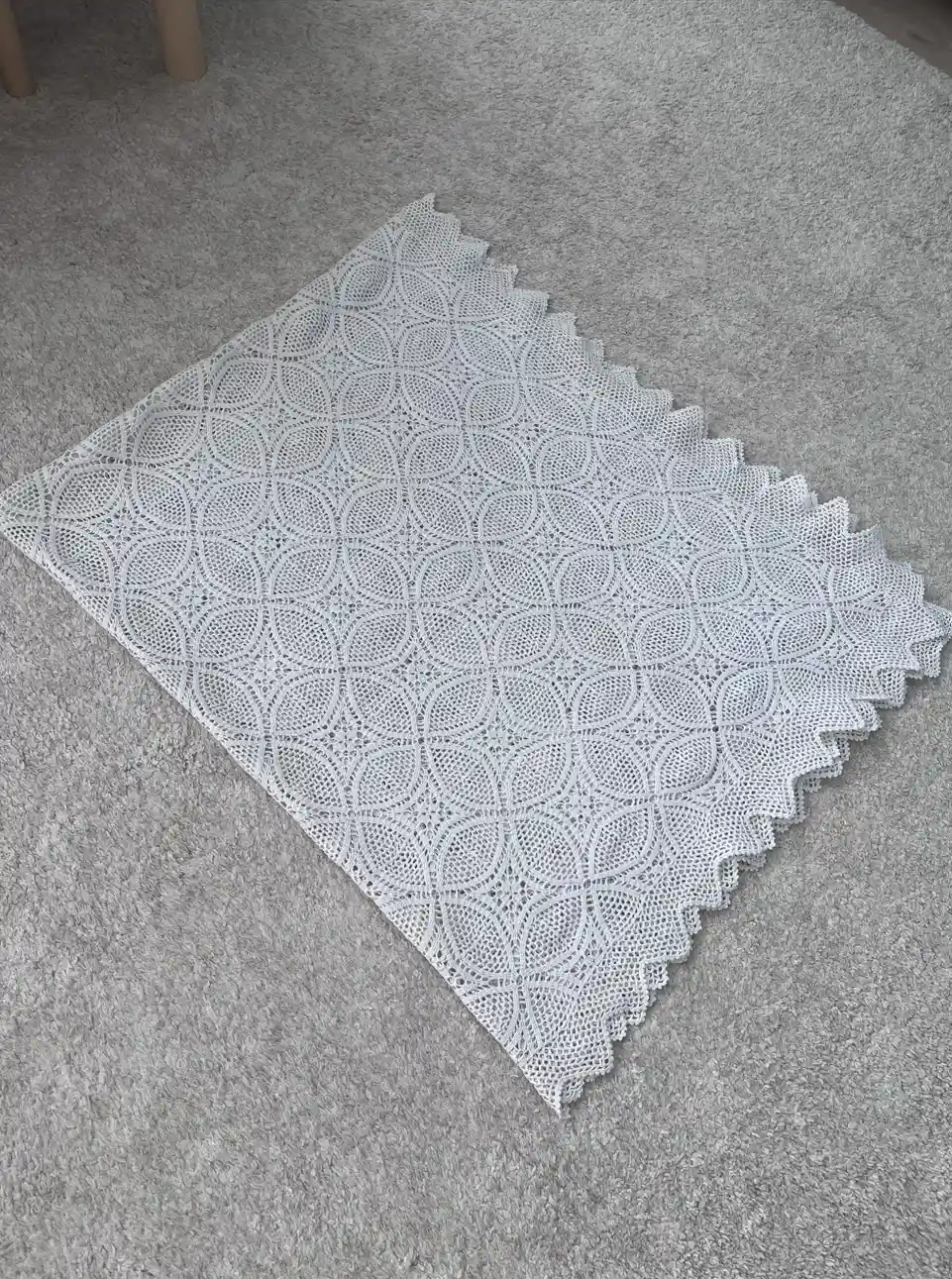
Fold the fabric in quarters, so you know where the middle of your dress is.
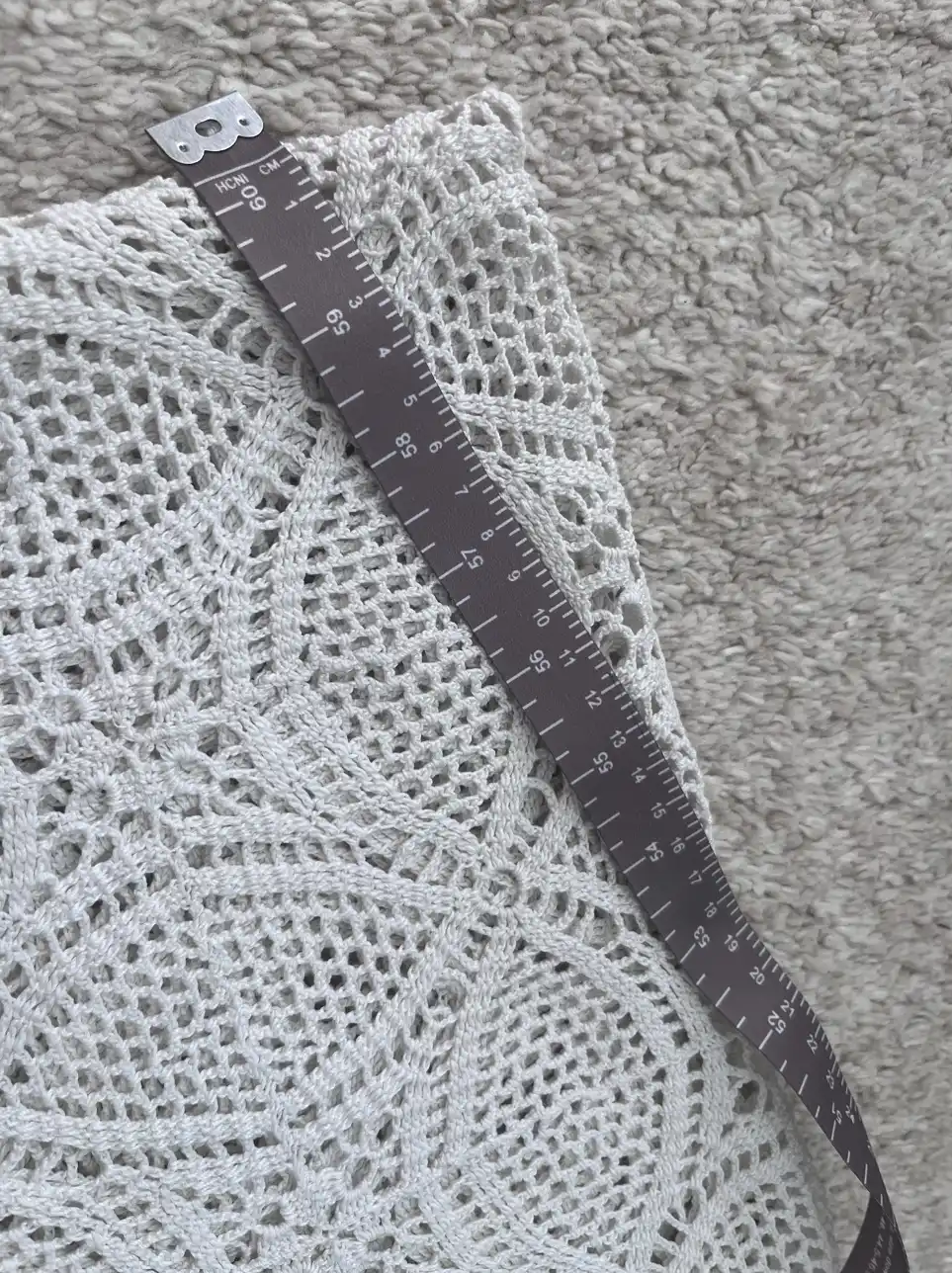
Measure 5 cm / 2 in from the top edge of the dress and, from this point, cut out a boat-shaped neck opening towards the edge.
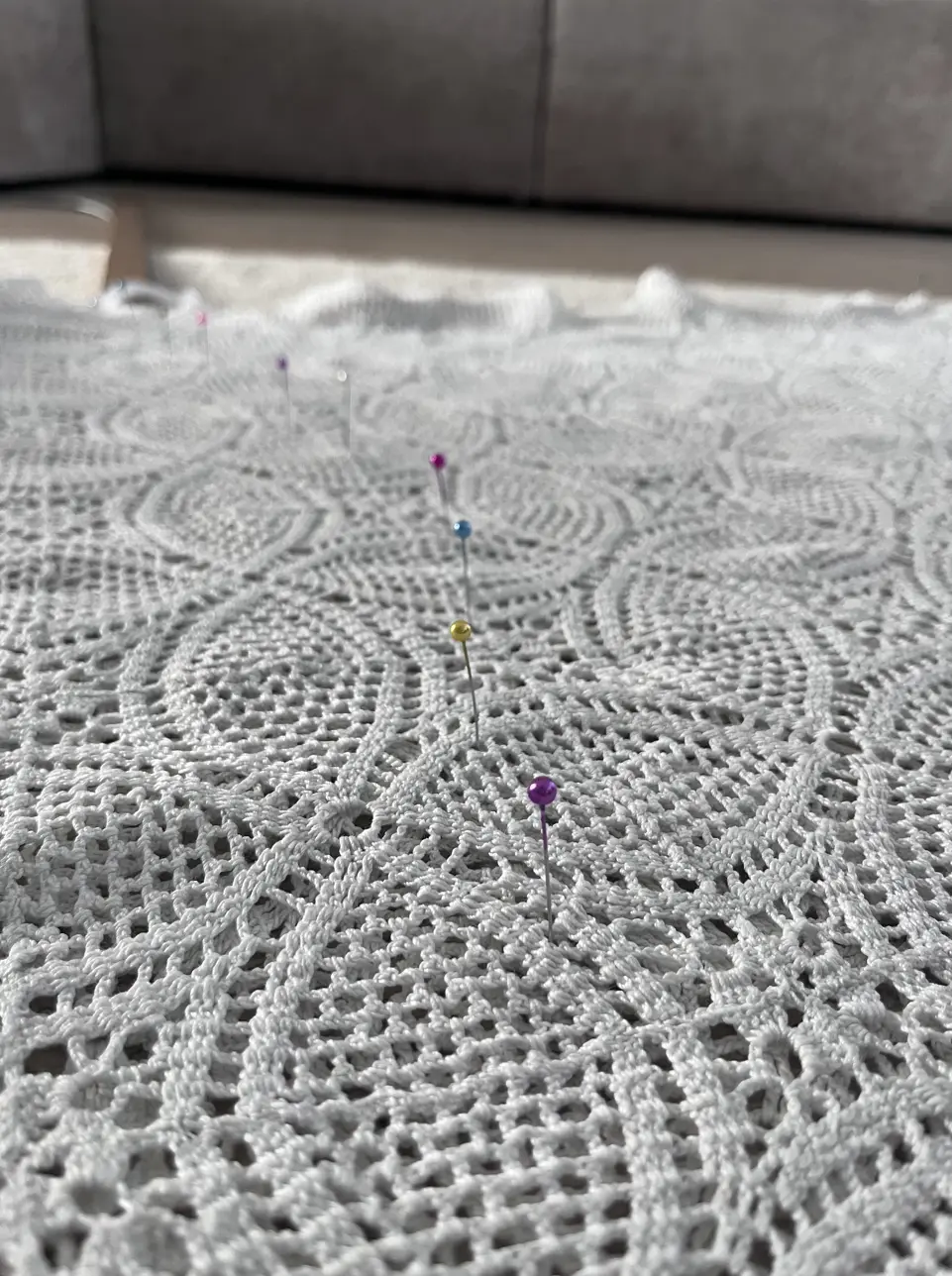
You now have the fabric folded in half, with the neckline facing up. Now create a silhouette on the rest of the fabric.
Measure around your chest, waist, and hips. Divide the resulting value by 2.
Trace the measurements onto the fabric as shown in the picture. Don't forget to measure the armhole.
Join the chest, waist, and hip points to form a silhouette so you know where to sew the fabric on the right side.
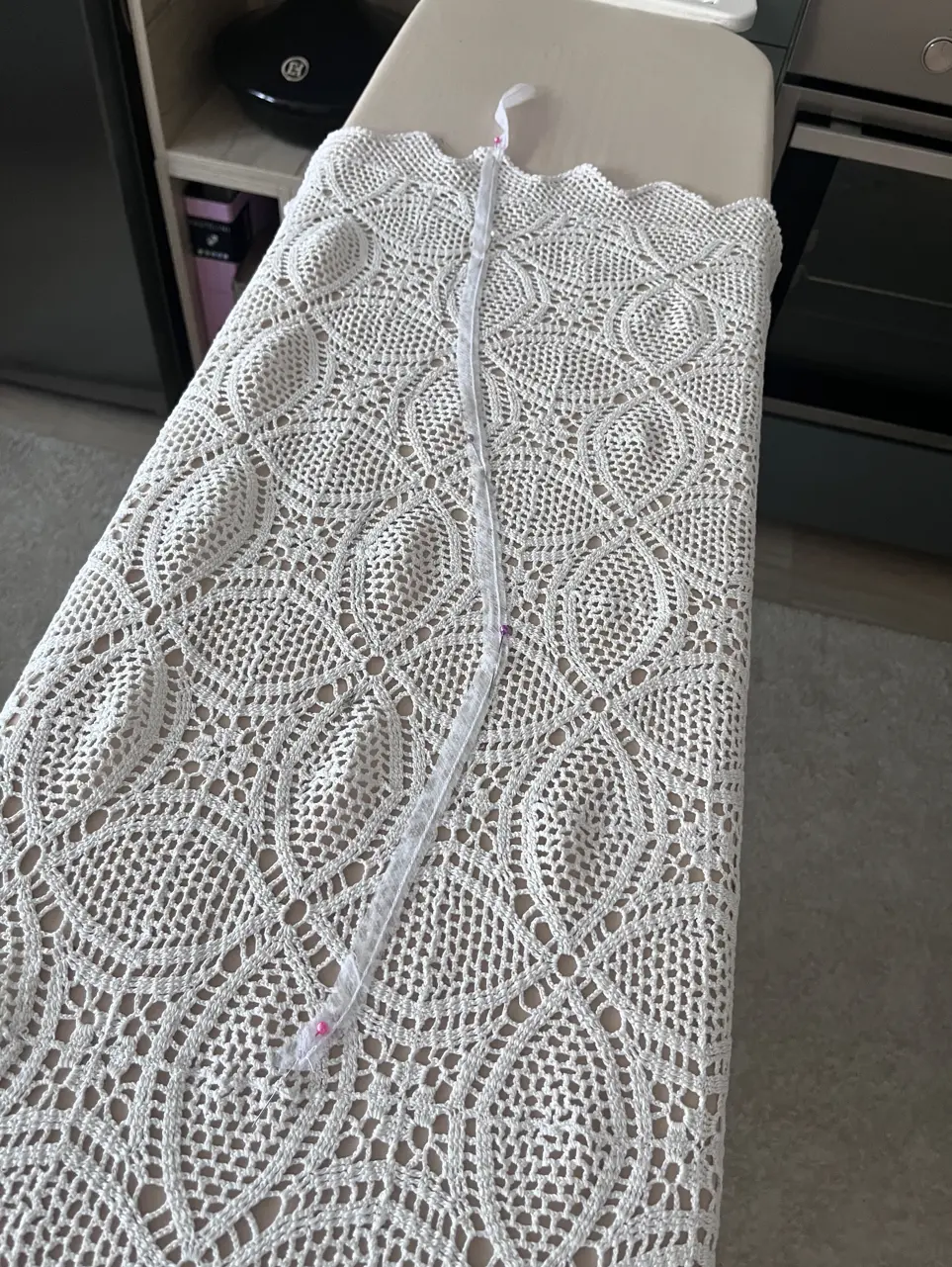
If the fabric is fragile and needs reinforcement, or has holes, iron on a reinforcing strip.
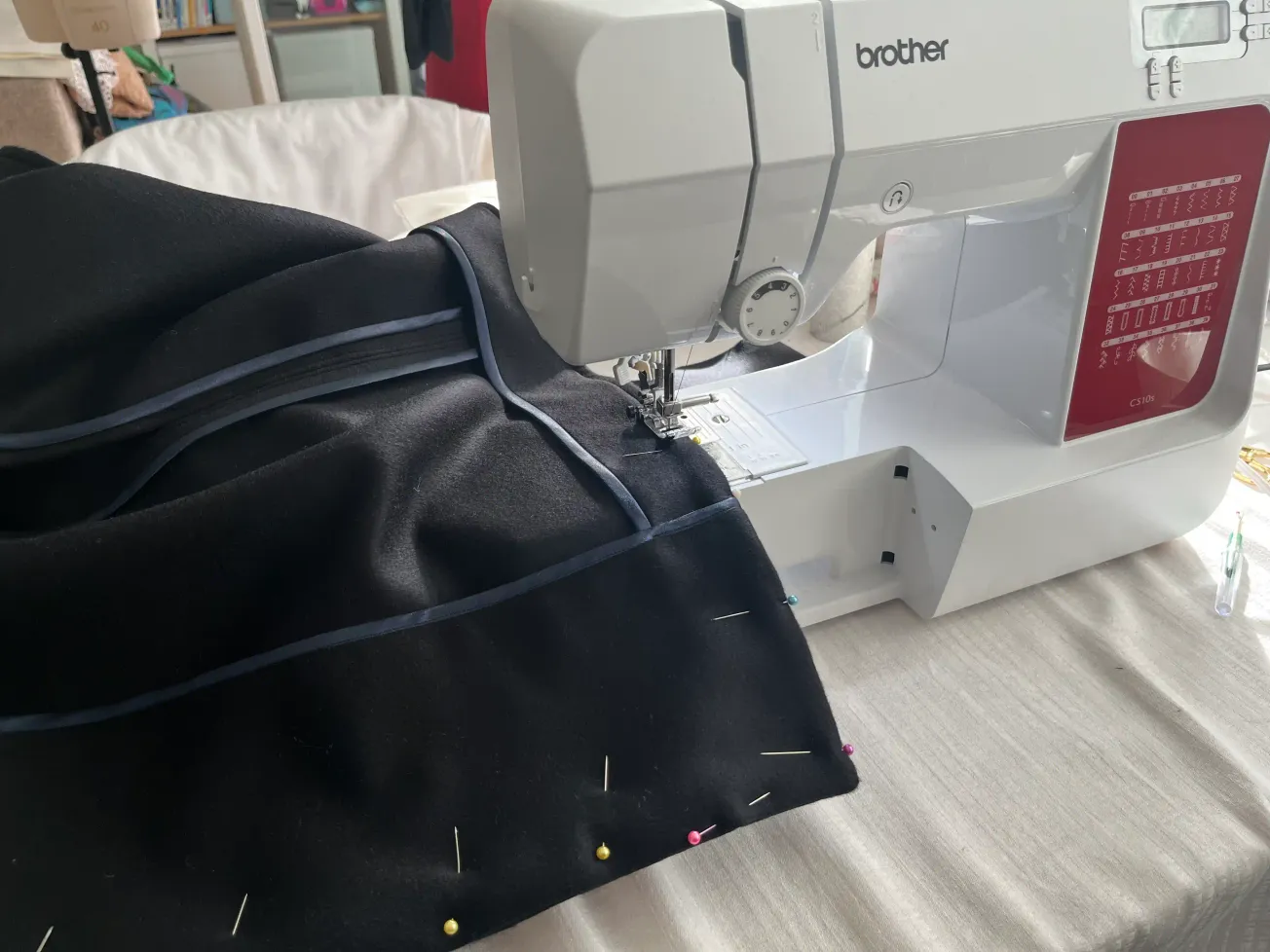
Now turn the fabric right side out and stitch along the surface on both sides of the silhouette. If you are making from embroidered or crocheted material, sew the fabric with a zigzag stitch. If from smooth, solid material, sew it with a straight stitch.
If you want a nicely trimmed neck like mine, prepare the fabric to create a border around the neck.
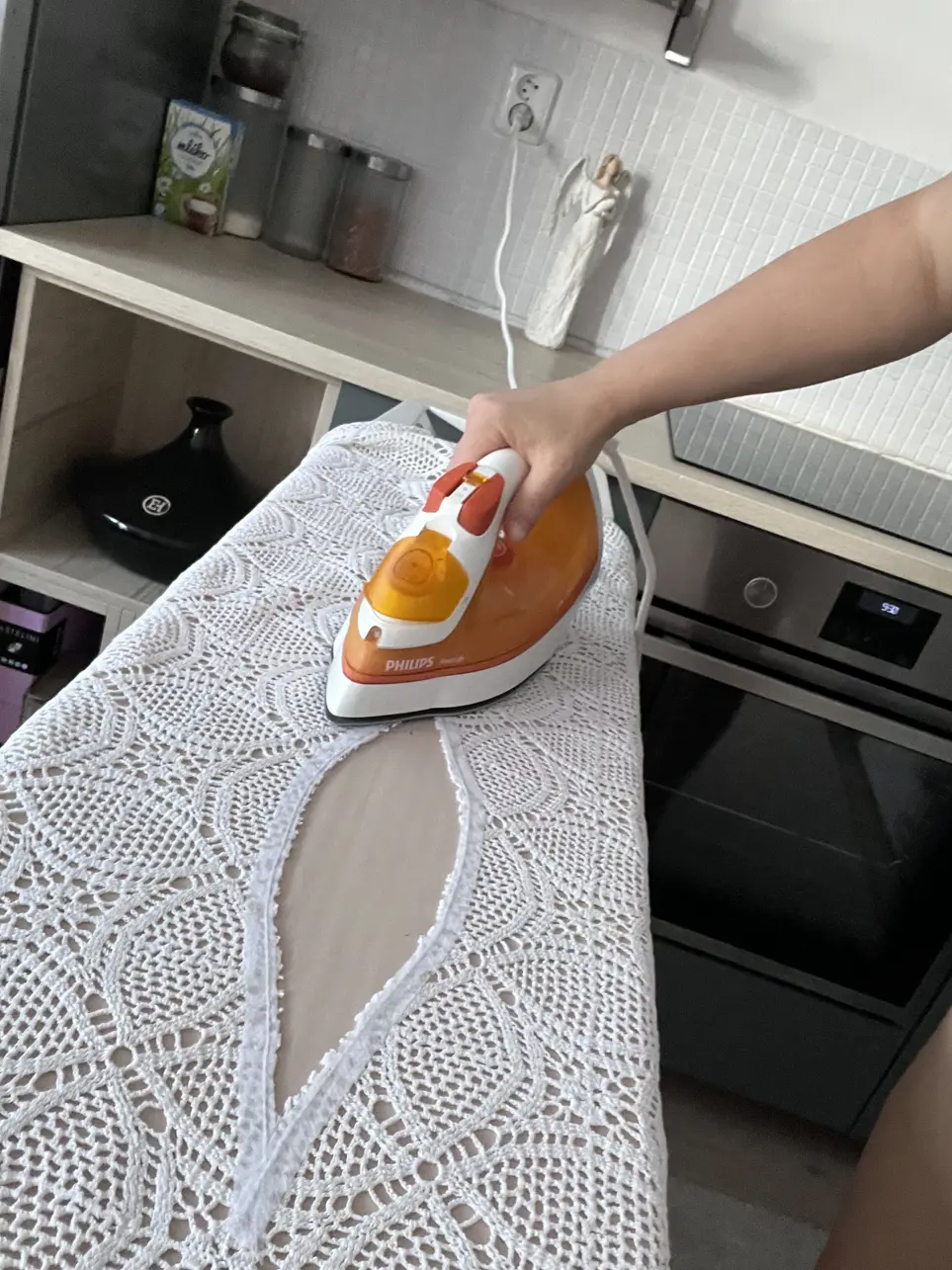
Preparing the part for the neck opening
Fold a piece of fabric and pin it to the edge of the dress; then cut an opening to match the neck shape. Fold the neck edge and stitch.
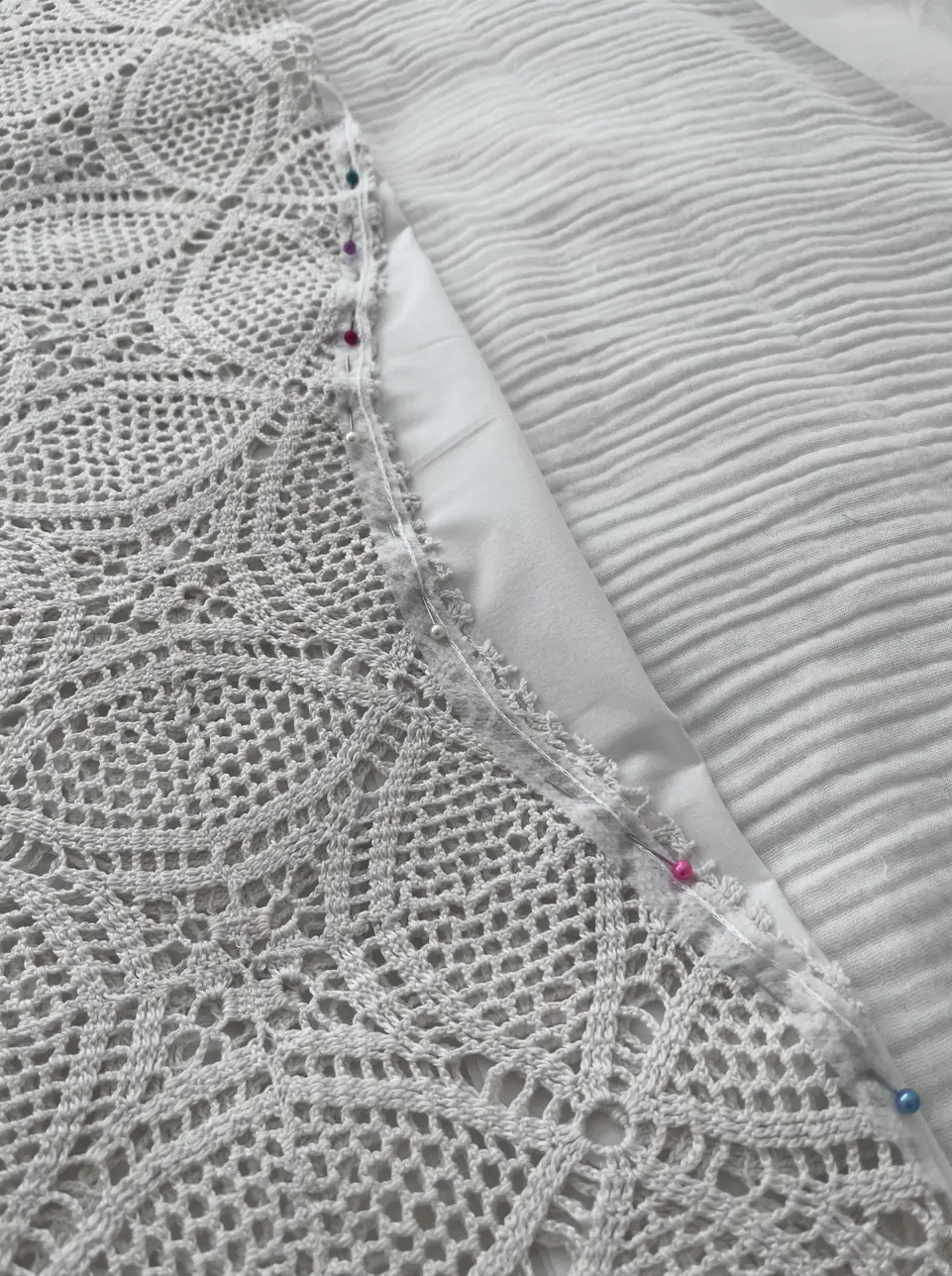
Take the prepared collar and pin it to the right side of the dress at the neck opening, wrong side out, then stitch.
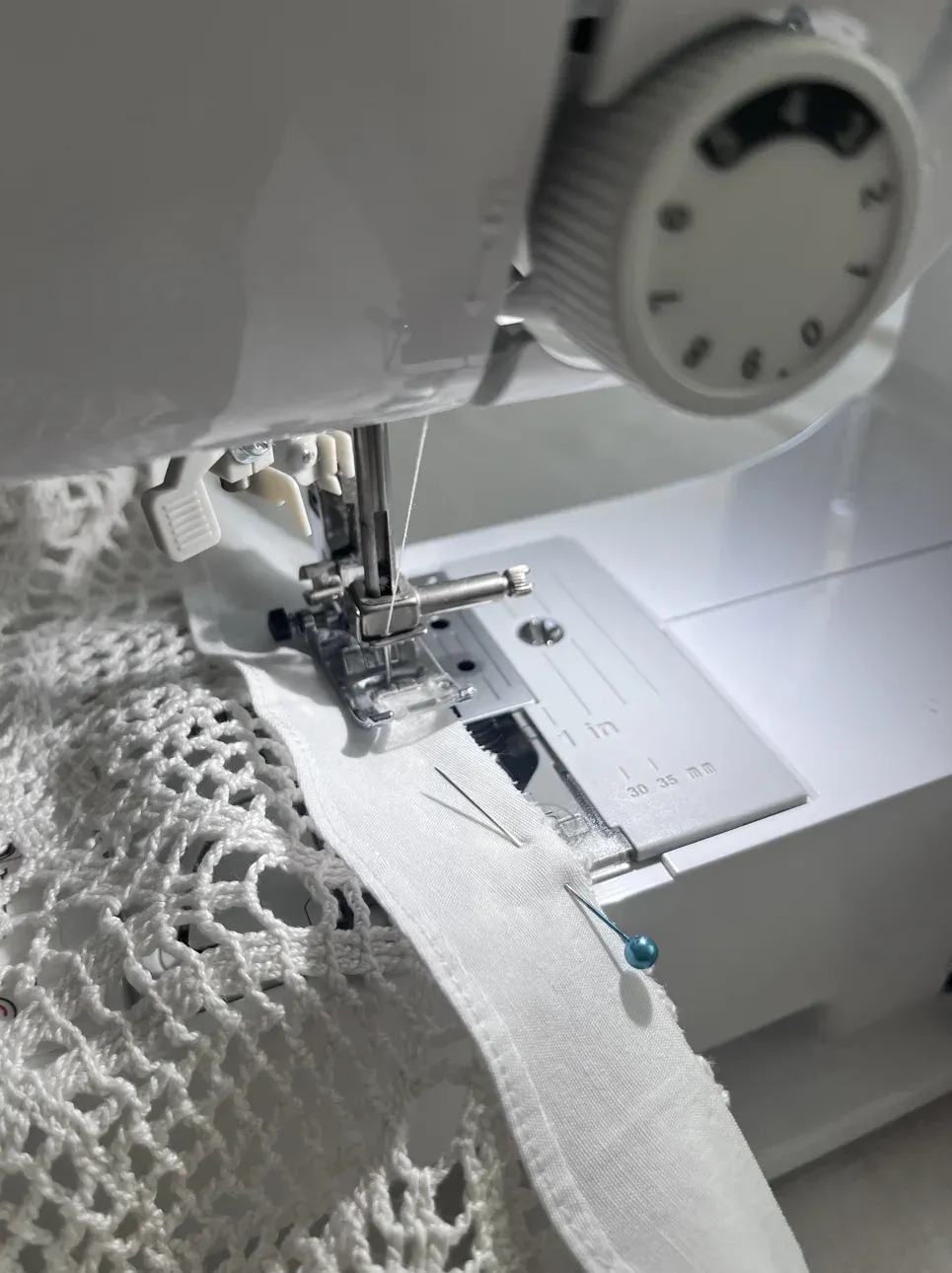
After stitching, turn the collar inside out so the right side faces inward and the collar lies flat. Iron the neck of the dress so that the collar fits snugly.
Sew the edge of the collar as close to the edge as possible to keep it neat and elegant. Thanks to the stitching, the collar will not turn out.
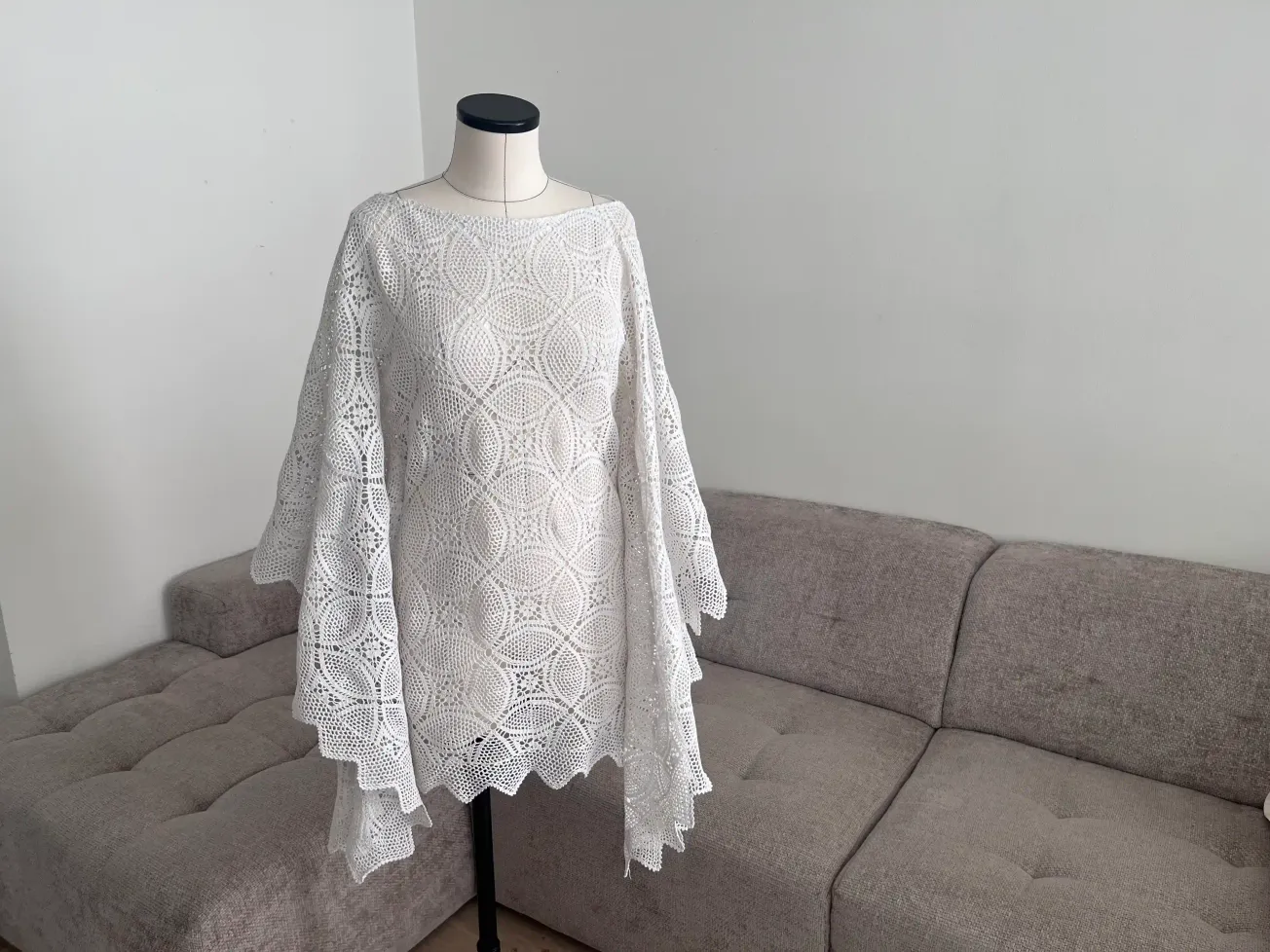
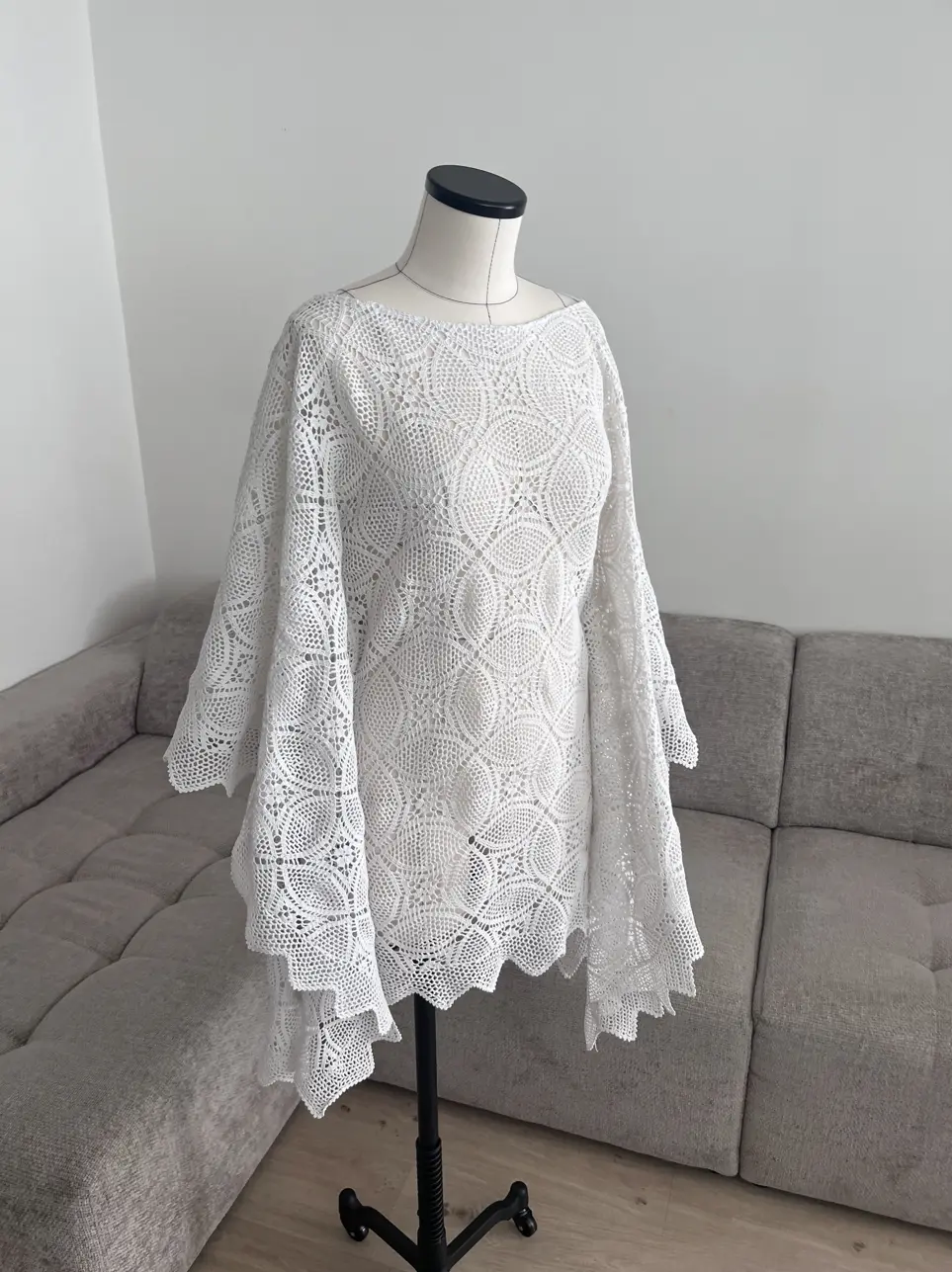
Done. Your new dress is finished and ready to wear.
Let's Do the Math
The dress takes about 3.5 hours to sew if you are a beginner. You only need a classic straight stitch, so the dress is a great beginner project you can wear both in the city and on the beach. I bought the tablecloth for about 20 EUR / 23 USD.
The moral value of the dress? Incalculable!
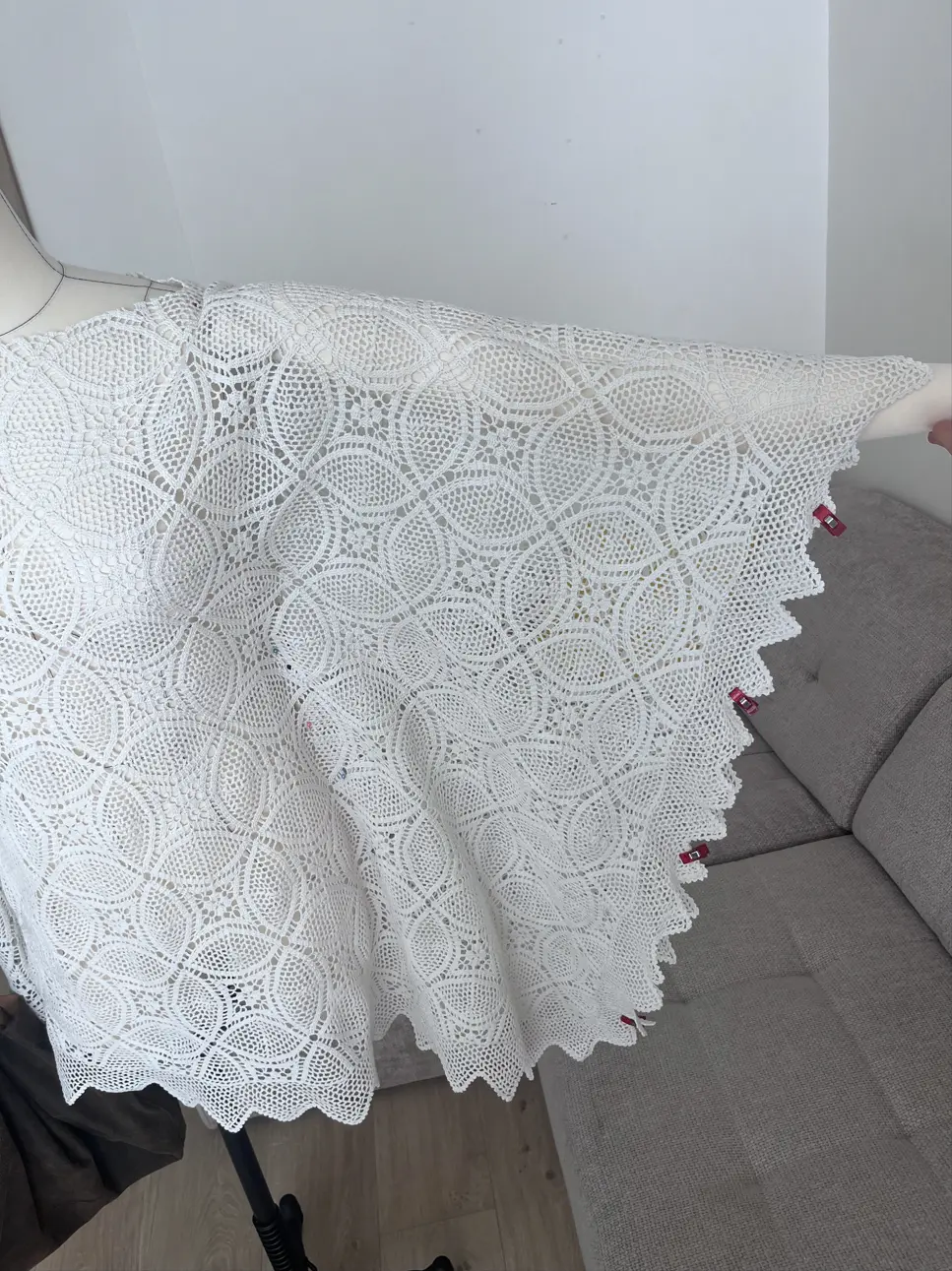
The tablecloth is fully hand-crocheted. Someone spent a huge amount of work on it. The tablecloth was crocheted from small squares that were sewn together. The whole is then crocheted with a decorative wave. If I calculate that the tablecloth maker crocheted 2 hours a day, considering the complex graphic pattern, that means approximately 150 hours of work. Or 4-6 months in the evenings. If the tablecloth maker took 20 EUR / 23 USD per hour, the tablecloth would cost 3000 EUR / 3450 USD. The aim of this calculation is to show the value of the work of the people who made the tablecloth in the evenings and at night.
A Little Courage
This project is very easy to sew. If you are a complete beginner, it is the perfect project to start with, and you will see the beautiful result of your work right away.
I am keeping my fingers crossed for you, and remember, we are in this together, so if you need anything, feel free to reach out.
Dana