Table of Contents
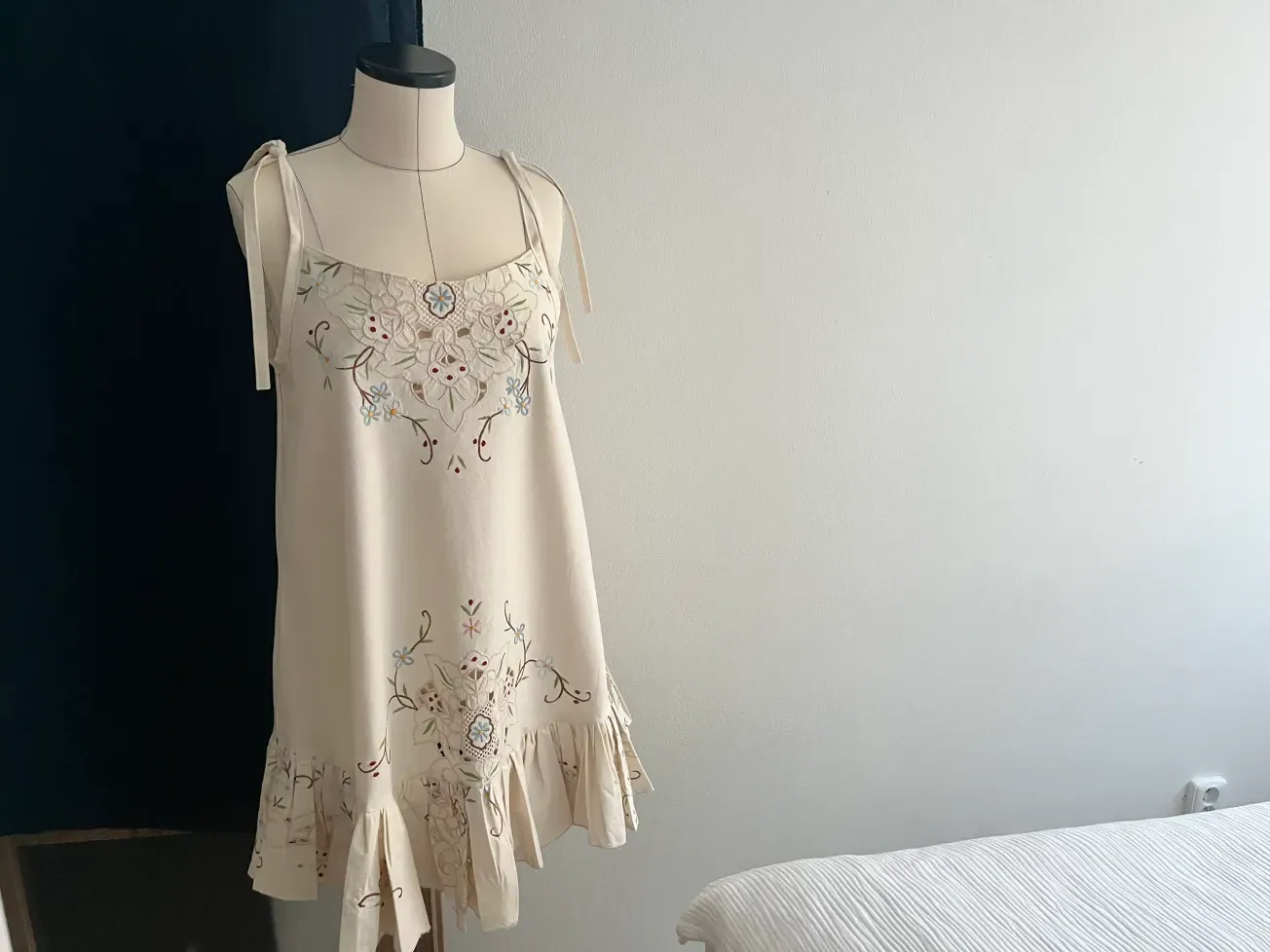
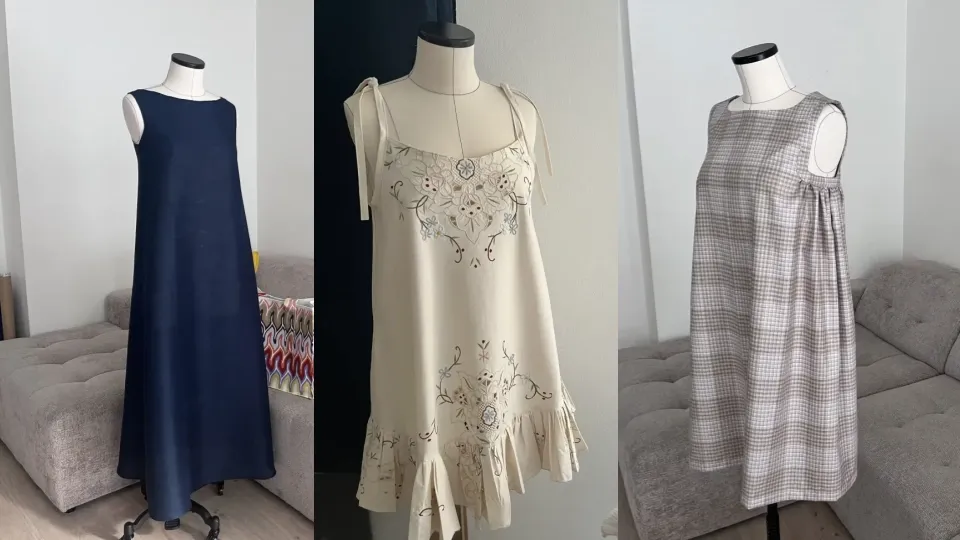
For decades, A line dresses have been a staple in most women's wardrobes. They work whether you wear them to work, at home, out with friends, or on vacation. This style comes in many forms, sharing the same basic silhouette but featuring subtle variations that make each model unique.
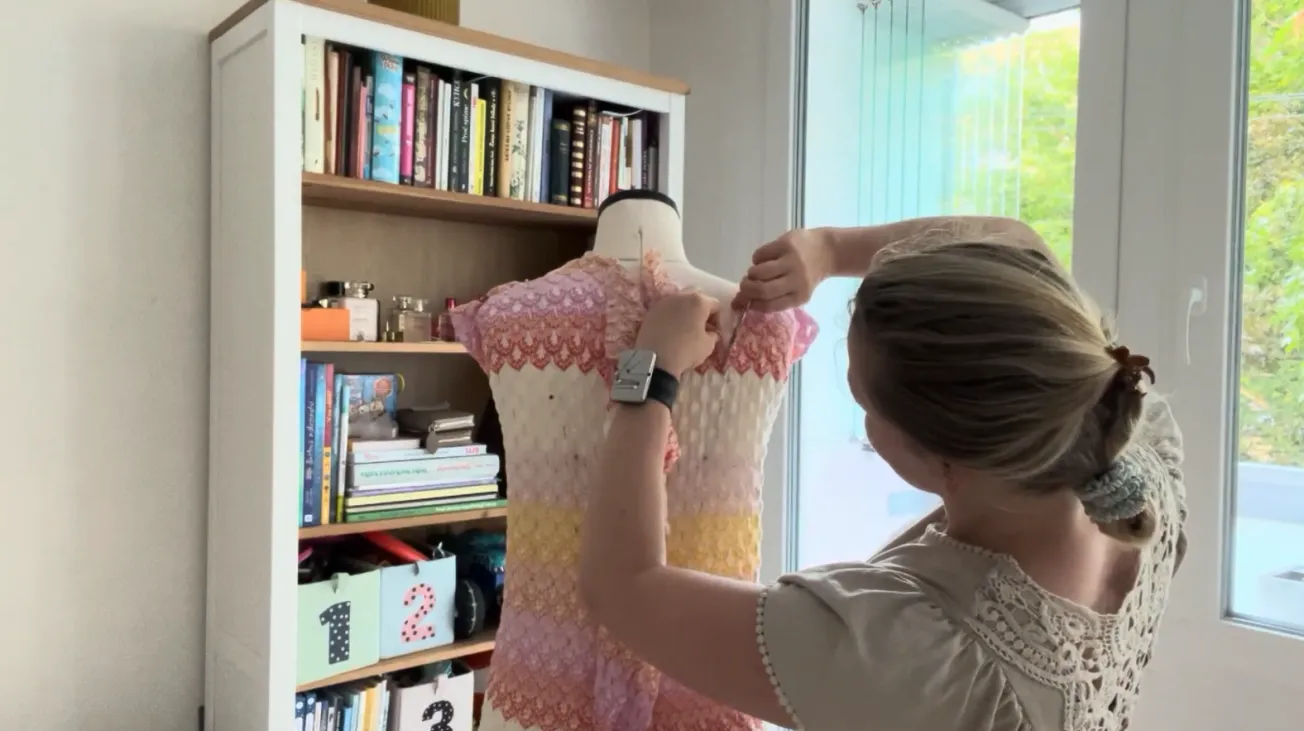
For me personally, sewing an A-line dress is not just about finishing another piece of clothing. It is an amazing practice in what I call 'Quiet Sewing.' This approach is about intentionality, prioritizing the joy of the creative process, focusing on quality craftsmanship, and curating a wardrobe built to last, rather than rushing to keep up with the fast-fashion cycle.
From my perspective, A-line dresses are a fantastic example of how a simple shape can form the foundation of our wardrobe.
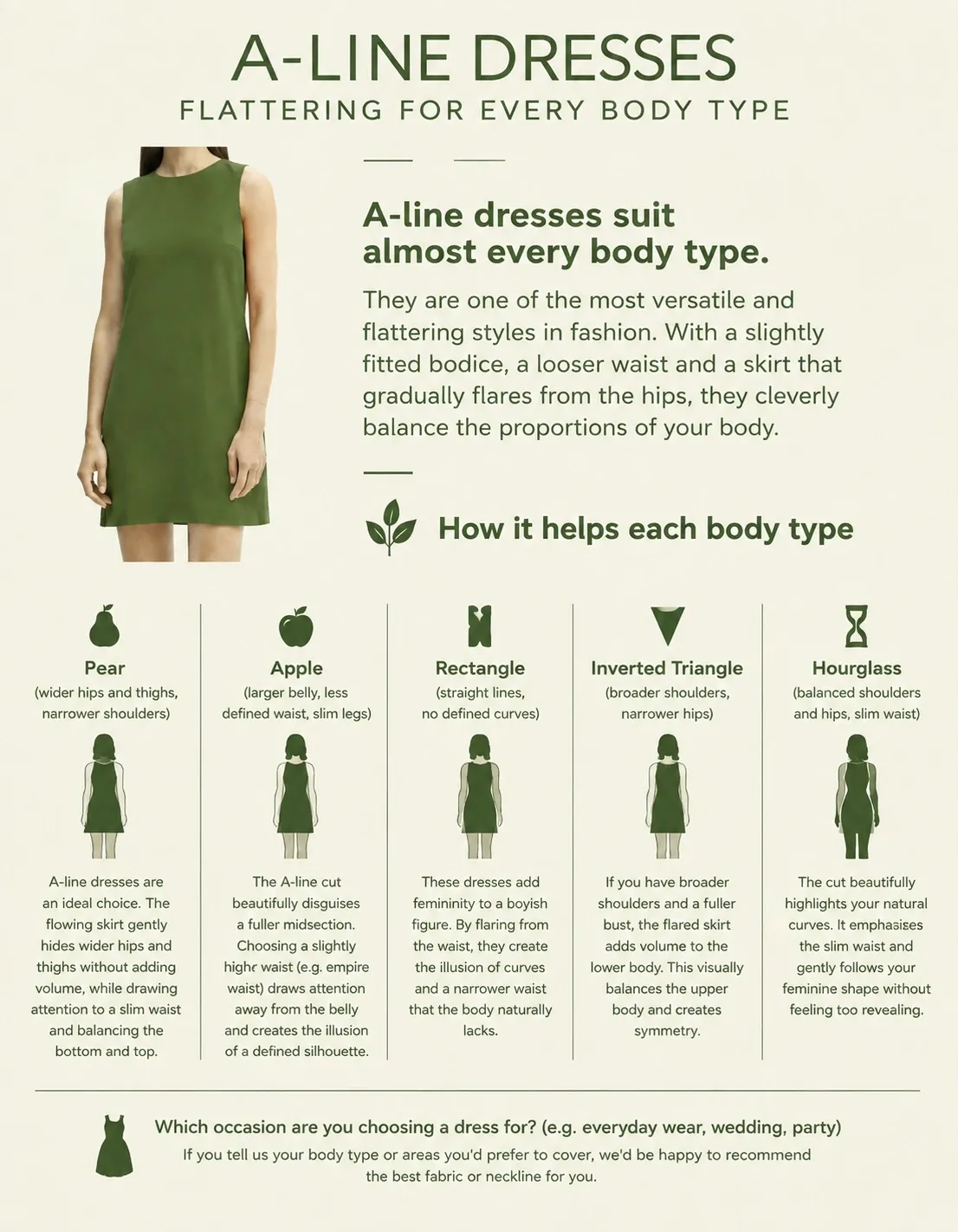
This shape's popularity comes mainly from its simplicity and comfort. They flatter almost every woman: they beautifully conceal areas you might want to hide while adding volume where you might want it. This globally beloved style has incredible charm and offers many variations that make it truly wonderful.
Shape of A-Line Dress
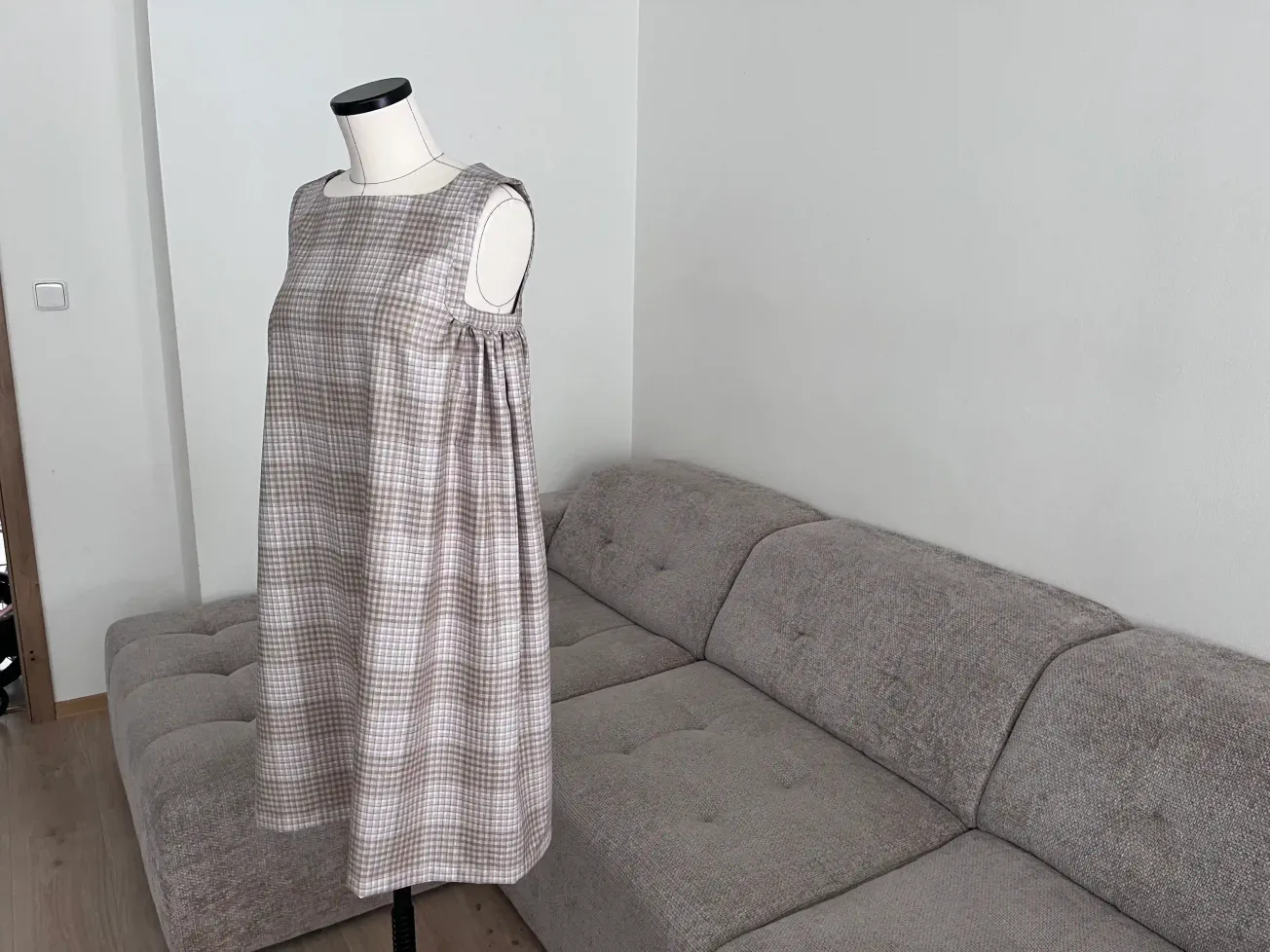
The defining feature of an A-line dress is its shape. It is not about a specific look, but the silhouette itself: any dress that gradually widens from the bust down into an "A" shape, regardless of length.
They can come in various lengths, such as:
• Micro / Ultra Mini
• Mini
• Above the knee
• Knee-length
• Midi
• Tea-length
• Maxi
• Floor-length
This design lets you conceal the tummy and hips or, conversely, add volume where you want it. Of course, choosing the right material is also crucial to achieving the desired effect for the specific occasion. You can find this silhouette in everything from evening gowns and work dresses to casual styles for the garden or vacation. The magic is that you can simply vary the length and tweak the bodice, opting for straps, ties, a boat neck, or full sleeves.
To work with the A-line cut, you only need one base pattern that fits your figure; then you adjust details like length and neckline to suit the specific dress style you want to create.
Quiet Sewing Philosophy
This perfectly embodies the "Quiet Sewing" philosophy, a mindset many of us have already adopted internally. Now, this philosophy finally has a name we can rally around and identify with. Instead of constantly hunting for new patterns and chasing after the next thing, we focus on and refine what works specifically for us. We learn how different high-quality fabrics behave, get to know our sewing machines inside out, and slow down to ensure every seam is sewn with intention. It is about sewing less but creating pieces that hold deep meaning and fit perfectly into our lives and identities
That is exactly what I love about A-line dresses. It is my favorite style to sew. I know the fit will be right, and the pieces are wonderfully versatile.
An A line dress was actually the first thing I ever sewed, right after making a bag.
The History of A-Line Dresses
This silhouette dates back to the 1920s and 1930s. Women's emancipation and, above all, the rebelliousness of the 1960s shaped its evolution. Various economic crises also influenced this dress shape, something most people might not think of right away.
I won’t go back to the Middle Ages, when people in need simply tied two pieces of fabric together or made do with whatever meager resources were at hand. Although this basic cut has existed since humans first began wearing clothing, a major turning point occurred around 1920 with the advent of the Jazz Age and the Charleston dance. This era brought fashion changes spearheaded by the so-called "flappers". Rebellious young women wore dresses that revealed their ankles and calves, a style considered quite daring at the time.
Later, during World War II, rationing forced companies to economize. Everything had to be simplified, fashion included, so hemlines rose to knee-length.
Immediately after the war, the House of Dior introduced its iconic "New Look." In my opinion, these styles are absolutely stunning for social events, featuring full skirts and "tea-length" hemlines. Dior restored a sense of femininity to women; however, amidst post-war scarcity, he faced criticism from the general public, who viewed the designs as wasteful. This sparked a public outcry. Yet, the style had already taken hold, and despite its rocky start, it soon spread to other fashion houses. In the 1960s, miniskirts and mini-dresses became symbols of freedom and rebellion. At first, they represented a major political and social protest, a public stand against the uptight atmosphere and the fashion choices of the older generation.
By the end of the 60s, dresses couldn't get any shorter; then, alongside hippie culture, the maxi length arrived, completely turning fashion trends around. Sometimes I feel like the same thing is happening today. Fashion changes every year, yet the basic shape of the dress often remains; only the length, the bodice style, or the material changes. It is fascinating to watch.
Nowadays, people don't focus quite as much on what is strictly "in vogue," because almost anything goes: short dresses, long dresses, spaghetti straps, halter necks, boat necks... simply put, everyone can wear what they personally love.
That is why, in this section, I will gradually share various types, lengths, and modifications of A-line dresses so that each of you can find something you like. You can print out the pattern, or assemble it yourself at home, and sew exactly the dress you want.
How to Style an A Line Dress
Beyond their comfort, what I love most about A-line dresses is their versatility. If I choose the right color and fabric, I can wear the dress with practically anything: a shirt or T-shirt underneath, or a blouse, sweater, or blazer over the top. Thanks to just one dress, I have a truly versatile wardrobe staple. You don't need overly complex shapes or cuts to look lovely and put-together; after all, beauty comes in simplicity.
Once you start sewing, you go your own way; don't rush. Choose fabrics that feel wonderful to the touch, take time to understand garment construction, and find calm in the creative process itself. That is exactly what "Quiet Sewing" is all about. Sewing a timeless wardrobe isn't just about the clothes we wear; it’s about our own work and relaxation.
Here I am sharing various A line dress sewing patterns, complete with a tutorial and downloadable patterns (or instructions on how to create your own pattern at home), so you can sew them yourself. I sewed these timeless dresses myself and made them beginner-friendly for all of you, so you can sew it at home too.
If you have any questions, I am here to help. 🌸
Feel free to ask in the comments.
Dana
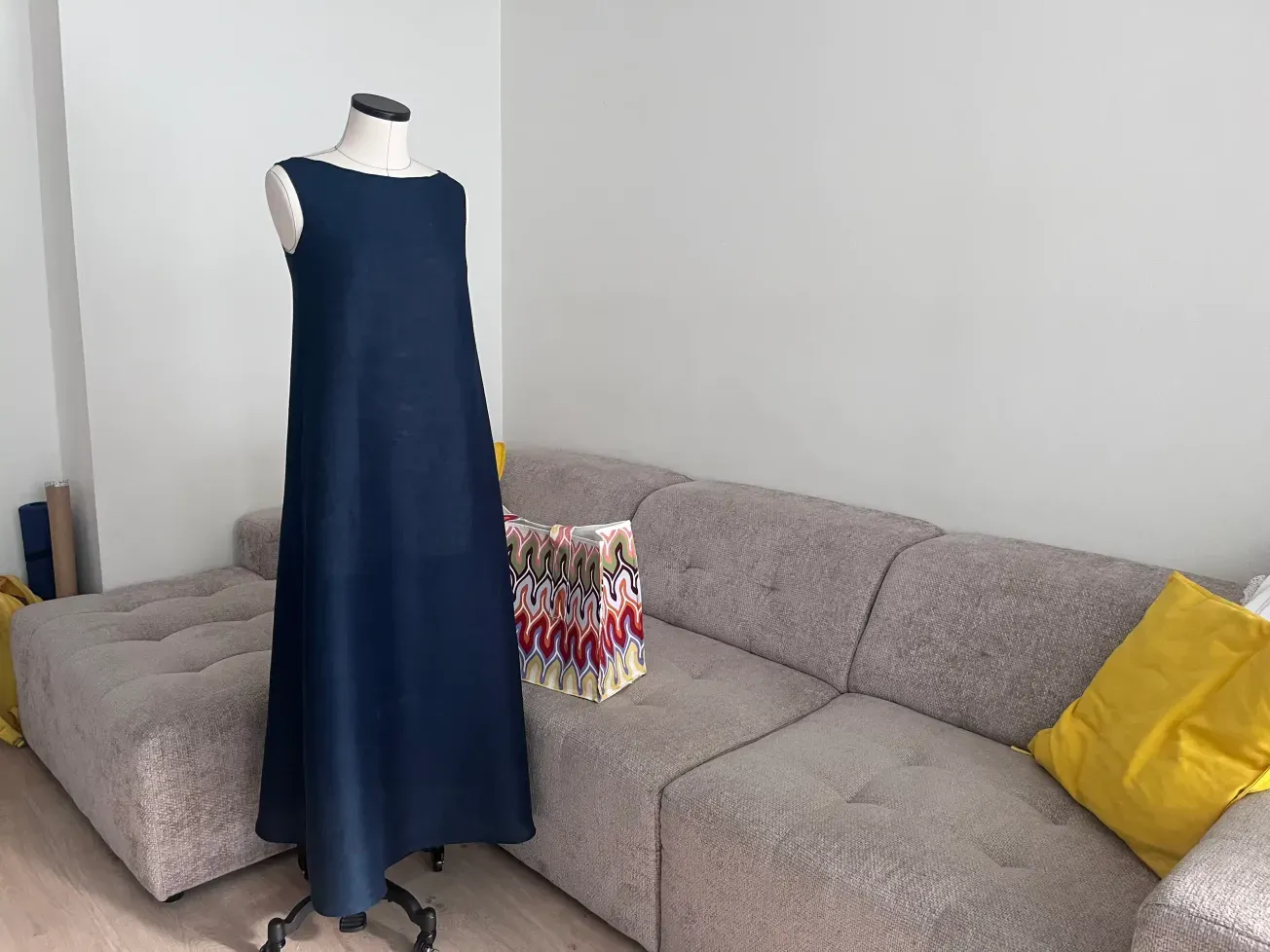
A-Line Dress Maxi Sewing Pattern + Tutorial
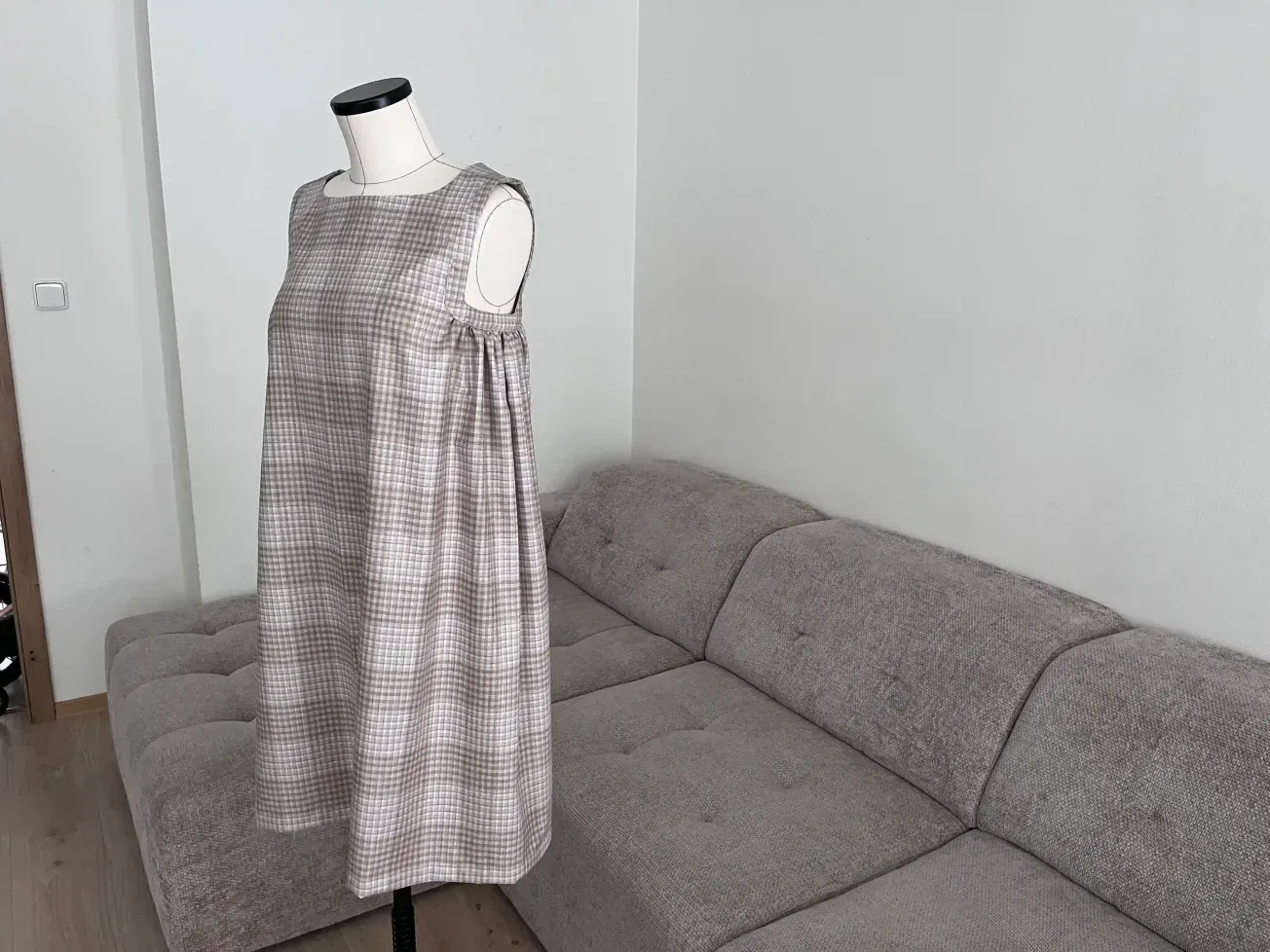
A-Line Dress Knee-length Sewing Pattern + Tutorial
A-Line Dress Above the Knee Sewing Pattern + Tutorial